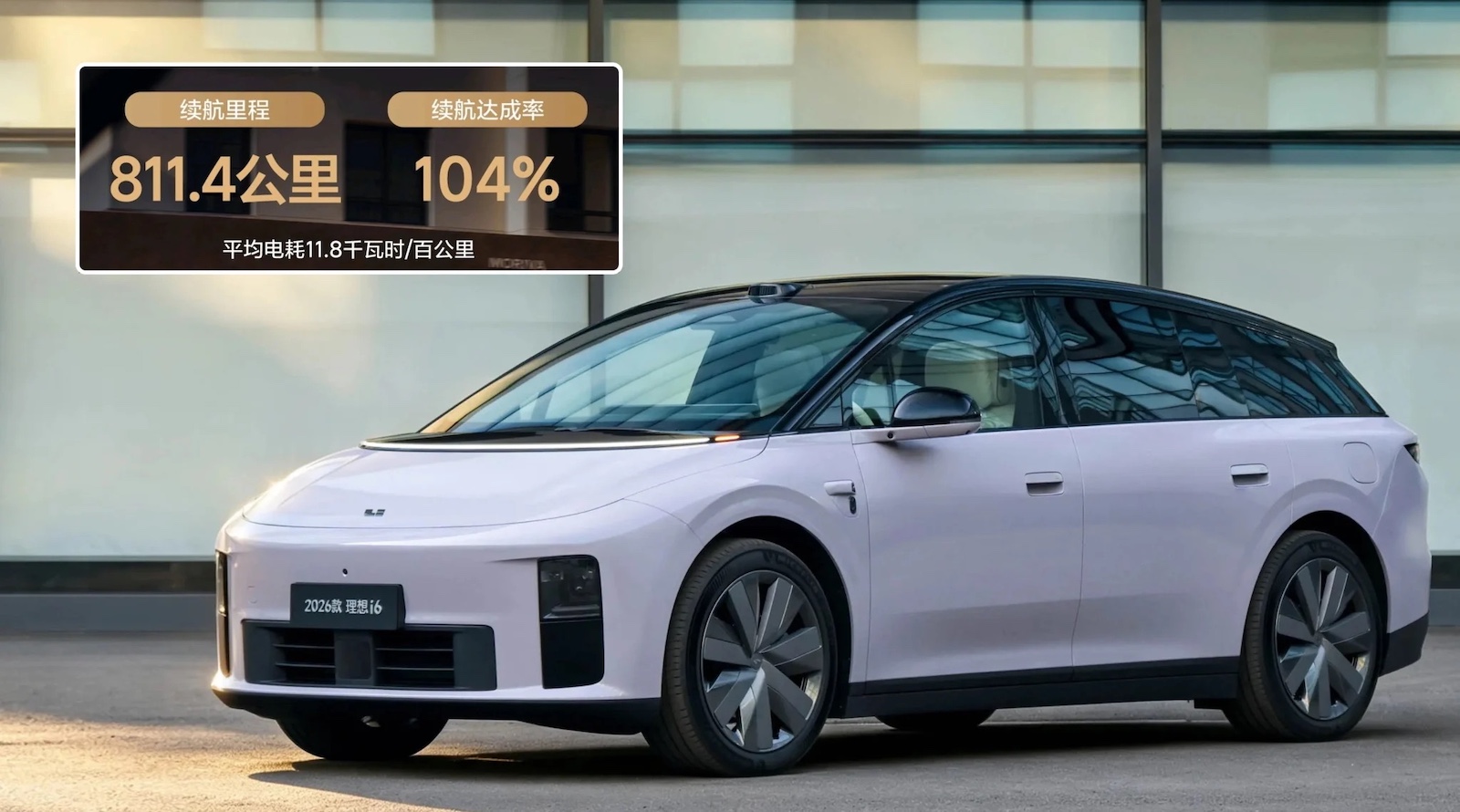
# Li Auto's i6 Extended-Range Vehicle Achieves 811-Kilometer Range
Li Auto unveiled its new i6, an extended-range electric vehicle that delivers 811 kilometers (504 miles) of total range on a single charge combined with its onboard fuel tank. The Chinese automaker's latest model targets the growing domestic market for vehicles that blend electric and gas propulsion.
The i6 adopts the multipurpose vehicle design increasingly dominant in China, combining sedan proportions with SUV versatility. This configuration reflects shifting consumer preferences in the world's largest vehicle market, where practical family vehicles command strong demand.
Extended-range electric vehicles (EREVs) operate through a series-hybrid architecture. An onboard gasoline engine powers a generator that recharges the battery pack, allowing drivers to extend trips beyond pure electric range without stopping at charging stations. This approach addresses range anxiety, a persistent barrier to EV adoption in regions with sparse charging infrastructure. The i6's total 811-kilometer capability positions it competitively against traditional combustion vehicles while retaining zero-emission electric-only driving for daily commutes.
Li Auto has emerged as China's fastest-growing automaker by focusing on extended-range technology rather than pure battery-electric vehicles. The company delivered over 376,000 vehicles in 2024, with extended-range models accounting for the majority of sales. This strategy diverges from competitors like Tesla and BYD, which emphasize either pure EVs or battery-only approaches.
The i6's range specification reflects improvements in battery efficiency and fuel tank capacity. Chinese EREVs typically achieve electric-only ranges between 100 and 300 kilometers before the gas engine engages. Adding the fuel tank's contribution provides total distances comparable to conventional vehicles. The model targets families seeking lower running costs than pure gas vehicles while avoiding charging time constraints.
Extended-range vehicles operate in a regulatory gray zone globally. China's government classifies them as new energy vehicles eligible for purchase subsidies and preferential licensing policies. The U.S. Environmental Protection Agency and European regulators treat them differently, typically requiring compliance with both electric and fuel-consumption standards. This classification disparity explains why extended-range technology dominates Chinese sales but remains niche in North America and Europe, where pure EVs and plug-in hybrids command preference.
Li Auto's manufacturing footprint centers on China, with production facilities in Anhui Province supplying domestic and export markets. The company plans incremental international expansion, beginning with Southeast Asian markets where charging infrastructure similarly constrains pure EV adoption.
The i6 competes directly with other Chinese extended-range vehicles including BYD's Song DM line and Geely's Geometry models. Pricing and delivery timelines for the i6 will determine its market impact. Li Auto's track record suggests aggressive pricing strategies aimed at capturing market share from competitors offering both extended-range and plug-in hybrid options.
The vehicle's launch reflects broader trends in Chinese automotive manufacturing. Domestic companies increasingly innovate in specific propulsion segments rather than following Western EV-first strategies. This divergence creates distinct technology ecosystems, with Chinese buyers accessing extended-range solutions unavailable or impractical in other regions.