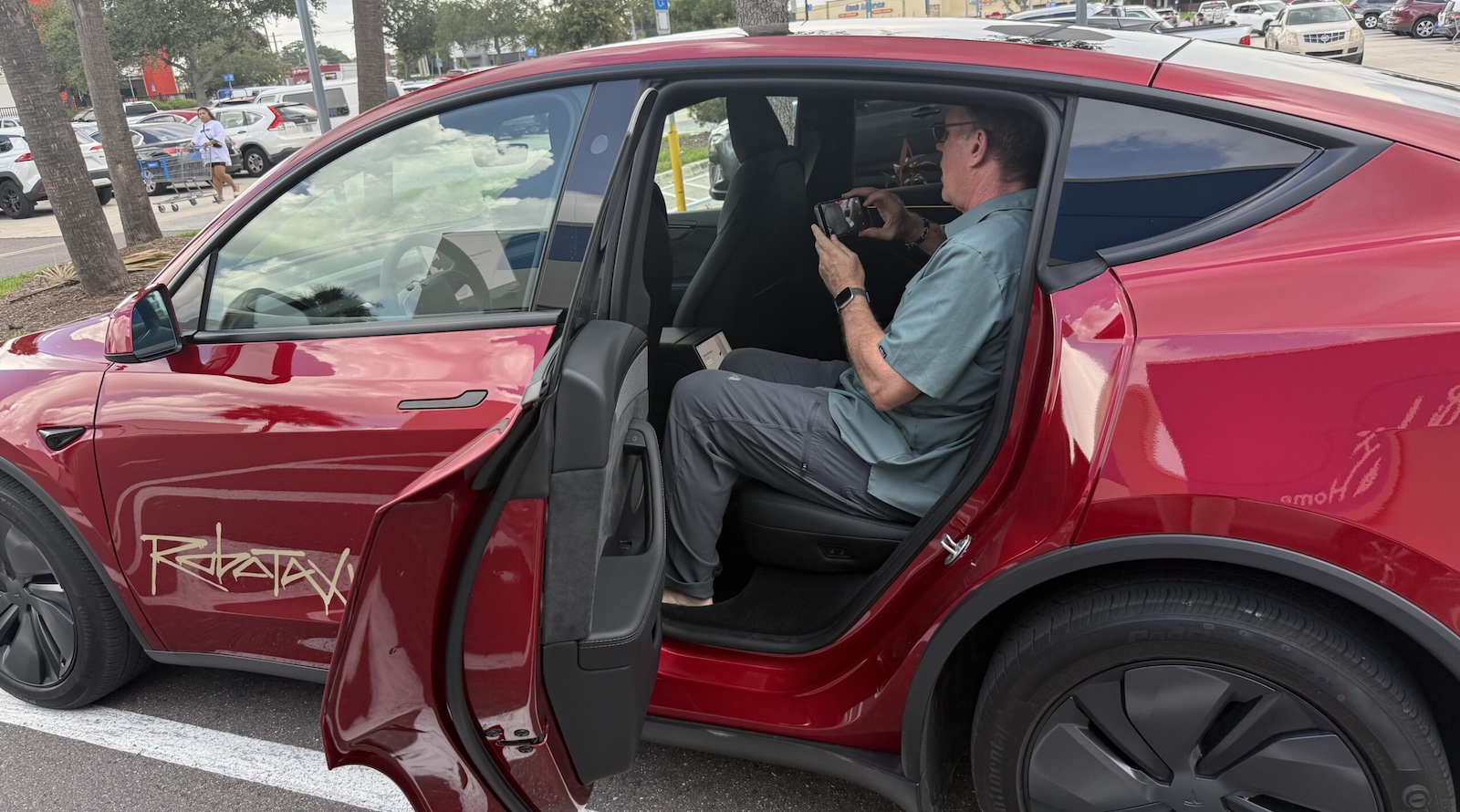
Tesla's autonomous vehicle operation has crossed a deployment threshold that demands attention from regulators and the insurance industry. The company logged more driverless miles than Waymo in Austin during recent weeks, and if its 20 percent weekly growth rate persists, Tesla will accumulate unsupervised autonomous vehicle miles at a scale that tests existing safety frameworks and data collection protocols.
The numbers project steeply upward. At 20 percent weekly compounding growth, Tesla's robotaxi fleet would surpass Waymo's national driverless mileage within eleven weeks. By mid-February, under this growth trajectory, Tesla's three Texas metropolitan robotaxi operations would collectively handle the weekly volume that Uber and Lyft currently process across those same regions. These figures matter because driverless miles represent the raw material for machine learning systems. The more unsupervised miles a fleet accumulates, the more edge cases and real-world scenarios the system encounters.
Tesla operates its robotaxi service under a limited deployment permit in California and Texas. The company calls this program "Full Self-Driving" or FSD, though it remains Level 2 autonomous technology under SAE classifications, meaning drivers legally must remain attentive and ready to intervene. However, the operational reality involves extended periods where Tesla's system controls acceleration, braking, and steering without human input. The National Highway Traffic Safety Administration (NHTSA) has received complaints about FSD but has not issued formal recalls or halted deployment.
The compounding growth model assumes Tesla maintains its current operational efficiency and that regulatory barriers do not tighten. Waymo, by contrast, operates under stricter conditions. The Alphabet subsidiary holds driverless permits in limited cities and operates with remote human operators available to intervene if needed. Waymo's model trades speed for caution. Waymo logged roughly 8 million autonomous miles as of mid-2024 across its entire network. Tesla's published data on total FSD miles remains less transparent, though third-party tracking suggests the fleet has surpassed 500 million miles under various human-oversight levels.
The insurance implications run deep. As robotaxi volumes grow exponentially, traditional auto insurers face actuarial uncertainty. A 20 percent weekly growth rate doubles fleet size every 3.8 weeks. That pace strains the data collection capacity needed to model autonomous vehicle risk accurately. Liability frameworks remain unsettled. If a Tesla in FSD mode causes a crash, courts must determine whether Tesla, the owner-driver, or both bear responsibility. This ambiguity has frozen some insurance products.
Regulators at NHTSA and California's Department of Motor Vehicles monitor deployment metrics, but enforcement remains reactive rather than predictive. Neither agency has published real-time dashboards showing autonomous vehicle mileage, crash rates, or near-miss incidents. This transparency gap makes it difficult to assess whether Tesla's scaling velocity outpaces safety validation.
The exponential growth assumption itself carries risk. Sustained 20 percent weekly growth in a single company's autonomous vehicle operation has no historical precedent. Saturation effects, regulatory intervention, technical failures, or accident events could flatten the curve abruptly. Tesla's actual near-term success depends on whether its system handles edge cases in cold weather, rain, and urban congestion without safety failures that trigger broader restrictions.
The next months will clarify whether this growth trajectory reflects genuine technical progress or represents a regulatory enforcement vacuum that may close unexpectedly.