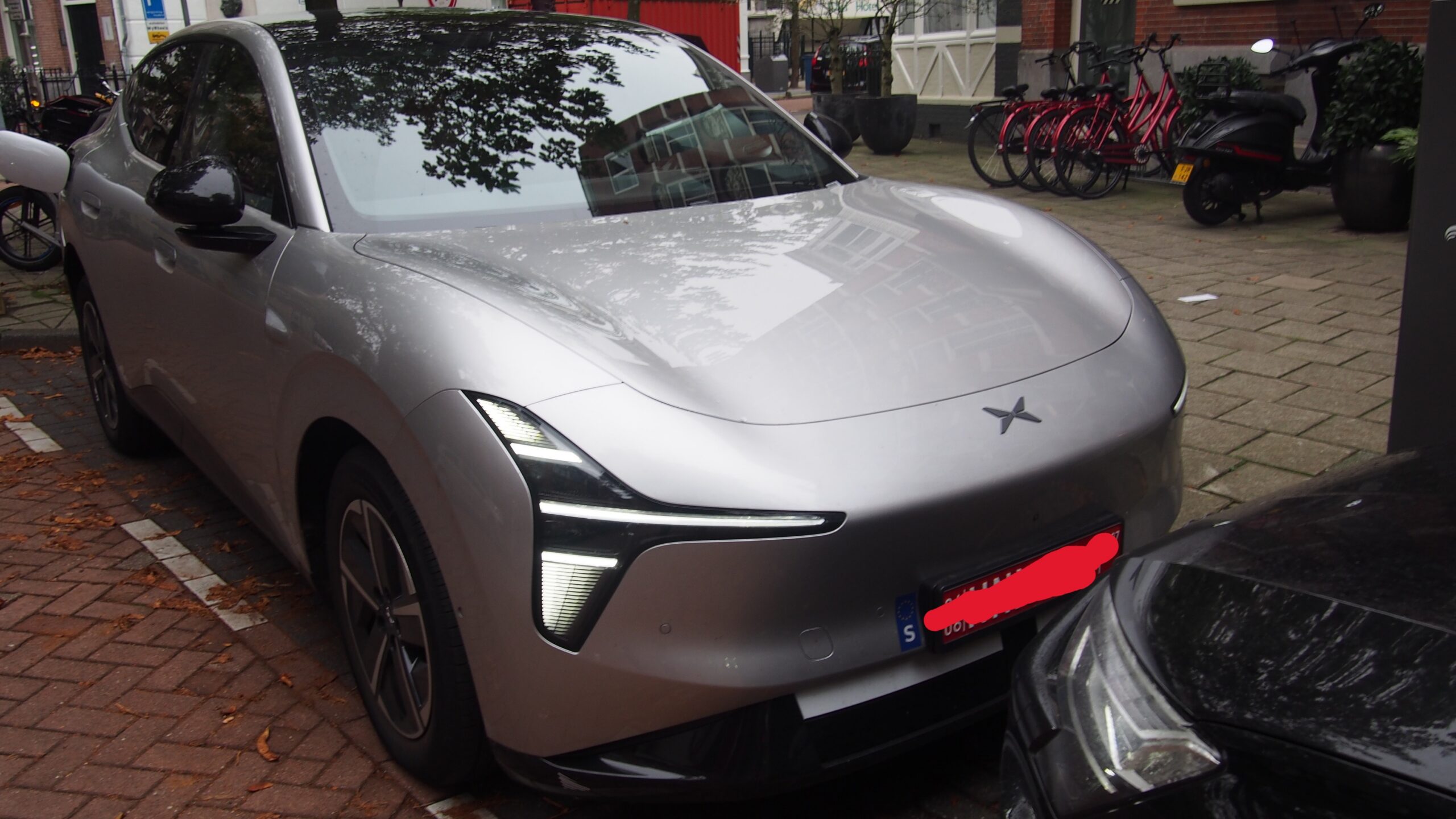
# XPENG's VLA 2.0 Autonomous System Faces Head-to-Head Test Against Tesla FSD in Amsterdam
A comparative evaluation of autonomous driving systems in real-world conditions marks a shift toward empirical assessment of competing technologies. An independent tester drove XPENG's L03 prototype equipped with the company's latest VLA 2.0 navigation system on Amsterdam roads, then repeated the same routes in a Tesla Model 3 running Full Self-Driving beta software.
This comparison matters because most evaluations of advanced driver assistance systems remain confined to single platforms or controlled environments. Testing both systems on identical road segments in a city known for complex urban traffic patterns—narrow streets, cyclists, trams, pedestrians, and frequent course corrections—creates the first documented side-by-side assessment of these competing autonomous technologies operating in European conditions.
XPENG, the Chinese electric vehicle manufacturer, has accelerated development of its autonomous capabilities through its vision language model approach called VLA 2.0. The system processes real-time video and contextual information to make driving decisions, representing a shift from traditional rule-based autonomous systems toward neural network based navigation. XPENG has deployed XNGP, its autonomous driving brand, across its vehicle lineup in China and has begun international testing programs.
Tesla's Full Self-Driving beta operates on a different architecture using camera-based perception without lidar sensors. FSD has been deployed to roughly 50,000 beta testers globally and represents Tesla's end-to-end learning approach to autonomous navigation. The system combines vision transformers with behavioral cloning to predict vehicle trajectories.
Amsterdam presents a particularly demanding testing environment. The city features narrow cobblestone streets where lane markings vanish or blur, protected bicycle lanes that blur the distinction between traffic and sidewalk space, and frequent unprotected left turns across opposing traffic. Both systems must navigate without painted lane guidance on many routes and interpret traffic signals while managing interactions with vulnerable road users.
XPENG's decision to permit independent testing of VLA 2.0 outside company employees suggests confidence in the system's capability. The company has not released performance metrics comparing VLA 2.0 directly against competing systems on standardized test courses. This real-world evaluation could influence perceptions of Chinese autonomous technology development outside domestic markets.
Tesla's FSD has undergone extensive public testing in North America, but comparative data on its performance in European cities remains limited. Road infrastructure differs significantly between continents. European cities often feature narrower streets, different traffic patterns, and distinct regulatory requirements around autonomous vehicles.
The XPENG test comes amid broader international competition in autonomous vehicle development. Companies including Waymo, Cruise (General Motors subsidiary), and various Chinese firms including Baidu and Didi are testing autonomous systems in multiple countries. Regulatory frameworks in Europe, particularly the EU's proposed requirements for autonomous vehicles, differ from Chinese and American approaches.
Standardized testing of autonomous systems remains absent across jurisdictions. No independent body currently administers comparable tests for all major autonomous platforms. Industry organizations and academic institutions have proposed frameworks, but adoption remains inconsistent.
The comparison addresses fundamental questions about whether Chinese autonomous technology developed primarily for domestic Chinese traffic conditions transfers effectively to European road environments. It also tests whether systems trained differently—XPENG's vision language model approach versus Tesla's end-to-end learning—handle unfamiliar urban geometry similarly.