# Tesla's Full Self-Driving Faces European Challenges in Direct Amsterdam Comparison
Tesla's Full Self-Driving system stumbles in real-world European conditions when pitted against competing autonomous driving technology, according to a hands-on evaluation conducted in Amsterdam. The comparison reveals critical gaps in FSD's capability outside its primary U.S. market, where the system has logged millions of test miles but remains in "beta" despite years of development.
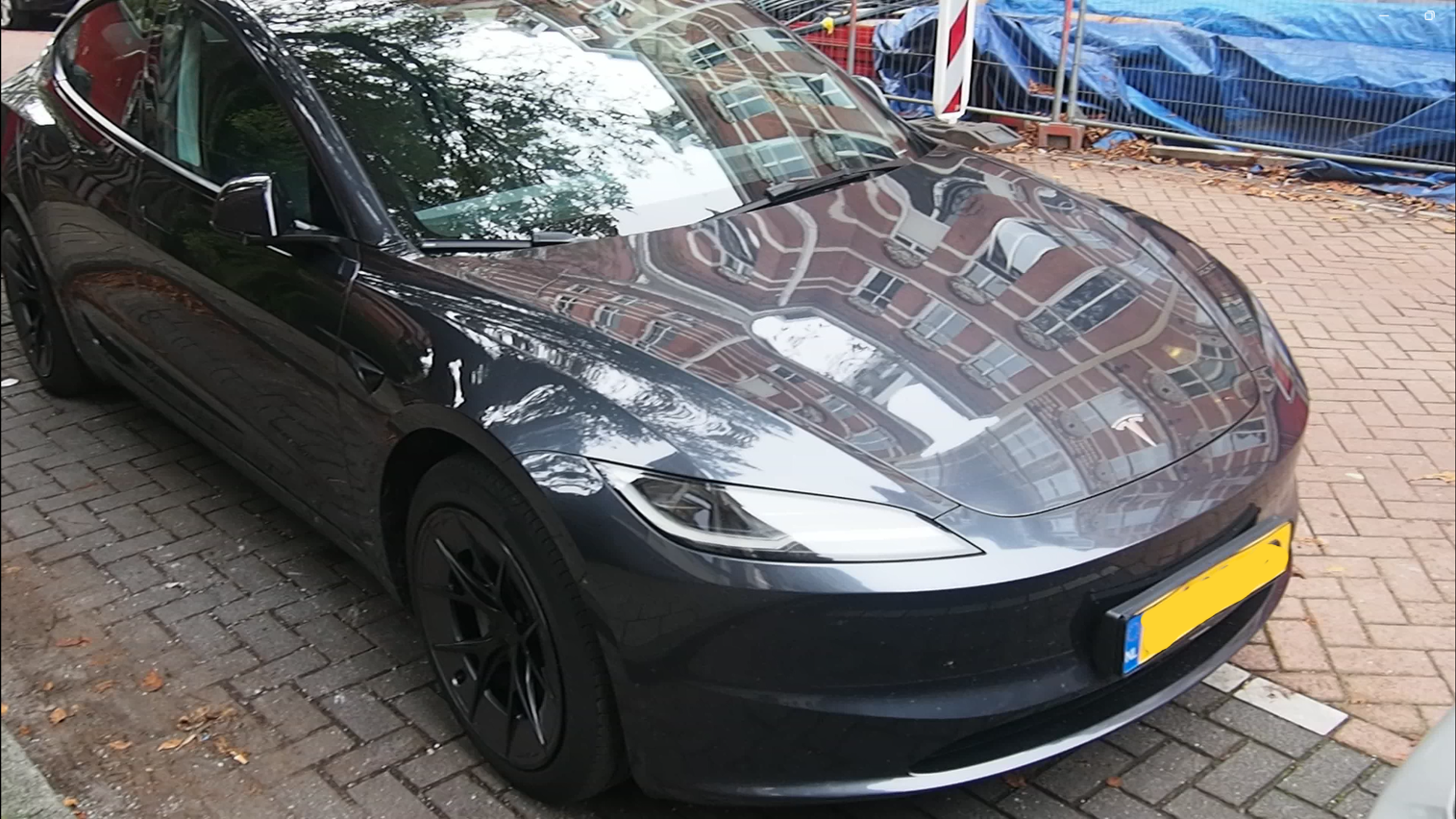
The test paired Tesla's Model 3 equipped with FSD against an XPeng L03 running VLA 2.0 autonomous software in Amsterdam's dense urban environment. FSD, which Tesla markets as its path toward full autonomy, proved less adept at navigating European street layouts, traffic patterns, and regulatory frameworks than the Chinese competitor's system. The disparity underscores a fundamental limitation in Tesla's approach. Elon Musk's company has trained FSD primarily on North American driving data, creating blind spots when the system encounters different road infrastructure, signage conventions, and driving norms.
VLA 2.0, developed by Chinese automaker XPeng in partnership with autonomous driving specialists, showed notably smoother operation through Amsterdam's narrow streets and complex intersections. The system handled roundabouts, bike lane interactions, and pedestrian-heavy zones with fewer interventions required from human operators. XPeng has invested heavily in training its neural networks on global driving scenarios rather than concentrating exclusively on one market.
FSD's limitations in Amsterdam carry broader implications for Tesla's European expansion strategy. The company faces regulatory hurdles across the European Union, where autonomous vehicle testing requires explicit certification from national authorities. Unlike the fragmented U.S. regulatory landscape, EU member states operate under coordinated safety standards administered through the European Commission and individual transport ministries. Germany, the Netherlands, and other nations have initiated formal testing programs for autonomous vehicles, but approval requires demonstrating competency in local driving conditions.
Tesla has deployed FSD to select European markets on a limited basis, but without the localized training data that competitors like XPeng and Waymo have accumulated, the system's performance lags. The company relies on continuous data collection from its deployed fleet, a strategy that assumes customer tolerance for suboptimal performance during the extended development phase. European regulators and consumers, accustomed to higher baseline safety standards in consumer vehicles, show less patience with beta-phase autonomous systems than U.S. drivers.
The technical gap extends beyond algorithm performance. VLA 2.0 correctly interprets European traffic signals, responds appropriately to speed limit variations between jurisdictions, and handles road markings that differ from North American standards. FSD frequently misreads or ignores these contextual cues, forcing driver intervention in situations where a properly trained system should operate independently.
XPeng's approach of designing autonomous driving systems with geographic flexibility from inception contrasts sharply with Tesla's U.S.-first methodology. As autonomous vehicle development accelerates globally, companies that build systems capable of operating across varied regulatory and infrastructural contexts will capture larger market shares than those dependent on single-market optimization.
The Amsterdam evaluation suggests Tesla's FSD will require substantial retraining and localization work to meet European expectations. Without this investment, competitors with truly global autonomous driving platforms will gain ground in Europe's electric vehicle market, where Tesla's brand strength provides insufficient advantage if basic autonomous functionality trails rivals.