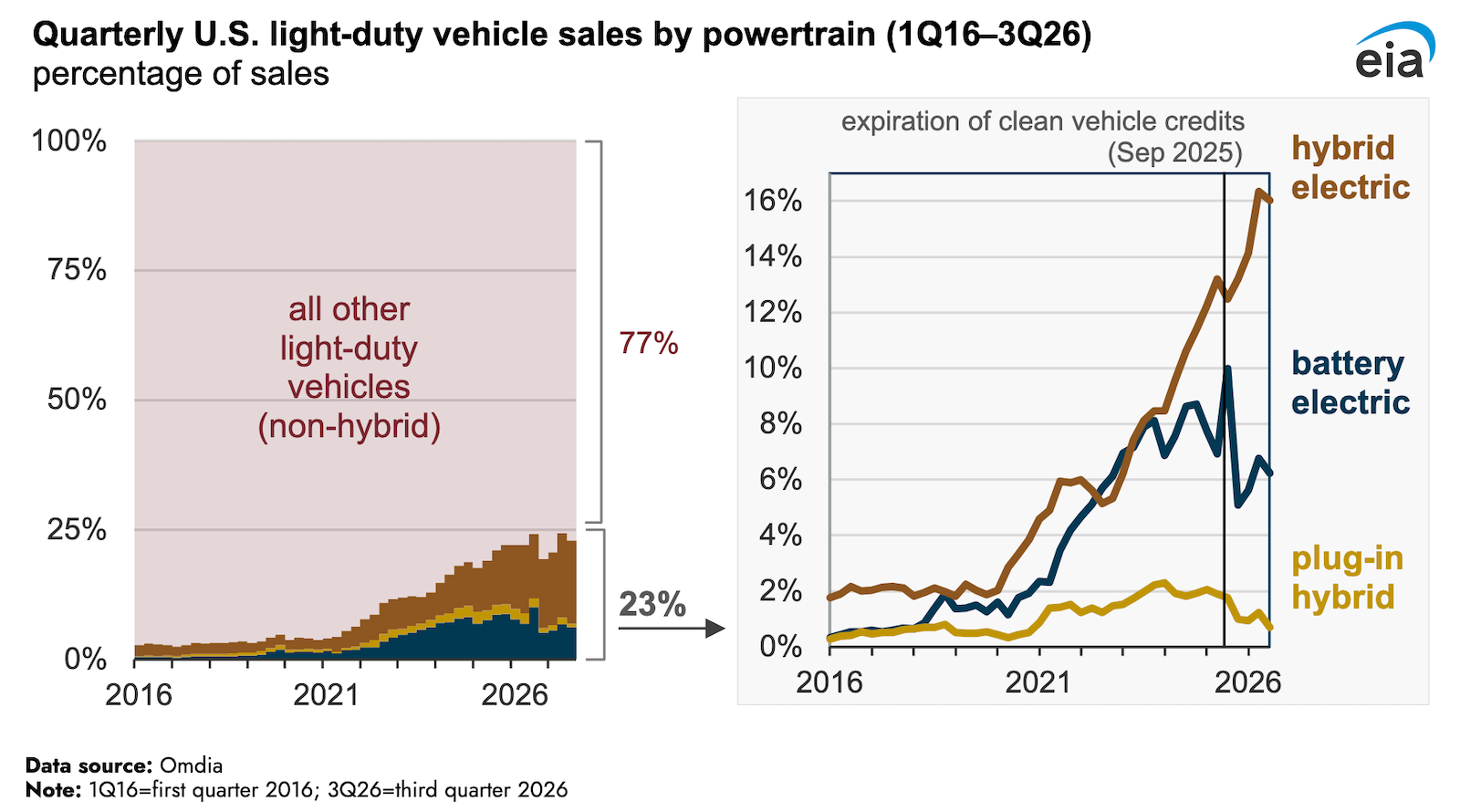
Hybrid electric vehicles gained market share in the third quarter of 2026, reaching 16% of light-duty vehicle sales in the United States, according to data reported by CleanTechnica. This marks continued growth for hybrids compared to the same period in 2025.
Overall, electrified vehicles—which include hybrid electric, battery electric, and plug-in hybrid electric vehicles—accounted for 23% of new light-duty vehicle sales in 3Q26, down slightly from 24% in 3Q25. The slight decline in the broader electrified vehicle category reflects a shift in consumer purchasing patterns across different powertrain types.
Battery electric vehicle sales remained lower than in the previous year, a trend attributed to the expiration of tax credits. The loss of these financial incentives appears to have dampened demand for fully electric vehicles, with consumers turning instead toward hybrid options that do not rely as heavily on subsidies to remain competitive in price.
The data reflects a complex market dynamic in the U.S. automotive sector. While the electrified vehicle market continues to represent a meaningful share of total vehicle sales, the composition of that market has shifted. Hybrids have emerged as the stronger performer, likely benefiting from lower upfront costs and the elimination of range anxiety compared to battery electric vehicles. Consumers appear to be responding to economic factors, with the availability of tax credits playing a significant role in vehicle selection decisions.
The third quarter results provide insight into how policy changes directly influence consumer behavior in the automotive market. The expiration of tax credits has reshaped the competitive landscape, benefiting hybrid technology over pure electric propulsion in terms of market adoption rates during this period.