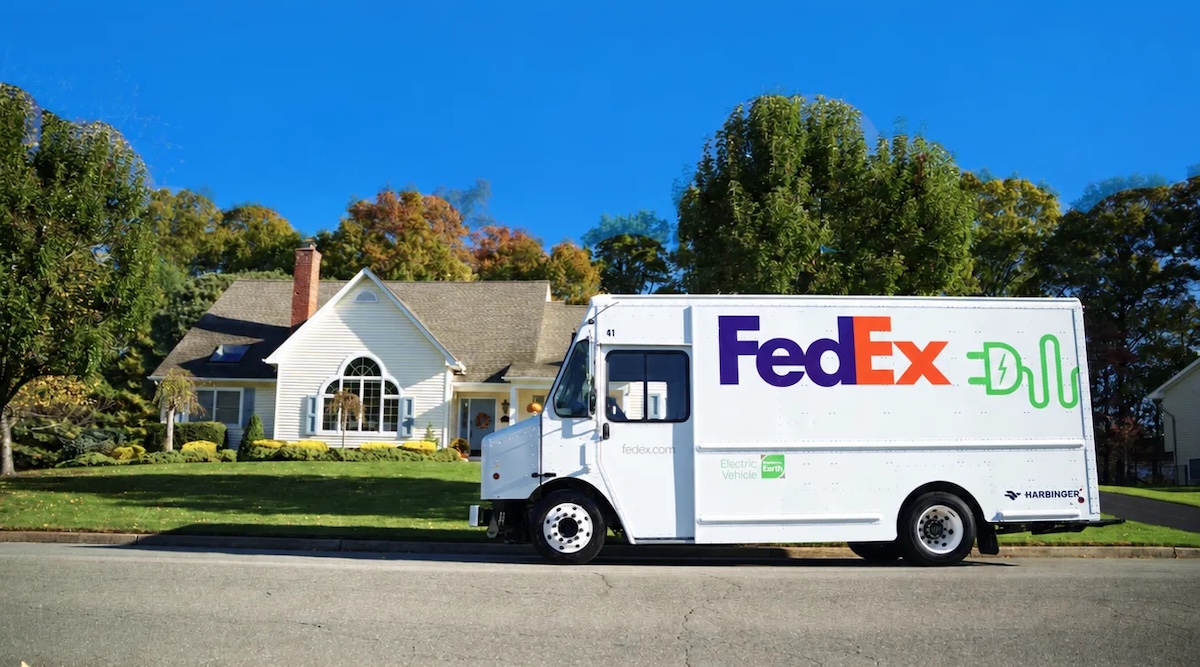
FedEx has committed to purchasing 2,000 electric trucks from Harbinger, a California-based startup, signaling sustained momentum in commercial vehicle electrification despite market headwinds facing EV adoption in the United States.
The order represents a substantial vote of confidence in Harbinger's technology and reflects the logistics industry's accelerating transition away from diesel-powered fleets. FedEx, operating one of North America's largest delivery networks with roughly 650,000 vehicles globally, has made electrification central to its sustainability strategy. The company set a target to achieve carbon-neutral operations by 2040, with intermediate goals requiring fleet transformation across its parcel, ground, and freight divisions.
Harbinger specializes in medium-duty commercial electric vehicles designed for last-mile delivery and urban logistics. The startup's trucks address a critical gap in the EV market, where light passenger cars have gained traction but medium-duty commercial vehicles remain underdeveloped relative to market demand. Last-mile delivery represents one of the largest sources of emissions in the transportation sector. The EPA estimates that medium-duty trucks account for roughly 5 percent of total transportation greenhouse gas emissions, yet they represent a disproportionate share of tailpipe pollution in urban areas where delivery density is highest.
FedEx has pursued electrification through multiple pathways. Prior to this Harbinger commitment, the company ordered electric vans from Ford and Volkswagen, placed orders with Tesla for semi-trucks, and partnered with Chanje Energy on electric delivery vehicles. This diversified supplier strategy reflects both the nascent state of commercial EV manufacturing and FedEx's determination to scale electric fleets across different vehicle classes and operational requirements.
The broader commercial EV market faces persistent obstacles. Charging infrastructure remains incomplete outside major metropolitan corridors. Battery costs, while declining, still represent 40 percent of medium-duty electric vehicle price tags compared to 10-15 percent in passenger EVs. Total cost of ownership, however, favors electric trucks in fleet operations where vehicles operate predictable routes and return to centralized depots daily. FedEx's 2,000-unit order leverages precisely these operational advantages.
This announcement arrives as federal incentives continue supporting commercial electrification. The Inflation Reduction Act provides tax credits for electric commercial vehicles and charging infrastructure deployment. EPA regulations under the Biden administration imposed increasingly stringent tailpipe emissions standards for heavy-duty vehicles, creating regulatory pressure that aligns with corporate decarbonization commitments.
Harbinger joins a growing roster of commercial EV startups competing for fleet orders. Lion Electric, Workhorse, and Freightliner have all pursued medium-duty electrification. Competition intensifies supplier pressure on pricing and performance while accelerating technology maturation across the industry.
Fleet electrification matters for climate targets. Logistics accounts for roughly 8 percent of global emissions. Decarbonizing delivery networks reduces both greenhouse gas concentrations and localized air pollution that disproportionately affects communities adjacent to distribution hubs. FedEx's scale means that 2,000 electric trucks displace millions of gallons of diesel annually, assuming average utilization of 40,000 miles per vehicle yearly.