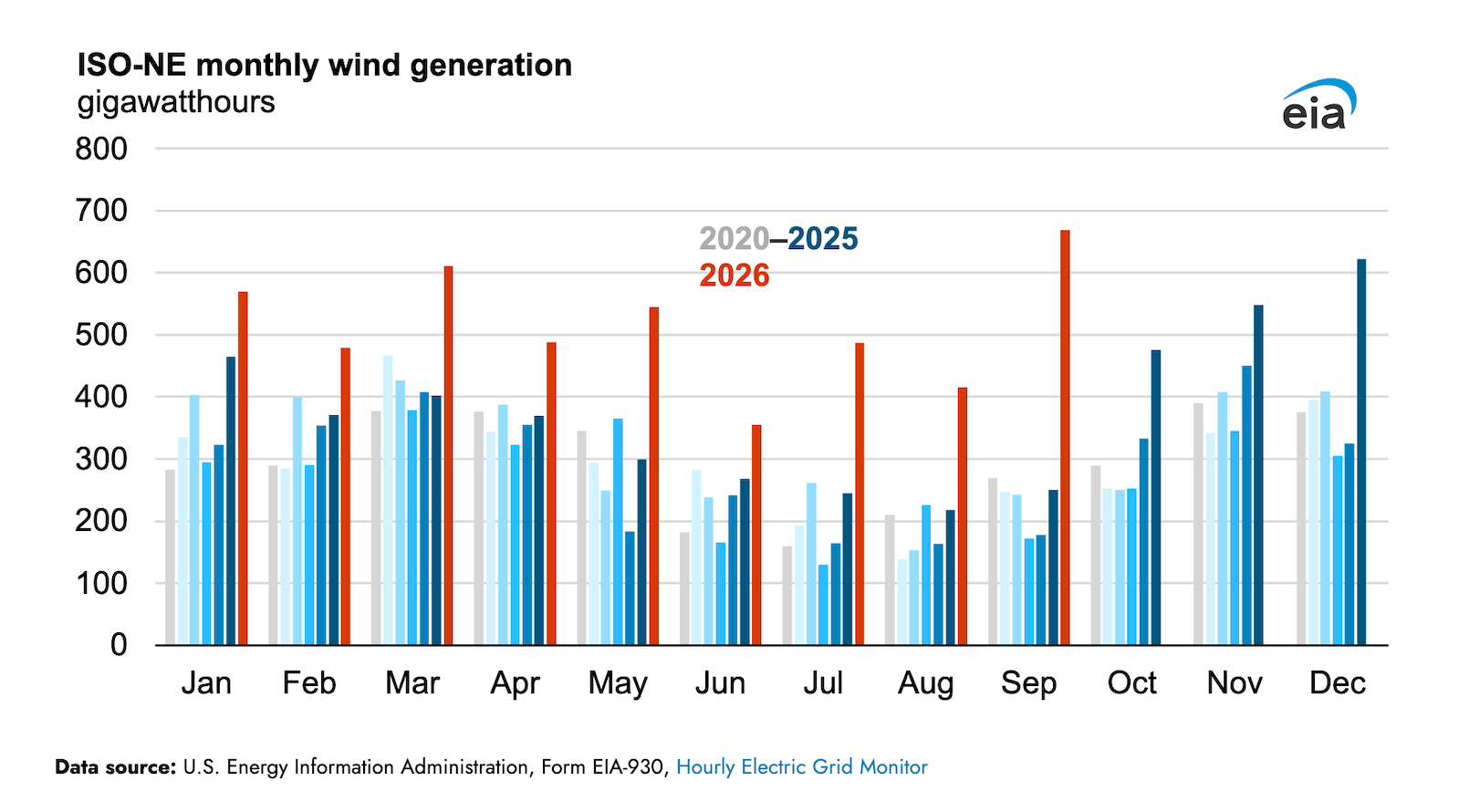
ISO New England reported a 68% increase in average monthly wind generation during the first nine months of 2026 compared to the same period in 2025. Wind generation peaked in September 2026 at 668.9 gigawatthours, more than double the September 2025 output.
The dramatic year-over-year growth reflects expanding wind capacity in the ISO-NE region, which covers most of New England. The region has added offshore and onshore wind projects that came online during 2025 and early 2026, contributing to the surge in renewable electricity generation.
September's record output of 668.9 GWh represents the highest monthly wind generation the region has recorded. This surge typically coincides with stronger fall wind patterns that increase turbine output across the region's wind fleet.
The sustained increase across the nine-month period indicates that wind generation now plays a larger role in ISO-NE's electricity supply mix. Higher renewable generation from wind reduces dependence on natural gas and other fossil fuel generation sources during peak production months.
The data underscores New England's progress toward meeting renewable energy targets. State-level renewable portfolio standards and regional decarbonization goals have driven investment in wind resources. These projects help displace carbon-intensive generation while providing cost-competitive electricity.
ISO-NE operates the wholesale electricity market and manages the electric grid across Connecticut, Maine, Massachusetts, New Hampshire, Rhode Island, and Vermont. Wind generation variability across months and seasons remains a characteristic of wind resources, but the year-over-year comparison demonstrates that installed capacity additions have lifted the baseline for renewable output. Growing wind generation supports grid decarbonization efforts across the six-state region.