# NSW Approves State's Largest Coalmine Expansion as Climate Crisis Accelerates
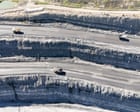
Australia's Independent Planning Commission has greenlit the Hunter Valley Operations coalmine extension, approving the largest coalmine project in New South Wales history. The decision clears the way for 19 additional years of coal extraction that will generate approximately 809 million tonnes of greenhouse gas emissions.
The project's approval arrives as global temperatures continue rising and extreme weather events intensify across Australia. The commission's published reasoning for the decision has drawn sharp criticism from environmental advocates who argue the approval represents a fundamental failure of governance systems to address the climate crisis.
The Hunter Valley Operations mine, located in the state's coal heartland, already ranks among Australia's largest coal producers. The extension approval signals no meaningful pivot away from fossil fuels in New South Wales, despite the state's commitments to renewable energy targets and net-zero emissions pledges.
Environmental commentator Georgina Woods characterizes the approval as a betrayal of Australians facing mounting climate impacts. She notes the disconnect between the commission's decision and the accelerating harms already attributable to global heating. The phrase "hostage statement" appears in her analysis of the planning commission's published rationale, suggesting the decision reflects coerced logic rather than genuine assessment of climate and community interests.
The timeline matters here. Australia's coal sector generates roughly 40 percent of the nation's electricity but accounts for a substantially larger share of its emissions. Every additional year of major coalmine operation locks in decades of carbon pollution. A 19-year extension commits the region to continued dependence on thermal coal exports at a moment when global energy markets are shifting toward renewables.
The Hunter Valley region has experienced firsthand the contradictions between coal economics and climate physics. Flooding, water scarcity, and agricultural disruption afflict communities in areas where large-scale coal extraction occurs. Yet the planning commission's approval suggests these local and global climate costs did not override the economic arguments presented for the mine's expansion.
New South Wales has jurisdiction over coal approvals within its borders but increasingly faces pressure from federal climate policy. The federal government has set 2030 emissions reduction targets, yet major new coal projects like this one work directly against those goals. This creates tension between state and federal authority that governance systems have yet to adequately resolve.
The decision raises questions about how planning commissions weigh climate impacts alongside economic factors. If a project's direct emissions (809 million tonnes) appear clearly quantified in assessments, the commission's approval suggests either those emissions received insufficient weight in deliberations or economic arguments prevailed despite their scale.
Woods frames the approval as evidence of governance failure rather than a minor setback. Her language reflects a broader concern among climate advocates that existing regulatory systems lack the mechanisms or political will to meaningfully constrain fossil fuel expansion, even as climate impacts intensify.
The Hunter Valley coalmine extension now proceeds toward construction and operation, assuming no successful legal challenges. Its approval reinforces Australia's continued reliance on coal revenue and export markets even as climate science demands rapid emissions reductions.