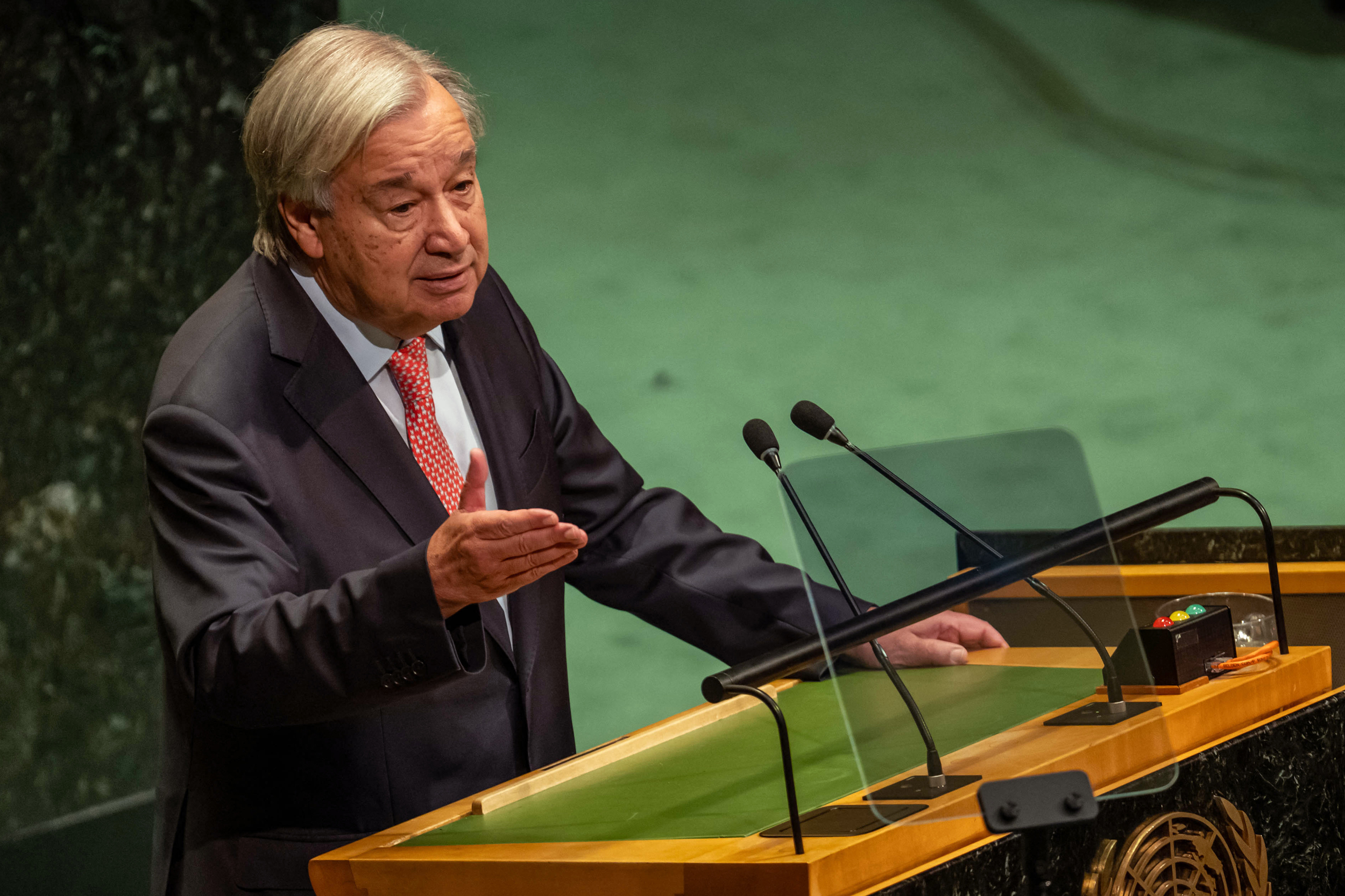
Secretary-General António Guterres told the United Nations General Assembly this week that the climate crisis has transitioned from a theoretical future threat to a present-day emergency. Speaking amid competing global crises, Guterres emphasized that the window for preventing the worst impacts of warming has contracted sharply.
The warning came during the annual assembly in New York, where heads of state gathered to address international concerns. Guterres framed climate change not as a distant problem but as an immediate challenge affecting nations today. His remarks reflected the latest scientific consensus. Global average temperatures have already risen approximately 1.1 degrees Celsius above pre-industrial levels, according to data from the World Meteorological Organization and Intergovernmental Panel on Climate Change assessments released over the past year.
The UN chief's speech underscored a persistent disconnect between the scale of climate impacts and their treatment as a secondary issue on the global political stage. While delegations discussed climate action, other crises dominated headlines and floor debates, including geopolitical tensions and regional conflicts. This gap between the urgency scientists document and the political attention the issue receives reflects a broader challenge in climate governance.
The IPCC's most recent synthesis report, released in March 2023, determined that every tenth of a degree of warming matters. At 1.5 degrees Celsius, the threshold specified in the Paris Agreement, climate impacts intensify dramatically. Extreme heat waves, severe droughts, and accelerated ice loss become locked in. Current national commitments place the world on a trajectory toward approximately 2.5 to 2.9 degrees of warming by 2100 if existing policies hold without strengthening.
Guterres has repeatedly emphasized this timeline in recent speeches. In 2023, he called for a "phase-out" of fossil fuels, language that moved beyond earlier UN positions favoring "phase-down." That shift reflected pressure from vulnerable nations, particularly small island states and least-developed countries experiencing climate impacts now, not in theoretical future scenarios.
The General Assembly speech signals frustration from UN leadership over the slow pace of emissions reductions. Global carbon dioxide emissions from fossil fuels reached 36.8 gigatons in 2023, up from 36.5 gigatons in 2022, according to data from the Global Carbon Project. Renewable energy deployment has accelerated, with wind and solar installations growing significantly, yet coal, oil, and natural gas continue to power the global economy.
Several nations used the assembly platform to call for stronger climate commitments ahead of the COP29 climate conference scheduled for Baku, Azerbaijan this November. Vulnerable island nations and African countries stressed that current pledges under the Paris Agreement fall far short of what science demands.
The challenge Guterres faces involves elevating climate action within a crowded foreign policy agenda where immediate security threats, humanitarian crises, and economic pressures compete for resources and political capital. His framing of the climate crisis as a present emergency, not a future one, represents an attempt to shift perception and urgency.