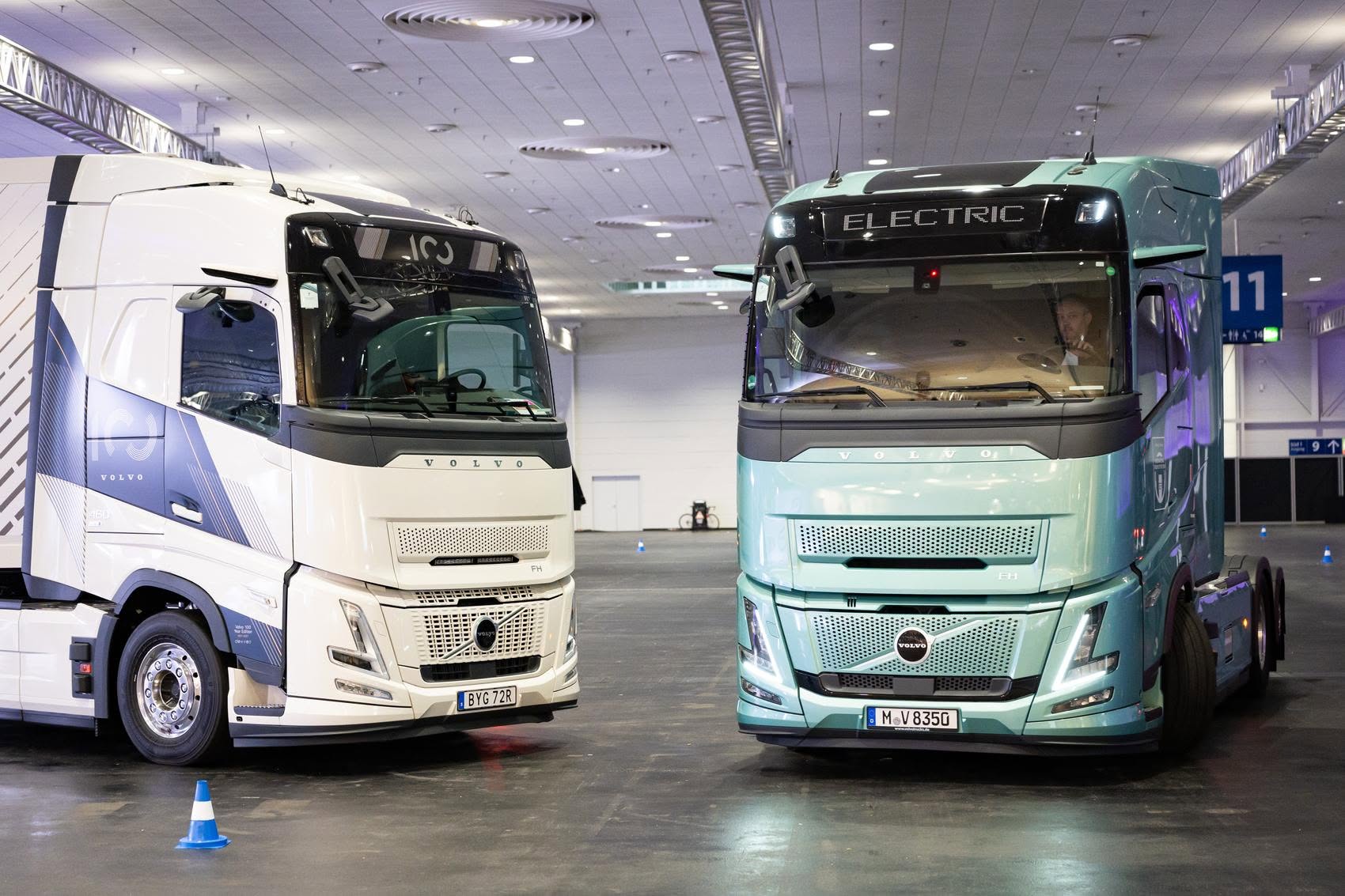
Volvo Trucks' new generation of heavy-duty electric vehicles has won the International Truck of the Year 2027 award, marking the Swedish manufacturer's eighth victory in the category. The recognition places battery-electric heavy trucks in the spotlight at IAA Transportation 2026, the major European commercial vehicle industry showcase held in Hanover, Germany.
The award signals accelerating momentum in the electrification of long-haul trucking, a sector responsible for roughly 27 percent of global transport emissions according to the International Energy Agency. Heavy-duty trucks account for approximately 6 percent of all direct CO2 emissions globally, making their transition from diesel to electric power essential to meeting climate commitments under the Paris Agreement.
Volvo's electric truck platform directly addresses regulatory pressures mounting across Europe and North America. The EU's Euro 7 standards, effective from 2035, will prohibit new fossil fuel-powered heavy vehicles in member states. The U.S. Environmental Protection Agency mandated that 35 percent of heavy-duty truck sales become zero-emission by 2030, rising to 100 percent by 2040. These regulations force manufacturers to abandon internal combustion engines on a defined timeline.
The International Truck of the Year award, administered by a jury of independent automotive journalists, evaluates vehicles on innovation, efficiency, design, safety, and environmental impact. Volvo's previous wins in 2005, 2009, 2013, 2016, 2019, 2021, and 2023 demonstrate the company's sustained investment in electrification. The 2027 award recognizes the maturation of Volvo's battery-electric platform for long-haul operations, addressing the primary barrier facing fleet operators: range anxiety and total cost of ownership.
Volvo's electric trucks use lithium-ion battery systems paired with electric drivetrains. The company has not yet disclosed specific energy density, range figures, or charging infrastructure partnerships in the available excerpts, but European electric truck manufacturers typically target 300-400 kilometer ranges with 30-minute rapid charging capability. Fleet operators require these specifications to maintain existing operational schedules without significant downtime.
The IAA Transportation 2026 presentation matters because the show convenes purchasing managers from Europe's largest logistics firms. Daimler, Scania, and MAN compete directly with Volvo in this market. Awards generate purchasing momentum. Fleet operators monitor these recognitions when evaluating capital investments in vehicle replacement cycles lasting 8-12 years.
Volvo's eighth International Truck of the Year win also reflects broader industry transition. Battery manufacturing capacity across Europe has expanded by 540 percent since 2020, according to the European Battery Innovation Network. Supply chain stability for lithium, cobalt, and nickel has improved through long-term contracts with mining operations in Australia, the Democratic Republic of Congo, and Indonesia.
The Swedish manufacturer faces competition from established players and new entrants. Tesla Semis have entered limited North American service. Chinese manufacturers including BYD and FAW have deployed electric trucks across Asia. Volvo's consistent award recognition positions it as a technology leader in a sector where fleet operators make decisions based on proven reliability and total cost of ownership rather than brand loyalty alone.
The award underscores that electric heavy-duty trucks have transitioned from experimental pilots to production-ready platforms. Regulatory mandates, charging infrastructure development, and battery cost reduction create conditions where operators can justify capital spending on electric fleet conversion without subsidies.