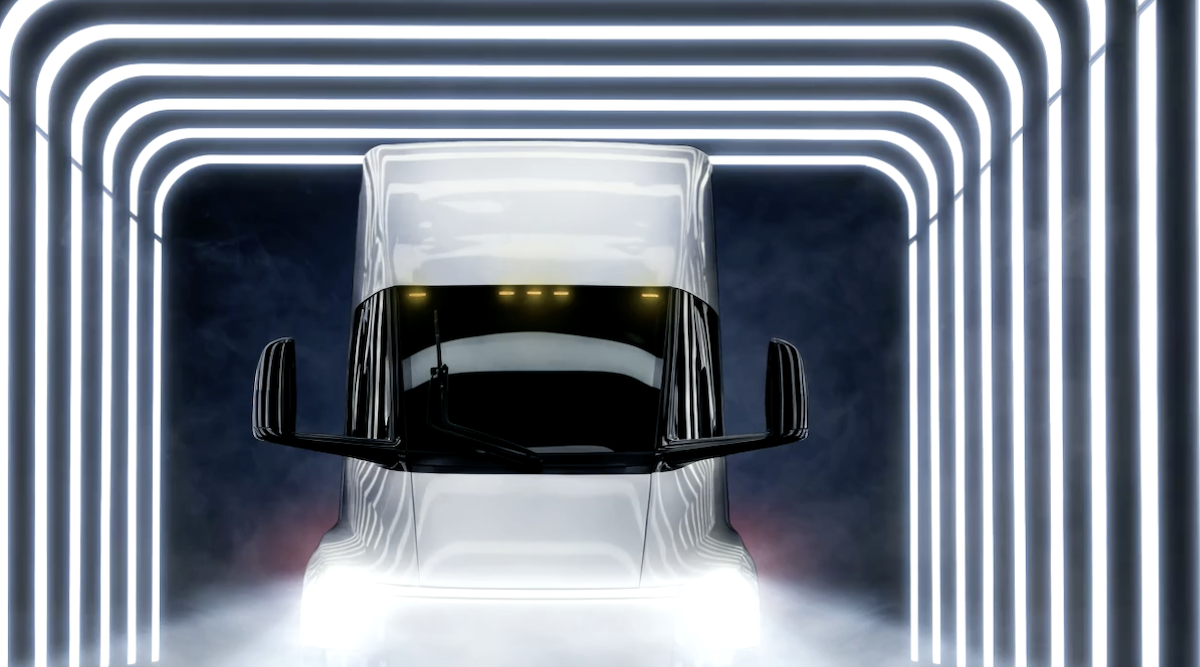
Tesla opened its dedicated Semi manufacturing facility in Nevada last week without CEO Elon Musk present, marking an unusual absence from a major product launch that underscores the company's shifting operational priorities.
The facility represents Tesla's formal commitment to Class 8 truck production, a segment dominated by diesel-powered vehicles responsible for roughly 5 percent of U.S. transportation emissions despite representing a fraction of total vehicles on roads. The Semi's electric powertrain targets this high-emission category directly. Class 8 trucks consume approximately 6 gallons of diesel per 1,000 ton-miles, according to the American Trucking Associations. Tesla's battery-electric alternative could eliminate those emissions entirely at scale.
Musk's absence signals competing demands on his time across his sprawling corporate portfolio. Tesla, SpaceX, The Boring Company, Neuralink, and X (formerly Twitter) occupy his attention. Recent reports link his no-show to documentary filming, legal matters, and a White House dinner, though Tesla did not provide an official explanation.
The Semi launch carries tangible business stakes. Early orders from PepsiCo, Walmart, and J.B. Hunt Transport Services demonstrate fleet operator interest in electrifying medium and long-haul trucking. These buyers face mounting pressure from environmental regulations and customer demands for lower-carbon supply chains. California's Advanced Clean Trucks regulation requires manufacturers to sell increasing percentages of zero-emission Class 8 vehicles annually starting in 2027, reaching 55 percent by 2035.
Competitors note the urgency. Volvo Trucks, Daimler Truck, and Paccar have launched or accelerated their own battery-electric Class 8 programs. Nikola Motors, despite its legal and operational struggles, still commands significant preorders. The market window for establishing early dominance in electric truck manufacturing remains open but narrows yearly.
Tesla's Nevada facility production capacity figures remain undisclosed, but industry analysts estimate initial annual production at 50,000 to 100,000 units. That output would position the Semi to capture meaningful market share in a U.S. Class 8 truck market that sold approximately 280,000 vehicles in 2023, according to the American Trucking Associations.
The Semi's economics hinge on battery costs and charging infrastructure deployment. Tesla operates its own Supercharger network with over 50,000 individual chargers globally, though Class 8 truck charging requires different specifications than passenger vehicle infrastructure. Depot charging overnight represents the most viable near-term solution for fleet operators running predictable regional routes.
Range specifications matter operationally. The Semi's claimed 500-mile range per charge addresses regional haul operations but requires proven real-world performance under loaded conditions and variable weather. Diesel competitors cover 600 to 700 miles per tank, setting the competitive baseline.
The launch proceeded without Musk, with other Tesla executives managing the event. This delegation approach reflects operational maturation at Tesla, where product launches now occur with distributed leadership rather than concentrated around the CEO's personal appearance.
The Nevada facility launch demonstrates the Semi program's concrete progress despite Musk's competing commitments. Production ramp timelines and real-world performance data will determine whether the Semi achieves the fleet adoption necessary to meaningfully reduce heavy-duty transportation emissions in the next decade.