# Community Learns to Live With Aggressive Plovers Protecting Their Young
Spur-winged plovers have earned a reputation as community menaces. Pedestrians curse them when they swoop. Cyclists dismount and walk. Parks officials receive complaints. Yet one Australian community discovered that tolerance and understanding transformed these aggressive birds from nuisance into neighbors worth protecting.
The conflict centers on behavior that appears violent but serves a purpose. Plovers nest in exposed, vulnerable locations: parking lots, sports fields, grassy medians. When chicks hatch, parent birds launch aerial attacks on anything that approaches. They dive at heads, clip ears, and strike with physical force. The aggression peaks during the first weeks of chick development, when young birds lack camouflage or mobility.
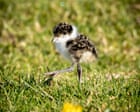
Spur-winged plovers, also called masked lapwings in some regions, are ground nesters. Their chicks hatch precocial, meaning they leave the nest within hours of hatching and begin foraging independently. In the September case documented here, two chicks emerged from speckled brown eggs and immediately began running on elongated legs across open ground. Their fluffy brown and white plumage made them vulnerable to predators and, in human-dominated landscapes, to accidental trampling.
This breeding biology creates an ecological trap in developed areas. Plovers evolved to nest on open ground in natural systems where predators and human presence were rare. Urban and suburban environments replicate this open-ground habitat but introduce dense human foot traffic. Birds cannot distinguish between genuine threats and people passing through.
The author's account reveals how perspective shifts behavior. Instead of viewing the swoops as unprovoked aggression, community members began understanding them as parental desperation. Chicks represent enormous investment for birds that typically raise one or two broods per year. Losing chicks to predation or trampling eliminates months of energy expenditure.
Educational outreach proved effective. When residents learned that swooping plovers were protecting vulnerable young, not attacking randomly, hostility decreased. Some community members began voluntarily avoiding nesting areas during vulnerable periods. Others advocated for temporary closures of parks or paths where active nests existed.
This shift holds wider environmental lessons. Many wildlife conflicts stem not from animal behavior but from human expectations. Plovers did not change. Their protective instincts remain unchanged for millions of years. What changed was human interpretation and response. Recognition that the birds occupied these spaces first, that their desperation was legitimate, created space for coexistence.
The timing matters too. Early September represents peak breeding season for spur-winged plovers in Australia. Understanding seasonal vulnerability allows communities to implement temporary accommodations rather than permanent removal strategies. Some jurisdictions now mark plover nesting areas during this period, educate pedestrians about timing, and monitor chick survival rates.
Wildlife management increasingly recognizes that urban coexistence requires reciprocal adjustment. Cities expand into bird habitat. Birds adapt to cities by nesting in available open spaces. Humans must then adapt to their presence. That adaptation works best when based on biological literacy rather than frustration.
The community's shift from swearing at plovers to admiring them represents a practical solution to human-wildlife conflict. Rather than poisoning, trapping, or harassment, communities that invested time in understanding plover behavior found ways to protect chicks while minimizing disruption. The plovers continued their ancient behavior. The humans learned new skills: patience, timing, and ecological awareness.