# A Century of Sand Debt Comes Due in Malibu
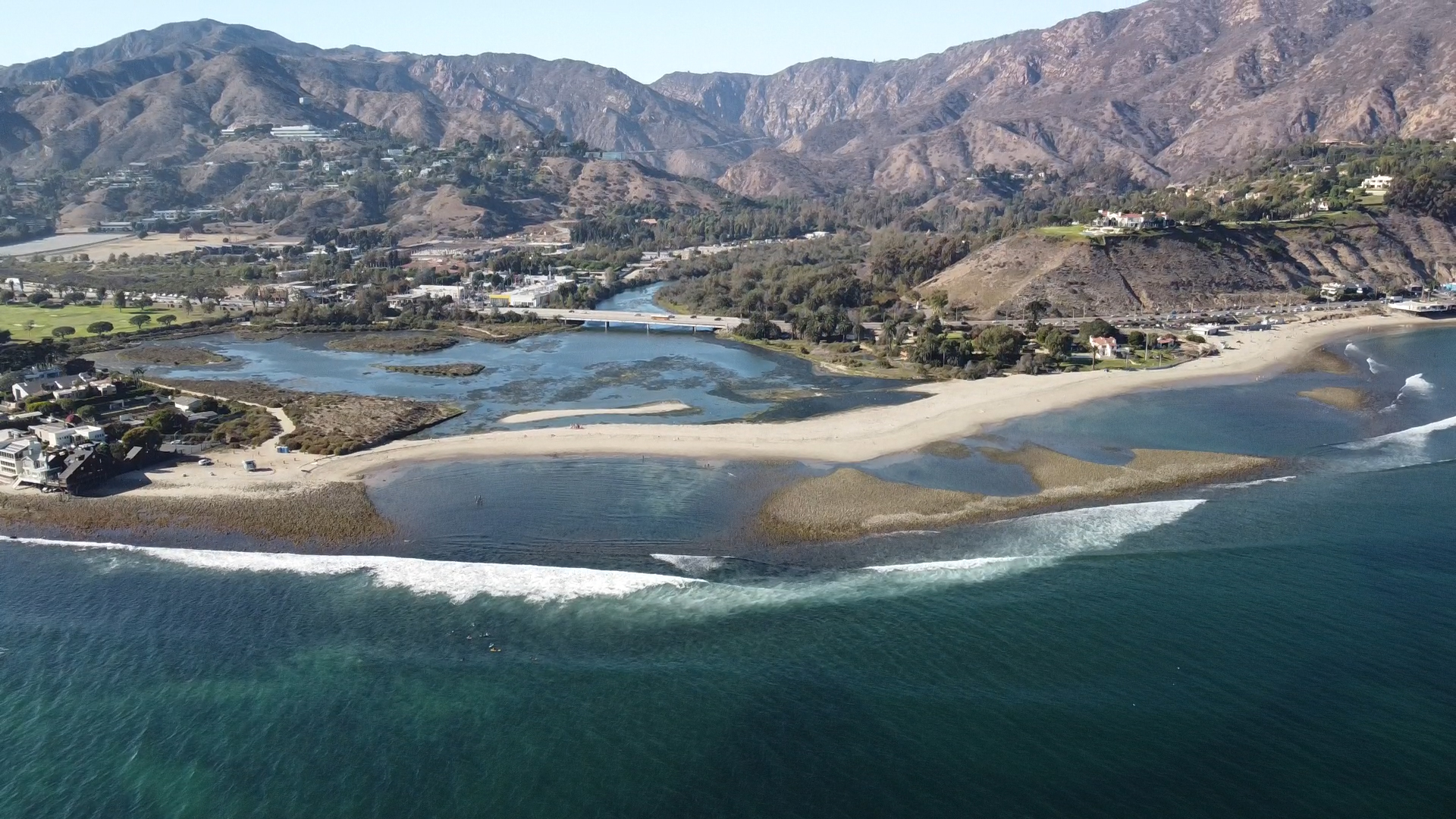
Malibu's legendary Surfrider Beach is vanishing. The iconic break that has drawn surfers for generations depends on sediment transported by Malibu Creek, a system that has been systematically starved of sand for over a century. Now that debt is coming due.
The problem traces to early 1900s dam construction. Engineers built Rindge Dam across Malibu Creek in 1912 to supply water to the valley. The structure trapped sediment upstream, halting the natural flow of sand and gravel that had replenished the beach for millennia. More recently, additional development and flood-control infrastructure further fragmented the creek system, cutting off the beach's primary sand supply.
The creek once transported thousands of tons of sediment annually to Surfrider Beach. Today that flow is nearly zero. The result is accelerating erosion. Beach surveys show Malibu has lost measurable sand width over recent decades, threatening not just surf breaks but also coastal property, infrastructure, and the marine ecosystem that depends on nearshore sediment dynamics.
This pattern repeats across California. The state's extensive dam network provides flood control and water supply but creates what geomorphologists call "sediment starvation." Beaches downstream of dams erode faster because they lose the natural replenishment mechanism evolution created over millions of years. Southern California's coast has lost an estimated 25 percent of its sandy beaches since the early 1900s, a loss directly linked to dam construction and coastal development.
Addressing Surfrider's erosion requires reckoning with Rindge Dam. The Los Angeles County Department of Public Works and state water agencies have begun studying sediment management options. One approach involves "sediment bypassing," where material trapped behind dams is mechanically moved downstream to recreate natural flows. Another requires dam removal, an option California has pursued with increasing frequency as reservoir capacity fills with sediment and maintenance costs climb.
Surfrider Beach holds cultural weight beyond surfing. The Chumash people, who inhabited this coast before Spanish colonization, understood creek systems as interconnected ecosystems. The Surfrider Foundation, founded in 1984, has used this beach as a rallying point for coastal protection policy nationwide. Its loss would represent both ecological and cultural erosion.
The environmental stakes extend beyond recreation. Eroding beaches lose habitat for plovers, least terns, and other species dependent on nearshore sediment. Reduced sediment flow degrades water quality and alters underwater topography that supports fish populations. Coastal property owners increasingly demand hard engineering solutions like seawalls, which accelerate erosion in adjacent areas and destroy remaining natural beach habitat.
California's water infrastructure was designed for a different era. The state must choose between defending sediment-starved beaches with expensive artificial replenishment programs or restoring natural sediment flows by fundamentally rethinking dam management. Sediment bypassing at Rindge could cost millions annually, yet dam removal carries its own economic and hydrological complications.
The Surfrider case illustrates a broader climate adaptation challenge. As coastal erosion accelerates under rising seas and intensifying storms, maintaining beaches requires either continuous artificial intervention or restoring the ecological processes that built them. For Malibu, that means confronting a century-old infrastructure decision that traded long-term coastal stability for short-term water supply security.