# Foreign Fishing Fleets Strip West Africa of Critical Nutrients
Industrial fishing vessels from wealthy nations are systematically depleting fish stocks off West Africa, depriving millions of people of essential micronutrients they cannot easily replace through other food sources.
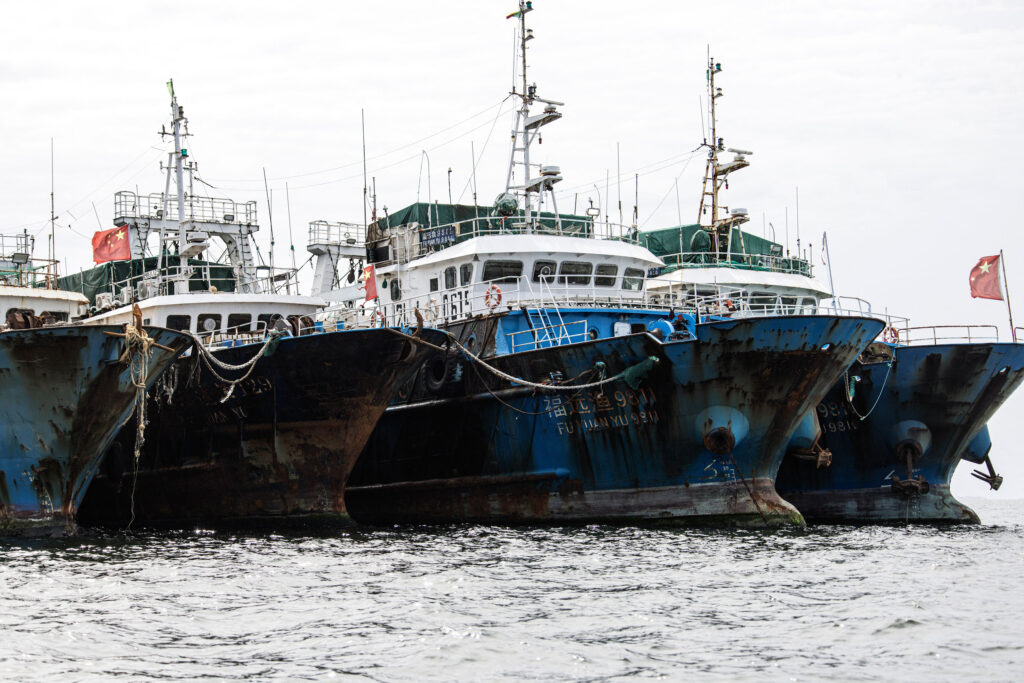
Bottom trawlers flagged to foreign nations catch fish in West African waters at scales that undermine local food security and nutrition. These vessels remove species that provide irreplaceable sources of iron, zinc, vitamin B12, and selenium for populations across the region. The catch goes overwhelmingly to export markets rather than local consumption, leaving coastal communities with depleted stocks and limited protein options.
West Africa contains some of the world's most productive fishing grounds. The Humboldt Current off Peru, the waters off Mauritania, and coastal zones from Senegal to Angola support fish populations that feed hundreds of millions of people across Africa and beyond. Yet foreign industrial fleets with advanced sonar, refrigeration, and processing capacity dominate these waters.
Bottom trawlers drag weighted nets across the seafloor, destroying benthic habitat and catching fish faster than populations can reproduce. A single large trawler can land more fish in a day than artisanal fishermen catch in weeks. Foreign vessels often operate under flags of convenience, registered to nations with minimal oversight. Weak enforcement of fishing agreements allows them to exceed quotas or fish in restricted zones with minimal penalty.
The nutrition impact cuts deeper than calorie loss. Fish provides concentrated micronutrients that staple crops cannot match. A 150-gram serving of oily fish delivers more than half the daily requirement for vitamin B12 and significant zinc. For children under five and pregnant women in low-income countries, fish is often the most accessible source of these nutrients. When stocks collapse, malnutrition rates rise.
Research from the University of British Columbia and other institutions has documented this dynamic across Southeast Asia and the Pacific, where foreign fleets reduced local fish availability while exporting the catch. Similar patterns now accelerate in West Africa, where economic growth and population increases have raised domestic fish demand precisely as foreign industrial capacity increases.
West African governments struggle to monitor their exclusive economic zones. Mauritania, which controls some of the world's richest waters, licenses foreign vessels to generate government revenue. Ghana and Senegal face similar fiscal pressures. Licensing fees rarely match the value extracted. Illegal, unreported, and unregulated fishing adds another layer of depletion beyond official catches.
Regional agreements attempt to manage shared stocks. The Nairobi Convention covers East Africa. The Abidjan Convention addresses West and Central Africa. Implementation remains patchy. Vessels change flags, operate under shell companies, or simply leave AIS tracking systems off in contested waters.
The World Bank estimates that illegal fishing costs developing nations $23 billion annually in lost economic value. Nutrition costs dwarf economic metrics. When children lose access to micronutrient-rich fish, developmental delays compound across years. Cognitive deficits from zinc or iron deficiency persist into adulthood.
Solutions require coordination on enforcement, stock assessments, and equitable access frameworks. They also require wealthy nations to reduce industrial fishing subsidies that make bottom trawling profitable in the first place. Without intervention, West Africa's fishing communities face a choice between poverty and malnutrition.