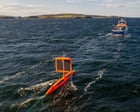
An uncrewed solar and wind-powered vessel has launched a 22,000-kilometre circumnavigation of Antarctica to collect data on how Southern Ocean waters absorb carbon dioxide, Australian scientists announced.
The seven-metre craft, operated by the University of Tasmania's Antarctic Climate and Ecosystems Cooperative Research Centre, departed for a journey expected to last several months through some of Earth's most treacherous waters. The vessel collects oceanographic measurements continuously as it travels, eliminating the need for crewed research ships and their associated logistical costs and emissions.
The mission addresses a specific gap in climate science. The Southern Ocean absorbs roughly 40 percent of the carbon dioxide that humans have added to the atmosphere since industrialization began, according to research from the CSIRO and partner institutions. Yet this region remains poorly understood. Water temperatures, salinity levels, and carbon cycling patterns fluctuate dramatically around Antarctica, and traditional research methods cannot capture data at the frequency and spatial resolution needed to model these processes accurately.
The autonomous vehicle carries sensors that measure dissolved inorganic carbon, oxygen levels, temperature, and salinity. This data feeds directly to researchers in Tasmania, allowing near-real-time monitoring of ocean chemistry across the Antarctic Circumpolar Current, the world's largest ocean current system. Scientists use these measurements to validate satellite observations and improve climate models that predict how oceans will respond to future warming.
The mission represents a shift in Antarctic research methodology. Crewed research voyages to Antarctic waters require enormous resources, typically cost hundreds of thousands of dollars, and concentrate observations into specific seasons and locations. Autonomous vessels operate continuously across the full Antarctic Circle, capturing seasonal variations and long-term trends that ship-based surveys miss.
The CSIRO and University of Tasmania researchers expect the mission to improve understanding of ocean acidification, a process where increased atmospheric CO2 dissolves into seawater and lowers pH levels. This acidification threatens marine ecosystems from plankton to fish stocks, particularly in the Southern Ocean where productivity supports global fisheries and food webs. More accurate baseline measurements allow scientists to track how quickly these changes accelerate.
The vessel's seven-metre length and lightweight construction enable it to navigate ice-choked waters that larger research ships cannot safely enter. Its solar panels and wind turbines provide sufficient power for onboard sensors and communication systems without requiring fuel resupply missions, reducing the overall carbon footprint of the research operation itself.
Antarctic research has intensified as climate scientists race to understand how polar regions amplify global warming signals. The Southern Ocean releases less CO2 than it absorbs, making it a carbon sink, but climate models suggest this capacity may weaken as ocean temperature and stratification change. Some research indicates the ocean's CO2 uptake has already slowed in recent decades.
The autonomous mission joins a growing fleet of uncrewed research platforms deployed globally to monitor ocean conditions. Similar vessels operated by international partners collect data in Arctic waters, the North Atlantic, and tropical oceans. These platforms allow research institutions to maintain continuous observational networks without the operational burden of maintaining research vessel fleets.
Scientists expect to retrieve the vessel after it completes its Antarctic circuit and returns to port. The data collected will feed into updated climate projections from the Intergovernmental Panel on Climate Change and inform policy decisions about carbon emissions reductions needed to limit Southern Ocean warming.