# Oyster Restoration Revives Cape Cod's Water Quality Through Shellfish Farming
Oyster consumption has emerged as a direct environmental intervention in East Falmouth, Massachusetts, where commercial and recreational harvesting now serves dual purposes: economic production and coastal water restoration.
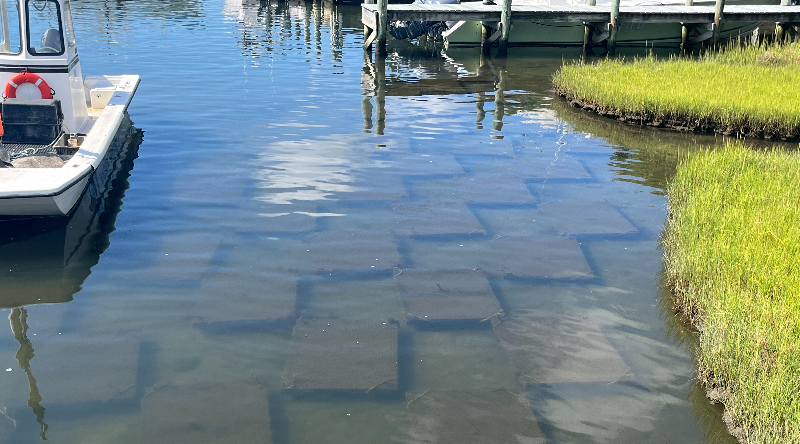
The East Falmouth harbor demonstrates how oyster farming addresses nitrogen pollution that degrades coastal ecosystems. Excess nitrogen from septic systems, agricultural runoff, and stormwater creates dead zones where aquatic life cannot survive. Oysters filter-feed on plankton and suspended particles, removing nitrogen from the water column in the process. A single oyster filters between 10 to 50 gallons of water daily, according to research from the Cooley Lab at MIT. This biological filtration rebuilds water clarity and oxygen levels essential for fish, crustaceans, and seagrass beds.
Massachusetts coastal waters face persistent nitrogen loading that has degraded habitat for decades. Cape Cod's residential density and aging septic infrastructure compound the problem. Traditional wastewater treatment plants handle only a fraction of homes. The state's Department of Environmental Protection has identified numerous impaired estuaries where nitrogen concentrations exceed safe thresholds. East Falmouth harbor sits among these degraded systems, making oyster restoration economically rational alongside conventional remediation.
The economics align consumer demand with ecological recovery. Oyster farmers in the region harvest shellfish that have spent months filtering harbor water. Diners purchasing these oysters directly purchase cleaner water. Restaurants sourcing locally marketed oysters as "harbor-cleaned" products create market incentives for expanded farming operations. This model transfers restoration costs from public budgets to commercial operations that profit from improved conditions.
Commercial oyster operations in East Falmouth have expanded from limited production five years ago to multiple farms now managing thousands of bags annually. Each farm occupies leased harbor bottom land and requires permits from the Massachusetts Department of Marine Fisheries. The farms employ local workers for seed collection, cage maintenance, and harvest operations. Revenue generated supports year-round employment in a region historically dependent on seasonal tourism.
Restoration outcomes remain measurable. Water quality monitoring conducted by Cape Cod Cooperative Extension documents nitrogen concentration reductions correlating with oyster biomass increases. Dissolved oxygen levels have risen in specific zones where oyster density reached critical thresholds. Eelgrass coverage, an indicator species for coastal health, has returned to areas previously dominated by algae blooms.
The approach addresses pollution at the source rather than through end-of-pipe treatment. Upgrading septic systems remains expensive and politically contentious. Constructed wetlands require significant land area unavailable in developed coastal neighborhoods. Oyster farming operates within existing commercial and environmental frameworks without demanding property acquisition or infrastructure overhauls. The strategy complements rather than replaces conventional wastewater management.
Challenges remain. Oyster farming does not eliminate nitrogen inputs entirely. Disease outbreaks, fluctuating water temperatures, and predation threaten harvests. Markets for local oysters remain limited outside affluent coastal communities. Scaling this model across Massachusetts impaired estuaries requires expanded production capacity, farmer training, and consumer education.
Yet the East Falmouth example proves oyster restoration generates dual returns. Environmental recovery proceeds while commercial harvesters achieve profitability. This alignment of economic incentives with ecological restoration offers a replicable template for other nitrogen-impaired coastal systems seeking nature-based solutions to pollution.