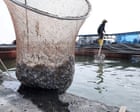
The United Nations' plan to massively expand fish farming threatens to create a wasteful cycle where nearly half of wild fish catches feed farmed fish rather than people, according to new analysis. The FAO targets a 75 percent increase in aquaculture production by 2040, but marine scientists and development experts warn this strategy will strain wild fish stocks, damage coastal ecosystems, and undermine food security for vulnerable populations.
The core problem is feed conversion. Industrial aquaculture relies heavily on fish meal and fish oil derived from wild-caught species. These inputs come primarily from forage fish like anchovies, sardines, and herring. If aquaculture expands as planned without changing feed sources, the FAO's own projections suggest nearly 50 percent of global wild fish landings will be ground into pellets for farmed operations. This creates a perverse outcome: depleting wild fisheries to sustain farmed production.
The FAO frames aquaculture expansion as a solution to global protein demands and overfishing. The organization projects that by 2040, farmed fish will comprise 55 percent of global seafood supply, compared to roughly 50 percent today. Population growth, particularly in Asia and Africa, drives this calculation. The FAO argues that farming fish reduces pressure on wild stocks and increases yields per unit of water.
But the math fails when examined closely. Forage fish support critical food chains and provide affordable protein to hundreds of millions of people in developing nations. West African countries, Southeast Asian nations, and Pacific island communities depend on catches of small pelagic species for nutritional security and economic survival. Redirecting these species into aquaculture feed diverts protein from human consumption to factory farms, many operated by multinational corporations.
Ecosystem impacts compound the concern. Wild fish populations that feed farmed fish face intensified harvesting pressure. Small pelagics already face overfishing in several regions. Their depletion cascades through marine food webs, affecting seabirds, marine mammals, and larger commercial fish species. Coastal ecosystems in Africa and Asia, which depend on stable forage fish populations, face destabilization.
Fish farming itself generates pollution. Concentrated operations release excess nutrients, antibiotics, and farmed fish escapees into surrounding waters. Escaped farmed salmon have hybridized with wild Atlantic salmon populations. Nitrogen and phosphorus from fish waste create dead zones in coastal areas. These externalities remain largely unpriced in aquaculture economics.
The FAO acknowledges these challenges in its expansion framework but proposes solutions that remain partial. Switching farmed species to algae-based and plant-based feeds could reduce wild fish dependency, but scaling these alternatives requires investment and technological development that remains uncertain. The organization encourages improved feed efficiency and reduced stocking densities, yet provides no enforcement mechanisms.
Developing nations with limited regulatory capacity face particular pressure. Chinese aquaculture companies and other large operators expand operations in countries with weak environmental oversight. Local communities often lack consultation in these decisions, despite dependence on adjacent fisheries.
Alternative pathways exist. Restoring wild fish populations through marine protection and ending industrial overfishing would provide more sustainable protein than farming. Supporting small-scale, community-based fisheries maintains local control and food sovereignty. Investing in plant-based protein infrastructure addresses global protein needs without marine ecosystem disruption.
The FAO plan proceeds on the assumption that aquaculture expansion solves food security. The evidence suggests it merely transfers overfishing to a new domain.