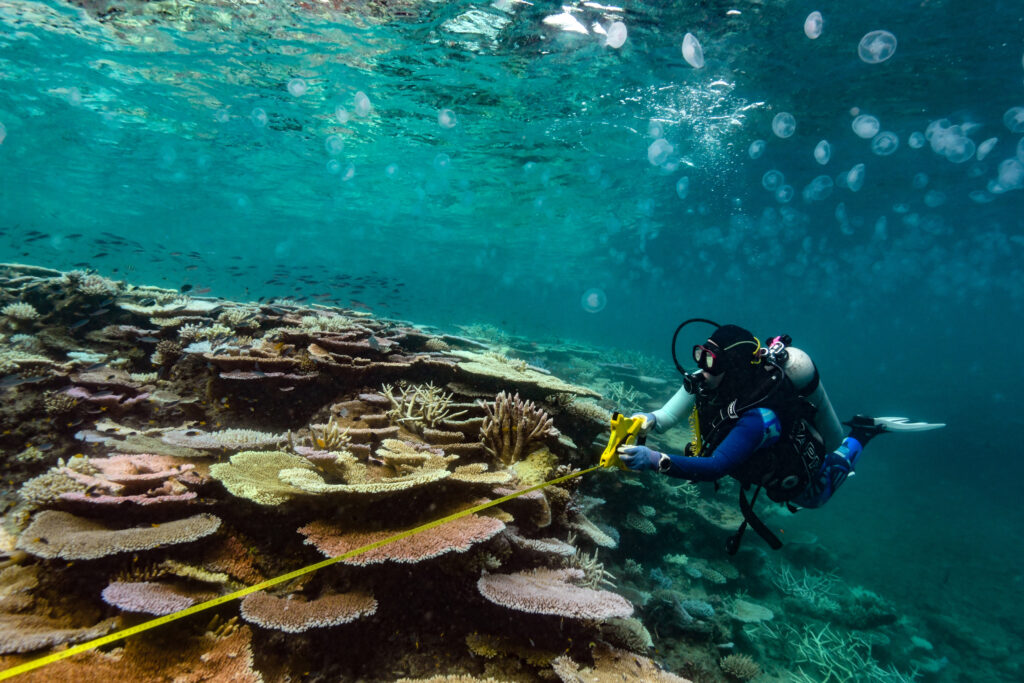
# Coral Reefs Can Recover But Relentless Marine Heat Waves Won't Let Them
The 1998 global coral bleaching event demonstrated that reefs possess genuine recovery capacity. When ocean temperatures spiked that year, corals worldwide expelled their symbiotic zooxanthellae, the microalgae that provide nutrition and pigmentation. More than 20 percent of Earth's reef systems turned white. Yet many reefs did bounce back over subsequent years, proving they could survive acute thermal stress if given time.
That recovery window is closing. New research confirms what marine biologists have observed in the field: the interval between successive marine heat waves has shrunk below what most coral species need to regenerate.
The mechanism of coral bleaching involves temperature stress above a coral's thermal tolerance threshold. When water temperatures rise beyond critical levels, corals expel their zooxanthellae as a survival response. While corals can regain these algae if temperatures drop quickly, the process requires months to years. Repeated bleaching events before full recovery wipes out accumulated reserves and weakens immune function. Cumulative stress from multiple bleaching episodes within a decade now threatens reefs that once appeared resilient.
Ocean temperatures have risen approximately 1.1 degrees Celsius since pre-industrial times. The warming rate in tropical waters where most coral reefs exist has accelerated sharply. The National Oceanic and Atmospheric Administration tracks thermal stress using accumulated heat measurements called Degree Heating Weeks. Thresholds of 4 Degree Heating Weeks typically trigger mass bleaching. In 2016 and 2023, global bleaching events struck with unprecedented intensity.
The 2023 event proved particularly severe. Satellite data showed bleaching across the Caribbean, Indo-Pacific, and Red Sea simultaneously. Australia's Great Barrier Reef, already damaged by five major bleaching episodes since 1998, faced another mass event. Recovery timelines that once spanned five to ten years now compress to two to three years between successive bleaching waves. Many reef systems experience repeated bleaching before zooxanthellae populations stabilize.
Adaptation limits exist. While some coral species show modest thermal tolerance increases across generations, these shifts occur over decades. Ocean warming unfolds across years. The mismatch between evolutionary timescales and climate change velocity leaves most reef ecosystems unable to adapt rapidly enough.
The economic stakes are substantial. Coral reefs support fisheries that feed 500 million people. Reef-dependent tourism generates $36 billion annually. Coastal protection services from reef structures benefit hundreds of millions. The World Wildlife Fund estimates 25 percent of reef-dependent fish species face extinction within this century if warming continues unchecked.
Mitigation pathways exist. Limiting warming to 1.5 degrees Celsius above pre-industrial levels could preserve 10 to 30 percent of remaining reefs. Every tenth of a degree matters. At 2 degrees warming, viable reef habitat contracts to near zero.
Local interventions cannot substitute for global emissions reductions. Marine protected areas and fishing restrictions help reef resilience marginally. Coral restoration programs propagate heat-resistant strains in nurseries. These efforts matter regionally but cannot counteract the relentless thermal pressure from rising atmospheric CO2. Reefs can recover. They simply will not get the chance without rapid decarbonization globally.