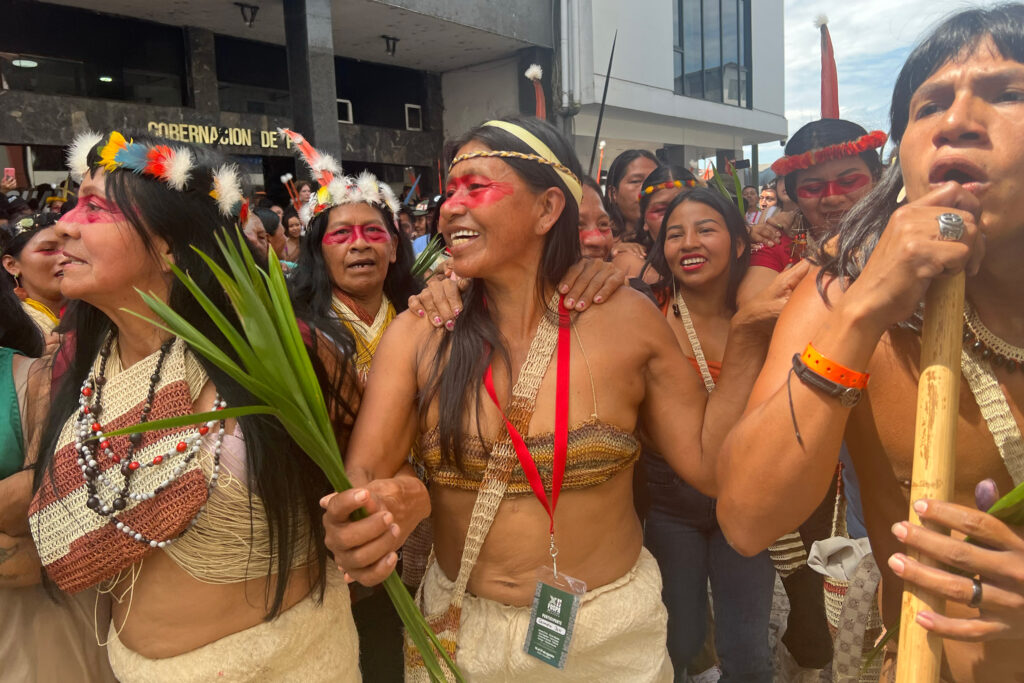
Indigenous organizations across the Amazon basin have convened in Puyo, Ecuador for the 12th Pan-Amazonian Social Forum (FOSPA), declaring a state of emergency in response to accelerating extraction threats. The gathering represents a departure from conventional environmental advocacy. Rather than lobbying government delegates at official conferences, these groups organized independently to set their own agenda and amplify grassroots resistance.
FOSPA brought together Indigenous leaders, Afro-descendant communities, women, youth activists and environmental defenders from multiple nations. Their focus centers on concrete threats: oil wells, mining operations, deforestation, and infrastructure projects that fragment territories and disrupt ecosystems. The forum's structure reflects a strategic choice. Communities most affected by extraction have historically been excluded from high-level policy discussions dominated by national governments and international bodies. By organizing their own conference, participants shifted power dynamics and ensured their concerns moved from the margins to the center.
The Amazon basin spans nine nations and contains roughly 10 percent of Earth's forests. It stores an estimated 150 to 200 billion tons of carbon and generates roughly 20 percent of the planet's oxygen. Scientists warn the region approaches an ecological tipping point. Deforestation rates, driven by cattle ranching, soy cultivation, illegal logging, and resource extraction, have accelerated across Brazil, Peru, Bolivia, and Ecuador. In 2023, Amazon deforestation reached the highest level in 15 years, with over 11,000 square kilometers cleared.
Ecuador faces particular pressure from oil interests. The country depends on petroleum revenues, generating roughly 30 percent of government income from crude exports. This economic reliance has enabled companies to expand operations in Amazonian territories, often against Indigenous opposition. The Waorani, Kichwa, Shuar and other groups have documented health impacts from oil contamination, including elevated cancer rates and waterway pollution. Similar patterns repeat across the basin.
FOSPA's declaration of emergency signals that Indigenous organizations view the situation as critical and demand immediate action. The forum typically produces joint statements and commitments, though enforcement depends on national governments and international pressure. Previous FOSPA gatherings have generated important statements on territorial rights, climate justice, and resource sovereignty, yet implementation has remained inconsistent.
The forum's timing matters. Global climate negotiations continue in international forums, and carbon markets increasingly target forest protection. Indigenous groups have long argued that their territories hold carbon and biodiversity value that must translate into direct payments and resource control. Brazil's government announced a "zero deforestation" commitment. Bolivia increased protected area status for forest regions. Yet these pledges coexist with contradictory policies that permit extraction and land conversion. Ecuador's president has faced conflict with Indigenous groups over oil expansion plans.
FOSPA represents a fundamental assertion: communities living in and protecting the Amazon possess knowledge and rights that must shape decisions about their homelands. By organizing independently, they reject the fiction that governments adequately represent their interests. The declaration of emergency underscores urgency. Deforestation, climate change, species extinction and social conflict will worsen without rapid shifts in policy and practice. Indigenous-led conservation has proven more effective than government-only approaches at preventing forest loss. Recognition and resource allocation remain the central obstacles.