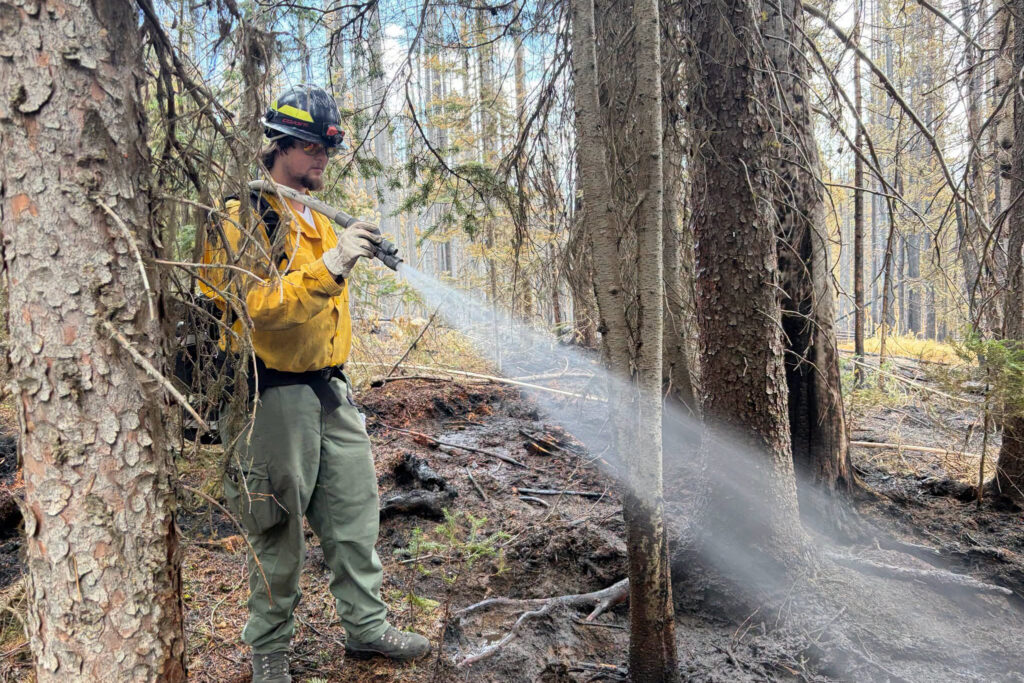
Firefighters have contained the Sand Creek Fire to 2 percent and are making progress on three large wildfires burning more than 47,000 acres in southwestern Montana. Recent rainfall provided temporary relief by slowing fire growth and creating conditions that allowed crews to advance on containment efforts.
That window is closing. The National Weather Service forecasts a return of higher temperatures, lower humidity, and wind across the region within days. These conditions historically accelerate wildfire spread and complicate suppression operations.
The fires highlight a persistent challenge for Western fire management. Moisture from precipitation provides only temporary respite in landscapes increasingly primed for rapid burning. As southwestern Montana moves out of a brief wet period, firefighters face renewed pressure to establish defensible perimeters before hot, dry conditions return.
The U.S. Forest Service has positioned crews strategically across the three active fires. Their containment progress depends heavily on maintaining the tactical advantage provided by current weather. Once temperatures rise and relative humidity drops, fire behavior becomes more aggressive. Wind-driven conditions spread flames faster and make aerial suppression operations more difficult.
Southwestern Montana has experienced intensifying fire seasons over the past two decades, driven by earlier snowmelt, extended drought periods, and warmer average temperatures. The 47,000 acres burned so far this season represents a significant portion of the region's annual burn footprint, and fire activity typically peaks later in summer.
Firefighters recognize the urgency. Containment strategies developed during the current favorable conditions must hold when weather shifts. Pre-positioning equipment, establishing fuel breaks, and maintaining crew readiness become critical as the meteorological window narrows.
The cycle repeats annually across the West. Brief periods of precipitation offer opportunities for containment gains, followed by extended periods of dangerous fire conditions. This year's pattern in southwestern Montana follows historical precedent, with crews racing against an approaching shift toward hotter, drier