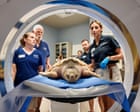
A Kemp's ridley sea turtle named Rhossi, found nearly dead on a Welsh beach in late 2023, has recovered well enough to relocate to Houston after international rescue efforts. The critically endangered species, native to the Gulf of Mexico, washed ashore in Wales severely weakened. British wildlife rescuers stabilized and rehabilitated the turtle over months before arranging transport to the Houston Zoo for continued care.
Medical scans conducted after Rhossi's arrival in Texas revealed lingering pneumonia, a condition likely acquired during the turtle's harrowing 5,000-mile ocean drift from the Gulf. Despite the respiratory infection, caretakers report the animal is thriving overall. Recovery protocols at the Houston Zoo focus on addressing the pneumonia while monitoring Rhossi's general health metrics.
Kemp's ridley turtles face extinction pressures from fishing nets, habitat loss, and climate disruption. Fewer than 20,000 nesting females remain globally, with nesting sites concentrated along the Texas and Mexico coasts. Ocean currents sometimes carry juveniles far from their natal waters into cold Atlantic regions where they lack adequate food and shelter, creating survival hazards that likely contributed to Rhossi's weakened state.
The turtle's recovery demonstrates the capacity of international wildlife rescue networks to intervene in individual cases, though conservation experts emphasize that such efforts cannot substitute for population-level protections. Rhossi's journey from Wales back to Texas represents both the scope of climate-driven oceanographic shifts affecting sea turtles and the practical limits of rehabilitation work.
The Houston Zoo has committed to housing Rhossi through full recovery, with plans to eventually return the turtle to Gulf waters once the animal demonstrates sufficient strength and health. This case underscores how far off-course young sea turtles can drift and how international cooperation now shapes marine species recovery.