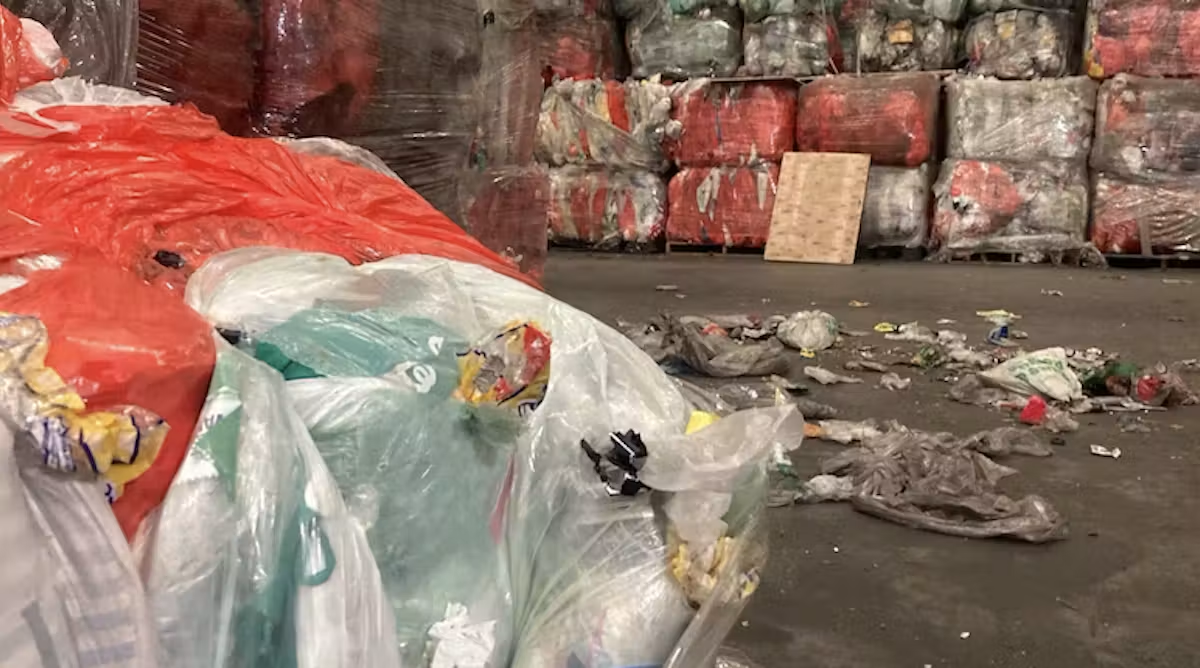
Soft plastic waste in Australia is projected to grow from 370,000-400,000 tonnes in 2025 to 515,000 tonnes in 2033, yet the country lacks sufficient recycling capacity and markets for processed materials.
A national soft plastic recycling scheme called REDcycle collapsed in 2022 after Australia's processing capacity could not handle the volume and demand for recycled products fell sharply. Authorities discovered 44 secret stockpiles and warehouses across Australia holding about 11,000 tonnes of soft plastics collected but never processed. By June this year, all those stockpiles had been processed following government and industry investment.
Woolworths, Coles and Aldi restarted a voluntary collection program at more than 700 supermarkets this year. The scheme is funded by participating packaging producers and retailers.
The recycling industry faces new pressure. In August, Adelaide's Recycling Plastics Australia entered voluntary administration after planning a soft plastics expansion for which it won a $20 million Commonwealth grant. This month, NSW recycler iQRenew warned its facility near Taree, which can recycle up to 14,000 tonnes of soft plastics annually, faces closure.
In June 2023, Australia's state and federal environment ministers committed to mandatory packaging standards including minimum recycled-content requirements. In September this year, the federal government shelved that promise, deferring it until at least 2028 due to cost-of-living concerns.
The Australian Council of Recycling argues the country needs clearer national rules. Extended producer responsibility, where businesses placing soft plastic packaging on the market fund collection and recycling costs, could help. This approach operates in Japan, South Korea and Europe. The European Parliament noted that Europe has achieved higher recycling rates and small packaging waste reductions through this model.
Industry-commissioned modelling estimates extended producer responsibility would add 9-29 cents to an average household's weekly grocery bill, rising to 31 cents if combined with a 30 percent minimum recycled-content requirement.