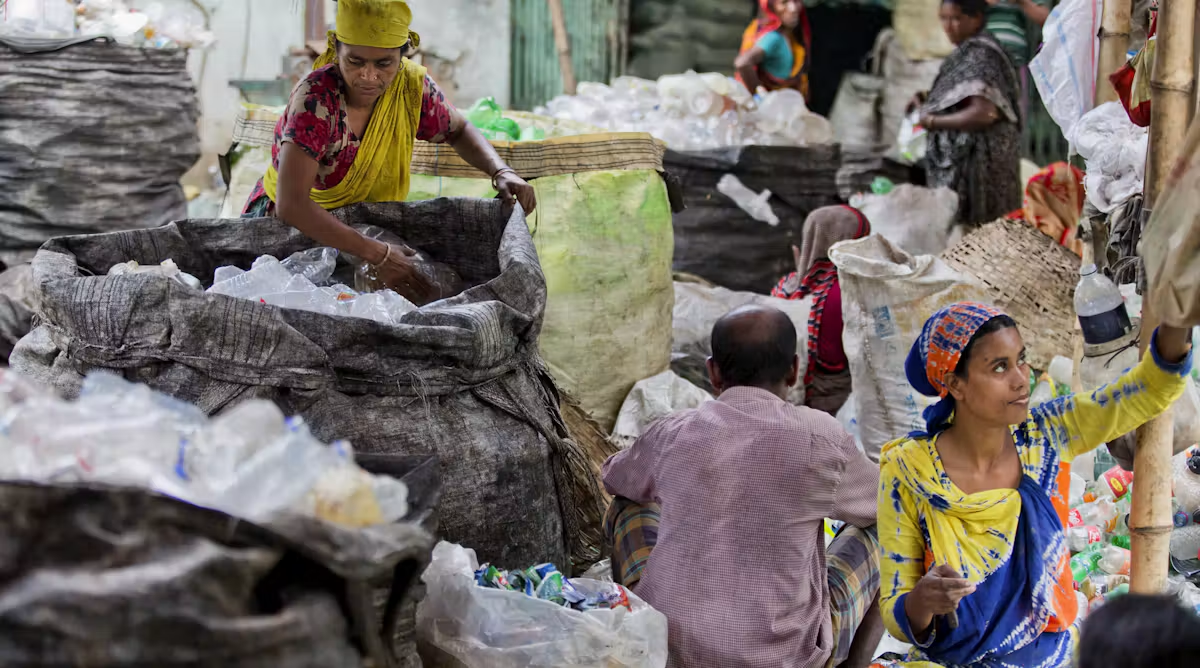
Millions of waste-pickers worldwide collect, sort and return recyclable materials to circulation, yet their labour receives little recognition in circular economy policies and public narratives. Thousands work daily in Bogota, Colombia and cities across the Global South, collecting cardboard, plastic, metal and paper that would otherwise reach landfills.
The International Labor Organization reports that several million people derive income directly from recovery, reuse or recycling activities. In many Global South countries, these workers form the backbone of material recovery systems. Research by geographers Nicky Gregson and Mike Crang, both professors at the University of Durham, notes that materials do not circulate on their own; their recovery, sorting and return depend on people often absent from dominant ecological transition narratives.
In Bogota, waste collectors develop specialized knowledge of waste streams, resale markets and recycling company needs through decades of experience and collective organization. Latin American waste-pickers were historically viewed as a social problem rather than environmental activists, according to research by Jutta Gutberlet, a professor at the University of Victoria, and Martin Medina, a Mexican anthropologist. Only after protests and legal rulings did they gain institutional recognition.
In African cities including Niamey, Niger, informal waste-pickers partially compensate for limited municipal waste systems while handling collection, sorting and recovery. Women play a particularly important role but face limited access to protective equipment, low incomes, exposure to violence and exclusion from decision-making. Formalization of informal waste-picker status can produce mixed results, according to a United Nations report "Leaving No One Behind" based on research by Costas Vélis, a professor at the University of Leeds. The report shows formalization may fail to protect workers' access to materials, collection sites and income.
The Institut de la Francophonie pour le développement durable noted in its 2024 report that without waste-pickers' work, significant portions of recovered materials would not reach recycling centres. Waste-pickers remain integrated into value chains for collection and sorting but participate minimally in decision-making, governance or benefit-sharing.