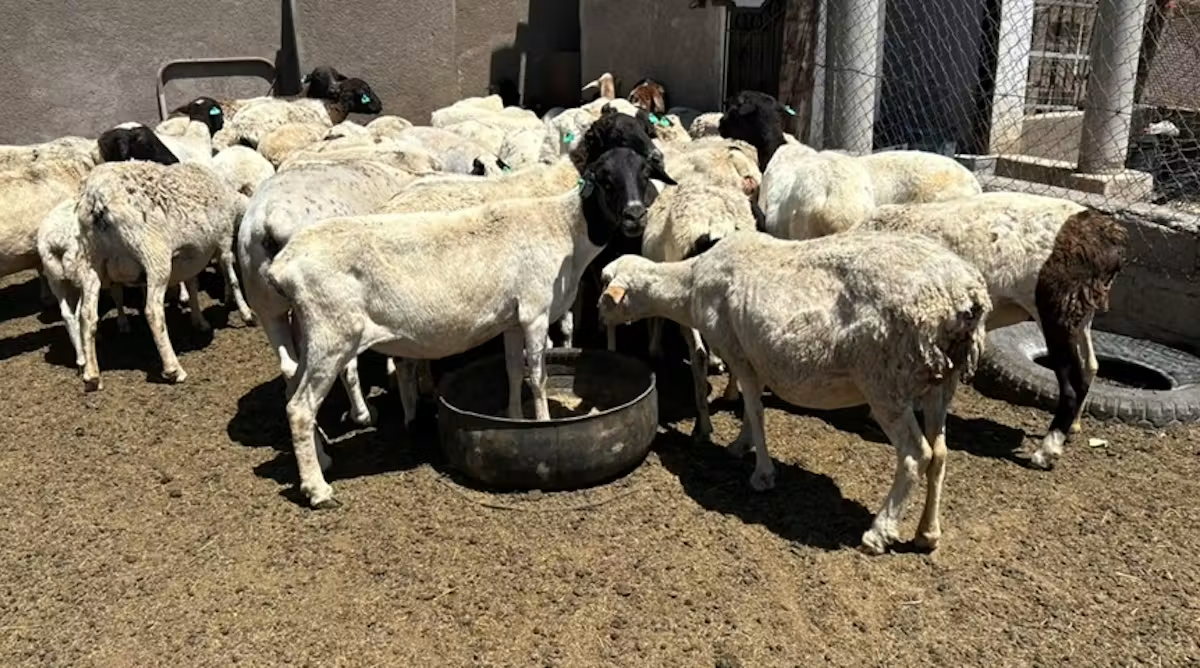
A study of 70 smallholder sheep farmers in Limpopo province, South Africa found that 90% practiced uncontrolled mating rather than selecting which breeding animals would produce the next generation. Researchers from the University of Limpopo identified this as a factor limiting productivity in smallholder flocks compared with commercial operations.
The study, led by Abigail Mmapaseka Phaladi, surveyed farmers in the villages of Makurung and Lenting near Lebowakgomo. Most farmers kept Dorper or Dorper-Meatmaster crosses, breeds developed for hot, dry conditions with limited grazing. Nearly half reported keeping sheep for savings, investment and meat production.
Farmers had clear breeding preferences. For males, they prioritized mating ability and body size followed by growth rate. For females, ability to produce twins ranked highest, followed by mothering ability and lambing interval. However, the researchers found farmers were missing information about reproductive anatomy that could improve selection decisions.
The study recommends farmers assess scrotal size and circumference in males and udder size, shape, teat size and placement in females when selecting breeding animals. These traits correlate with reproductive potential and maternal ability.
A systematic review examined research from Ethiopia, Kenya, The Gambia, Nigeria, Burkina Faso, Mali, Somaliland, Senegal and Botswana. It found uncontrolled mating was common across these African countries and farmers typically obtained breeding rams from their own flocks or neighborhoods.
The researchers propose community-based breeding schemes where farmers, researchers and extension workers collaborate to identify superior breeding males and prevent unsuitable males from mating. This approach could make genetic improvement more accessible to smallholder farmers while retaining locally adapted traits.