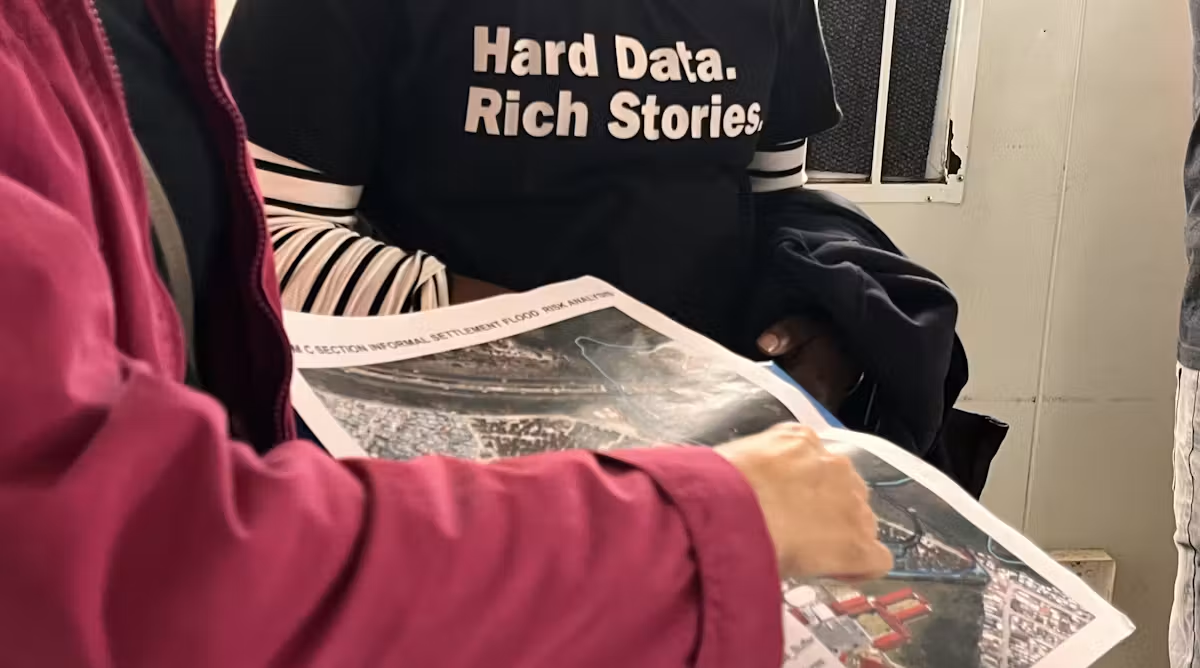
South African researchers tested a co-design approach to climate adaptation by bringing together four teams of municipal staff, NGO workers, private sector representatives, and academics to tackle local climate challenges. Teams worked through design thinking, starting by observing people's experiences before defining problems and building prototypes.
The research found that co-design workshops helped teams narrow broad challenges to specific local problems and increased confidence in trying new ideas across sectors. Teams gained personal skills in creative thinking, relational skills in collaboration and trust-building, and systemic understanding of how problems connect. One team designed a board game to teach fishing communities about sustainability. Another worked on a just transition for a coal-dependent municipality. A third addressed vegetable growing and livelihoods in a peri-urban settlement. A fourth focused on flooding in an informal settlement.
However, the process revealed gaps. Most teams developed solutions for broader environmental or social needs rather than specific climate hazards, making it difficult to classify solutions as climate adaptation. The workshop energized participants, but an intended incubator phase to develop prototypes into reality was not implemented. Teams left with connected networks and ideas but enthusiasm faded as people returned to other work and projects stalled.
Researchers noted that climate adaptation funders typically demand ready-to-deploy interventions with limited funds available for the groundwork of bringing people together, understanding problems, and testing ideas. The study suggests social innovation approaches fit climate adaptation well but lack financial support for the preparatory stages before implementation.