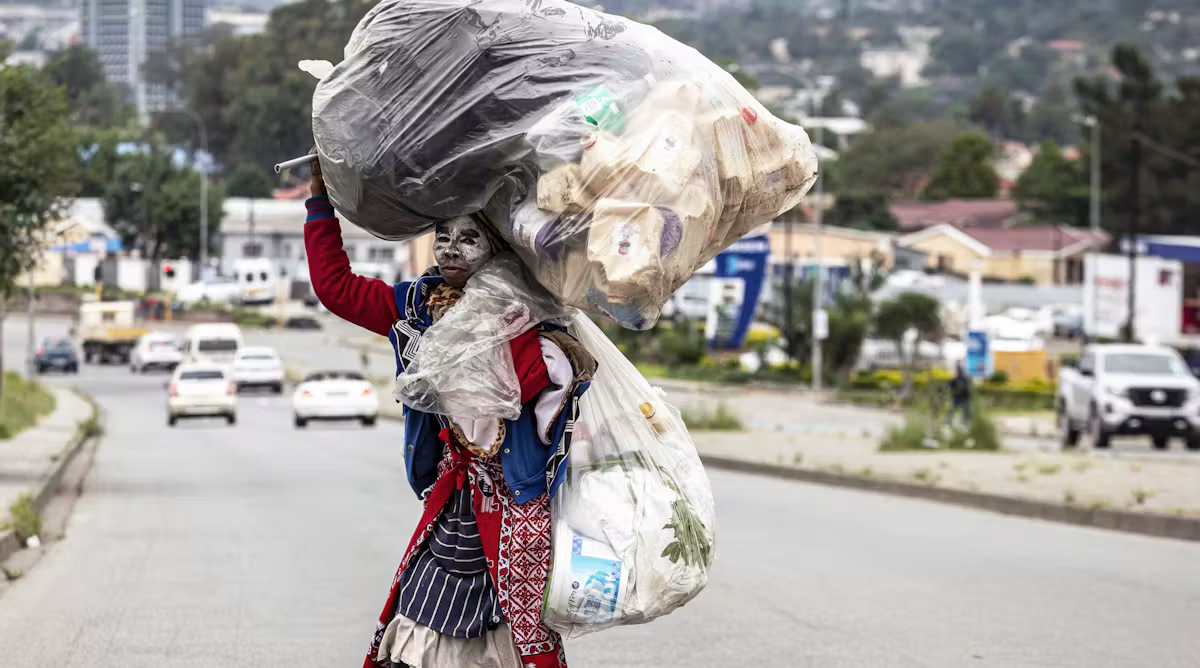
South Africa recycled about 301,000 tonnes of plastic waste in 2020, out of roughly 1.55 million tonnes generated that year. This means approximately four of every five tonnes of plastic waste ended up as garbage rather than being recycled.
Conservation scientists from the University of the Western Cape identified three barriers to effective plastic waste management. Municipalities lack sufficient funding, staff, and facilities to enforce national recycling rules. Misleading labels like "biodegradable" do not specify how or where plastic breaks down, potentially leading consumers to dispose of such materials unsafely. New collection schemes risk diverting valuable materials away from waste reclaimers, the workers who earn income from collecting and sorting plastic waste.
South Africa's Waste Act of 2008 requires waste avoidance, reuse, and recycling. The National Waste Management Strategy, revised in 2020, outlines implementation. From 2021, extended producer responsibility rules made packaging and paper producers responsible for managing their products after consumer use. However, the researchers found that national policies depend on local systems. The country's constitution assigns refuse removal and solid waste disposal to local government, but no dedicated national recycling grant supports municipalities in establishing schemes.
The researchers propose a phased national plastics governance framework. This would require the Department of Forestry, Fisheries and the Environment to coordinate with provincial and municipal government, producers, recyclers, and waste-reclaimer organisations. The framework should clarify responsibilities and identify where municipalities need support. Deposit-return pilot schemes should be tested, with waste reclaimers involved in design and guaranteed continued access to materials and fair compensation. South Africa's existing extended producer responsibility rules already require reclaimers to be included in the post-consumer value chain, but this requirement remains ineffective in practice.