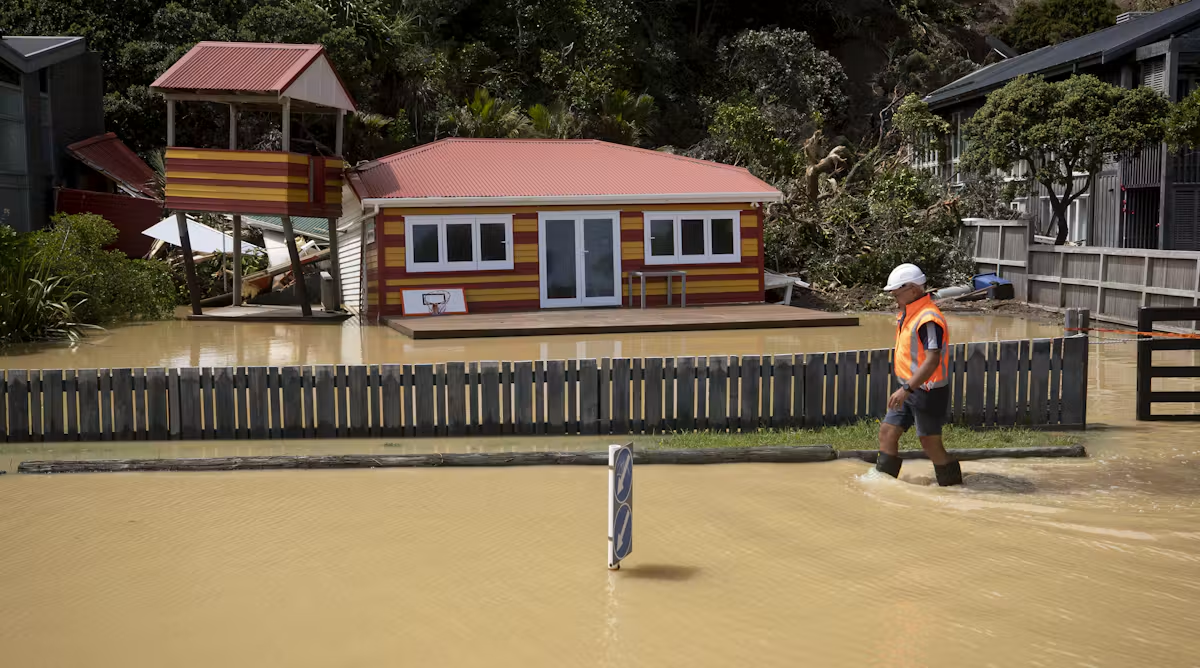
Westpac will provide home loan applicants with reports assessing properties for natural hazard risks including flooding, landslides and coastal erosion. The bank says it does not expect to decline applications solely on risk grounds, though it may affect loan amount or duration in no more than two percent of cases.
The bank's hazard data mirrors what it uses internally for lending decisions. This move raises concerns about downstream effects on the property market and existing homeowners.
New Zealand currently has an estimated 750,000 people and NZ$235 billion in buildings potentially exposed to flooding from one-in-100-year rainfall events. Under 3 degrees Celsius of global warming, those figures could rise to 900,000 people and $288 billion.
Homebuyers face two obstacles: obtaining mortgage finance and securing home insurance. Banks generally require properties to be adequately insured, but insurers are increasingly selective about natural hazard risks. In September 2025, AA Insurance stopped accepting new home insurance policies in parts of Canterbury due to earthquake exposure. Similar restrictions were reported in Westport and Blenheim this year due to flood risk.
A homebuyer might secure mortgage approval only to find insurance unavailable or unaffordable. Alternatively, a bank may refuse to lend enough to complete a purchase based on its own risk assessment.
Westpac's mortgage conditions state that failure to maintain required insurance can constitute an event of default, potentially exposing borrowers to enforcement action even when repayments are current.
As finance and insurance become harder to obtain, high-risk properties may lose market value and appeal to prospective purchasers. The Reserve Bank warned this year that declining insurance availability could prompt banks to restrict lending in high-risk areas, potentially depressing property values while increasing demand and prices in lower-risk areas.
These effects can occur without a natural disaster happening. Growing recognition of a property's hazard exposure may affect its insurability, access to finance and market value.
New Zealand will need to confront policy questions about government intervention for homeowners unable to insure, finance or sell their properties. Options include assistance for hazard mitigation, public insurance programs, development restrictions or relocation assistance. Other countries offer examples. Queensland and New South Wales have provided programmes for flood-affected homeowners. California has provided targeted grants for earthquake-resistant property improvements.