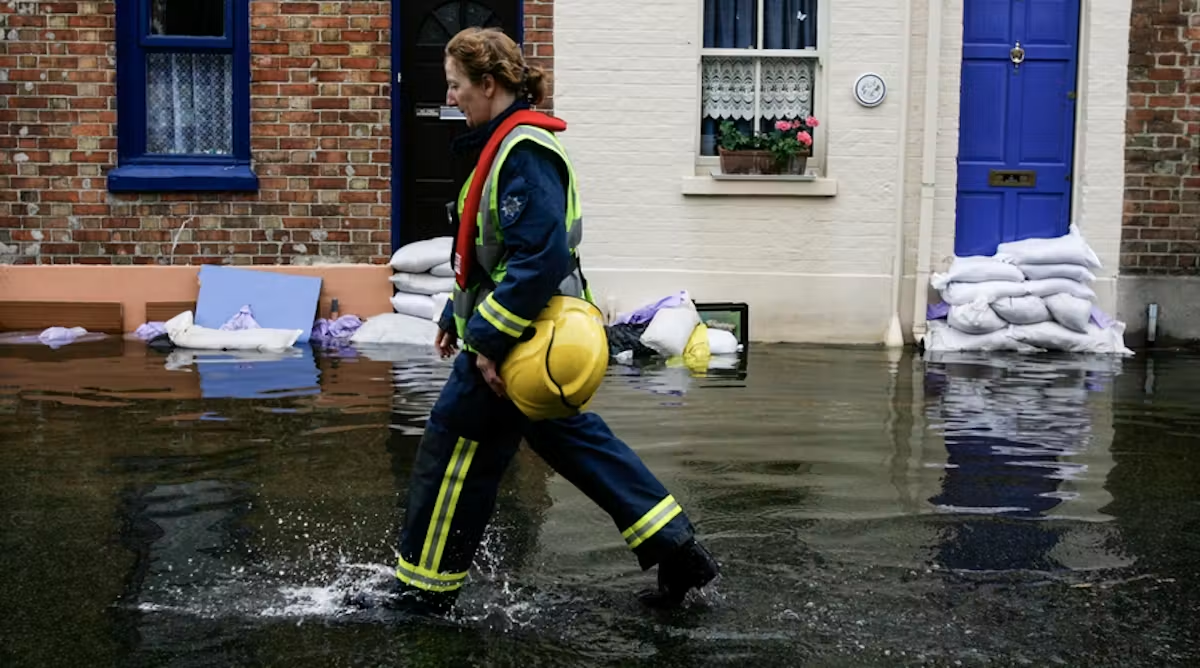
People wade through floodwater because they underestimate its dangers, often prioritizing reaching a destination over personal safety. A review of research identified several reasons for this behavior: wanting to get to work or school, taking photos of high water levels, protecting property or pets, and being influenced by others who have crossed safely.
Visual cues mislead people. Watching someone else wade through creates false reassurance, even though their height, strength and route differ from yours. Previous success at crossing a flooded road encourages repeat attempts, yet conditions change between crossings. Media images sometimes depict people paddling through flooded streets in ways that look recreational, potentially normalizing entry into dangerous water.
The water itself conceals hazards. Refraction makes flooded areas appear shallower than they are. In muddy water, the bottom is invisible, hiding submerged pavement edges, ditches and uncovered drains. A 2023 study of 185 drivers found participants often focused on depth while ignoring water speed, though both factors determine danger.
Water depth and speed combine with body size to affect balance. Moving water pushes against legs and body; as more becomes submerged, buoyancy reduces weight pressing feet to the ground. The pushing force increases roughly with the square of water speed. Doubling speed creates about four times the pushing force. The Environment Agency warns that water around 15 centimeters deep can knock someone over or conceal hazards.
Still water poses additional risks: sharp objects, damaged surfaces and sewage contamination. Flooded riverbanks become unstable as erosion occurs below the water surface.
Government advice is to avoid walking through floodwater altogether. Heavy rain and flood warnings call for moving away from danger, not investigating. Flash flooding can develop before an official warning arrives.
Katie Parsons, a research fellow at Loughborough University, developed a game called the Flooding Mucky Dip with Girlguiding, Global Link Education and the Environment Agency. The game uses clouded water with cards representing flood risks and story scenarios to help children and adults understand dangers and explore safer responses to disrupted routes.