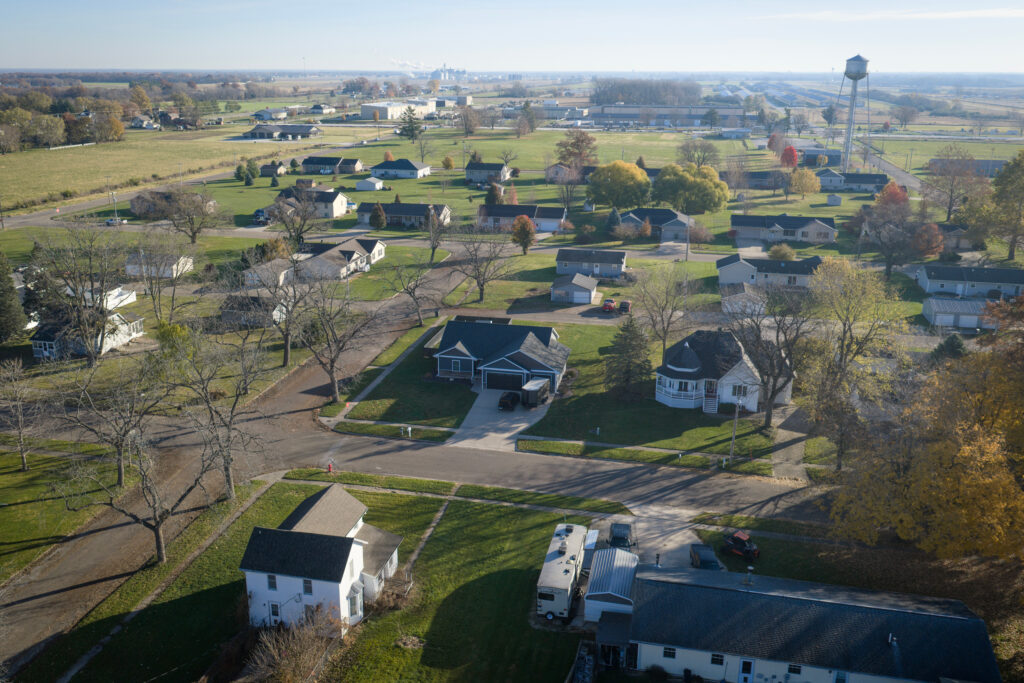
The Army postponed a planned detonation of nearly 10,000 pounds of degraded lead azide at the Iowa Army Ammunition Plant after a federal appeals court temporarily halted an EPA emergency permit for the operation.
The detonation was initially scheduled for Friday but was rescheduled to Monday by Acting Army Secretary Adam Telle on Thursday. Hours later, the U.S. Court of Appeals for the 8th Circuit placed an administrative stay on the EPA's permit, indefinitely delaying the operation.
Earthjustice, representing the Iowa Environmental Council and the Sierra Club Iowa Chapter, sued the EPA and filed an emergency motion to suspend the permit. Senior attorney Thien Chau said the suit argued that "the decision-making process lacked transparency and that the Army failed to adequately explore alternatives to detonation." He described the planned detonation as "abnormal and extraordinary."
Sixty-eight barrels of lead azide, stored at the plant in Middletown, Iowa, became dangerously unstable after decades in storage. During a March safety review, officials discovered the compound had dissolved and reformed into highly volatile crystals. Friction, heat or shock could trigger spontaneous detonation. The Army considered alternatives including leaving the barrels in storage, relocating them, or chemically neutralizing the contents before opting for controlled detonation.
The EPA granted an emergency permit citing an "unacceptable" risk of accidental combustion. Even with mitigation technology like blast containment barriers and water misters, the explosion would generate a lead-containing dust cloud. Army maps project surface deposition of lead at least 30 miles north of the plant and up to 10 miles wide, with airborne exposure potentially reaching 100 miles.
Patrick O'Shaughnessy, a professor of occupational and environmental health at the University of Iowa, said Army projections suggest outdoor lead dust levels in the plume's path could exceed federal benchmarks for indoor lead levels in homes and childcare facilities.
Residents of Middletown learned of the detonation at a town hall in October. Most Iowans and state officials learned about the operation just days before it was scheduled. A spokesperson for Gov. Kim Reynolds said the public advisory was the first she had heard of it.
The Army advised residents to stay indoors, close windows and doors, and set heating systems to recirculate for hours after the blast. Residents were also told to clean cars and hose down play surfaces and windowsills.
On Thursday night, Gov. Reynolds, Governor-elect Rob Sand, and U.S. Senator-elect Josh Turek called on military leadership to postpone the operation until residents received more information about the decision-making process.