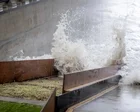
When Dutch researchers at the Delta Flume subjected transplanted salt marsh sections to 21 hours of wave action in the world's biggest wave machine, they uncovered a remarkable truth: nature's wetlands are far tougher than we gave them credit for. With surface erosion averaging just 7mm and up to two-thirds of vegetation surviving the battering, these findings—due to be published in Nature—challenge our assumptions about what happens to our coasts when storms intensify.
The Delta Flume facility outside Delft, with its 300-metre concrete trough and pistons capable of generating waves up to 4.5 metres high, provided the perfect testing ground for a critical question facing our changing climate: can salt marshes survive the severe storms predicted as sea levels rise? The answer appears to be yes. Researchers were surprised not only by how little damage the plants sustained, but by how effectively they reduced the energy of the waves themselves. This dual function—acting as both a physical barrier and an energy dampener—transforms how we should think about coastal protection strategy.
As sea levels rise and storms become more powerful, salt marshes could play an increasingly important role in coastal protection. Yet this cannot happen unless we actively preserve and restore these ecosystems. The experimental evidence from the Delta Flume gives us concrete reasons to prioritize wetland conservation over artificial defences. We know now that these natural systems work—they bend but do not break under extreme conditions.
The research raises an uncomfortable question: if we have known that salt marshes provide crucial coastal defence, why have we allowed so much of this habitat to disappear through development and neglect? The findings should trigger an immediate policy shift toward mandatory wetland protection and restoration programmes in vulnerable coastal regions. This is not sentimental environmentalism—it is practical risk management backed by experimental science.
The implications are profound for coastal communities worldwide. Investing in salt marsh resilience costs far less than constructing and maintaining concrete seawalls, while providing habitat benefits and carbon storage to boot. We now have evidence from the world's most advanced wave testing facility that nature, given the chance, can protect us better than our engineering solutions ever could. It is time our policies caught up with that reality.