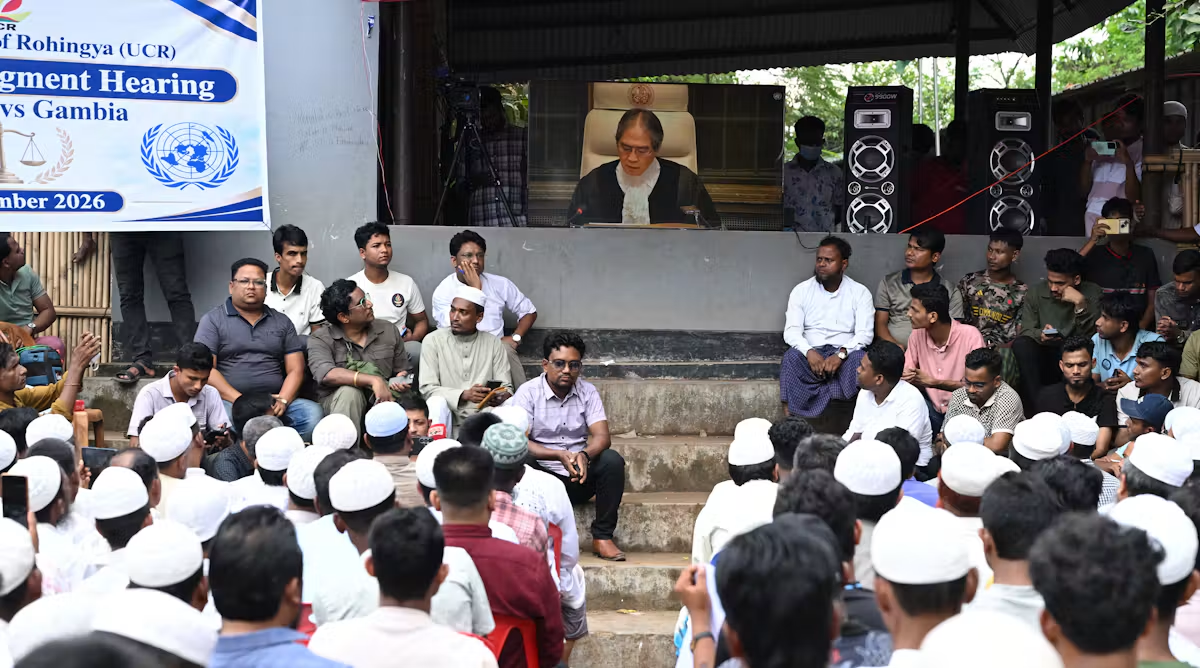
The International Court of Justice ruled yesterday, by nine votes to six, that Myanmar is responsible for genocide against the Rohingya in 2017. The court found that Myanmar failed to investigate and prosecute those responsible.
The ruling marks the first time since the UN genocide convention's adoption in 1948 that the ICJ has found a state responsible for committing genocide. The court ordered Myanmar to provide restitution and compensation to victims, investigate and prosecute those responsible for the genocide, prohibit genocide in its national law, allow the return of displaced Rohingya, and help search for the disappeared.
The case set a precedent for who can bring cases to the ICJ. The Gambia, a nation with no direct connection to the Rohingya, brought Myanmar before the court under the genocide convention in 2019. Three years later, the judges accepted that any party to the treaty can enforce it.
Myanmar's military launched what it called "clearance operations" in northern Rakhine State in late 2017 following attacks by a Rohingya armed group. Many thousands of Rohingya civilians were killed, hundreds of women and girls were raped, villages were burned, and more than 740,000 people fled to Bangladesh.
Myanmar and former leader Aung San Suu Kyi argued they were fighting terrorism and had no intent to destroy the Rohingya. The court rejected these arguments, finding that much of what the military did could not be explained by fighting an insurgency. There was no evidence the military distinguished between civilians and fighters. The only reasonable inference was an intention to destroy the Rohingya of northern Rakhine State.
The ICJ lacks enforcement mechanisms. The UN Security Council can compel compliance under Article 94 of the UN Charter, though it has never previously taken this step. Myanmar's backers on the Security Council, China and Russia, have routinely provided diplomatic cover to the junta.
Over a million Rohingya remain in camps in Bangladesh in worsening conditions. Those still in Rakhine State continue to experience torture, abuse, and discrimination from the Myanmar military and the Arakan Army.
Myanmar has two years to report to the court on steps taken to comply with the judgment. The court kept the case open to decide further on compensation amounts.