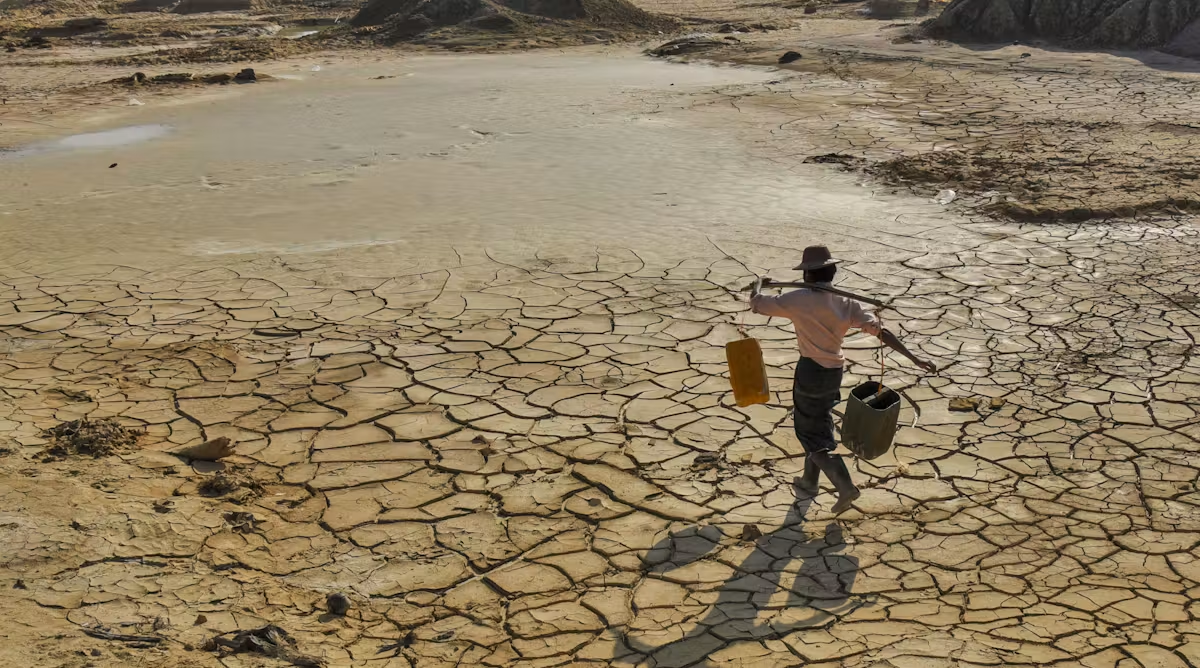
A strong El Niño event is expected to continue into early 2027, with Myanmar meteorologists warning of extended effects into the hot season from March to May. The US National Weather Service forecasts a strong to very strong event.
In Myanmar, extreme heat will deepen existing inequalities shaped by years of conflict, displacement and unreliable electricity. The International Federation of Red Cross and Red Crescent Societies warns that heat can disrupt electricity, water and healthcare where conflict has damaged infrastructure. The UNHCR highlights displaced people's greater climate risks due to inadequate housing and essential services.
Three in four people displaced by conflict live in countries highly exposed to climate hazards.
Extreme heat threatens health by putting pressure on the heart and kidneys, according to the World Health Organization. High nighttime temperatures are particularly dangerous because the body needs cooler conditions to recover.
Myanmar's electricity supply deteriorated after the military takeover in February 2021. Power cuts have become more frequent during the dry season when hydropower reservoir levels fall while cooling demand rises. On October 5, the Ministry of Electric Power and Energy introduced rotating power cuts, citing El Niño-related heat that had pushed electricity demand beyond available supply.
A 2023 US modelling study found that a multi-day blackout during a heatwave could more than double heat-related deaths. Electricity is needed to pump clean water, refrigerate medicines and operate medical equipment.
Exposure to heat is unequal. Farmers, construction workers and day labourers often continue working during the hottest hours because losing income is not an option. Wealthier households can invest in solar-powered cooling. One industry estimate suggests household solar installations increased from a few hundred in 2019 to around 300,000 in 2025. With global fuel shock pushing inflation to 24.6% in April 2026, that protection is slipping further out of reach for poorer households.
As of July 2026, nearly 3.8 million people were internally displaced in Myanmar. Many live in temporary shelters with limited access to clean water and healthcare. Plastic roofs, overcrowding and poor ventilation leave them particularly exposed to extreme heat.
Insecurity Insight recorded at least 1,939 attacks on healthcare between February 2021 and May 2026. Ongoing fighting and movement restrictions further limit humanitarian organisations' ability to deliver medical assistance.
The military-backed government has begun opening heat shelters in Yangon. But a shelter only protects people who trust it and feel safe enough to reach it. Young people have been seized at checkpoints under conscription law. Displaced communities have also faced military attacks, including reported airstrikes on displacement camps in Rakhine State.
No single authority controls all of Myanmar. Ethnic armed organisations and resistance groups administer large parts of the country. Most heat plans assume a single government that issues warnings and runs clinics.