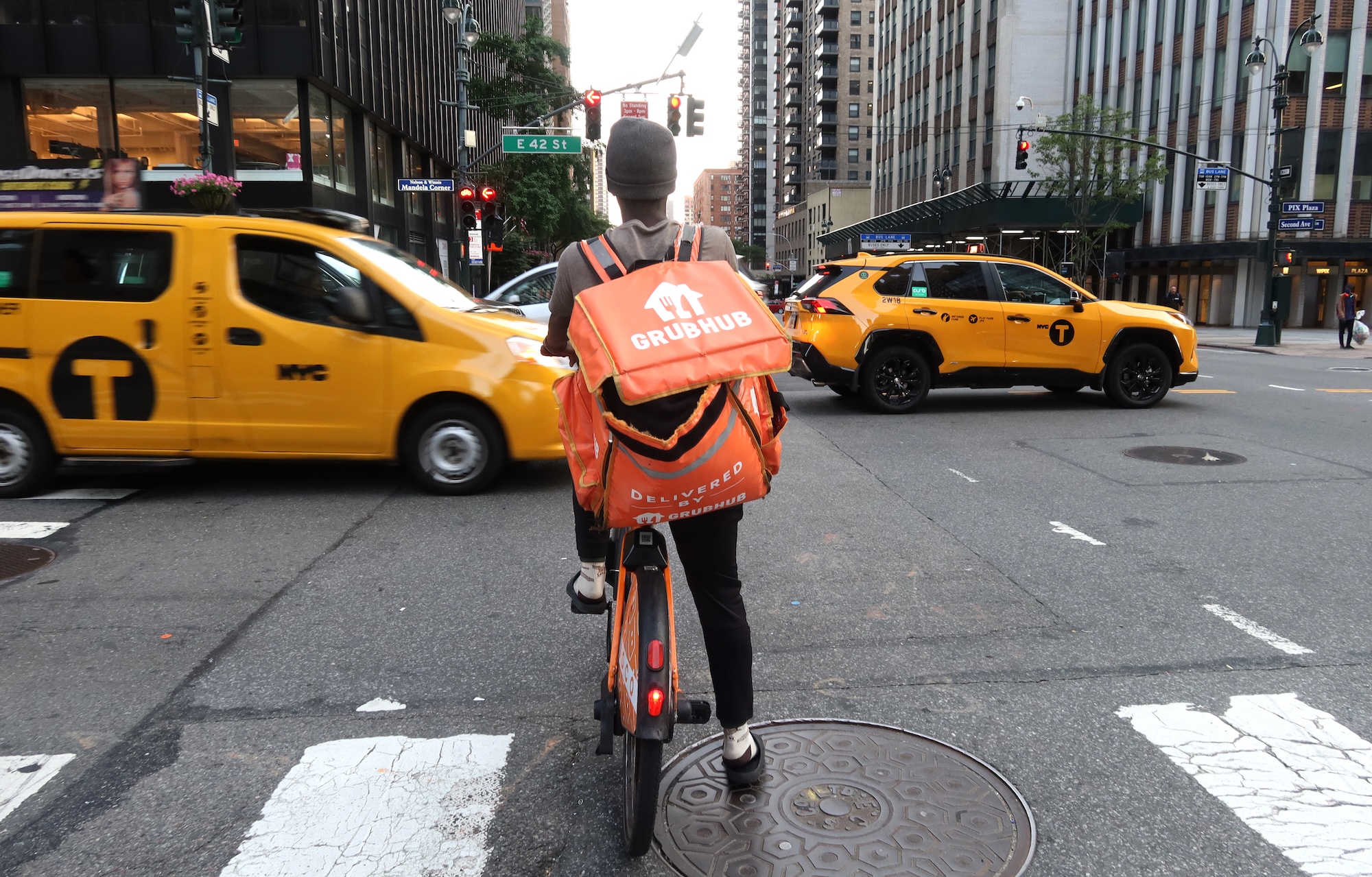
José Yos, a 40-year-old Guatemalan delivery worker in New York City, rode his e-bike through wildfire smoke and extreme heat in July because he could not afford to stop working. Wildfires in Quebec had sent smoke hundreds of miles south, blanketing the city in orange haze, while temperatures climbed close to 100 degrees Fahrenheit. The city opened cooling centers and sent cooling vans, but Yos stayed on the clock. He feared that taking longer to fulfill orders on Uber Eats would lower his rating and risk deactivation from the app.
Yos is one of roughly 70,000 delivery workers across New York City's five boroughs. Many of them, primarily from Latin America and increasingly from sub-Saharan Africa and South Asia, work outside on two wheels, exposing themselves to extreme heat, heavy rainfall, and poor visibility during storms. As self-employed freelancers, they lack adequate health and safety protections on the job.
Yos migrated from rural Guatemala partly because his family could no longer depend reliably on farming due to unpredictable rainfall. In recent years, Guatemala has suffered from droughts and flooding that suppressed crop yields. Researchers have linked this volatility to climate change and El Niño weather patterns.
In January 2026, the city enacted a deactivation protection bill requiring delivery apps to give 72 hours' notice before deactivating a worker's account and to allow workers the right to have deactivations investigated. Despite this law, workers still fear the deactivation process and regularly visit Worker's Justice Project offices seeking help reopening their accounts.
Los Deliveristas Unidos, a labor union representing delivery workers, works to make city officials aware of workers' needs on the road. Ligia Guallpa, executive director of Worker's Justice Project, which helps run the union, stated that during heat waves, snowstorms, floods, and wildfire smoke events, delivery workers continue delivering essential goods including water, medication, and groceries. The mobile delivery app industry was valued at $25.7 billion in 2018 and is now worth $428.2 billion.