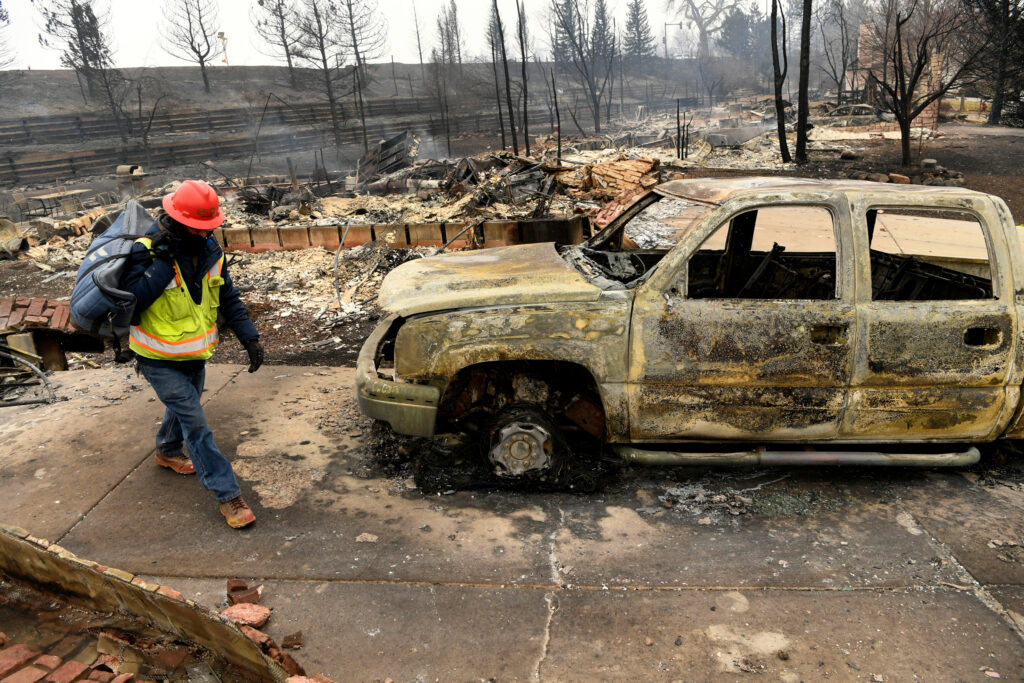
In late December 2025, Xcel Energy cut power to over 50,000 customers in Boulder County, Colorado, after the National Weather Service warned of exceptionally high wildfire danger. Record-warm temperatures, below-average snowfall, and dry vegetation created conditions similar to those that preceded the Marshall Fire nearly four years earlier.
The Marshall Fire burned over 1,000 homes and caused more than $2 billion in property losses. Boulder County Sheriff's Office investigators concluded an unmoored Xcel Energy power line was partially to blame. Xcel settled lawsuits from homeowners, businesses, and insurers for $640 million one day before trial began in September 2025. The company denied fault and wrongdoing.
Xcel now implements "Public Safety Power Shutoffs" when wildfire risk peaks. California utilities have used this strategy since 2019 after power lines ignited catastrophic wildfires.
The shutoffs have triggered backlash. Boulder city council sent a letter to Xcel stating that residents view the outages as "prioritizing litigation avoidance ahead of protecting our community." Business owners lost revenue when the December shutoff occurred during the busiest shopping season.
"We understand that losing power for any amount of time is impactful and frustrating, but the safety of our customers, crews and the communities we serve remains a top priority," an Xcel Energy spokesperson said.
U.S. utility companies have faced more than $18 billion in wildfire liabilities over the past decade. Lawsuits have emerged as the de facto recovery strategy for communities and governments responding to wildfire losses. States including Oregon, Montana, and California are now debating how much utilities should bear these costs.
Policy experts note that lawsuits forcing utilities to pay may create a disincentive for homeowners and communities to undertake wildfire mitigation. The approach also raises fairness questions in the judicial system.
The number of wildfire ignitions in the U.S. has not dramatically increased over the past 50 years, with 50,000 to 70,000 fires burning annually. However, U.S. annual burned area has increased roughly 60 percent since 1990, meaning more fires are growing into major conflagrations.