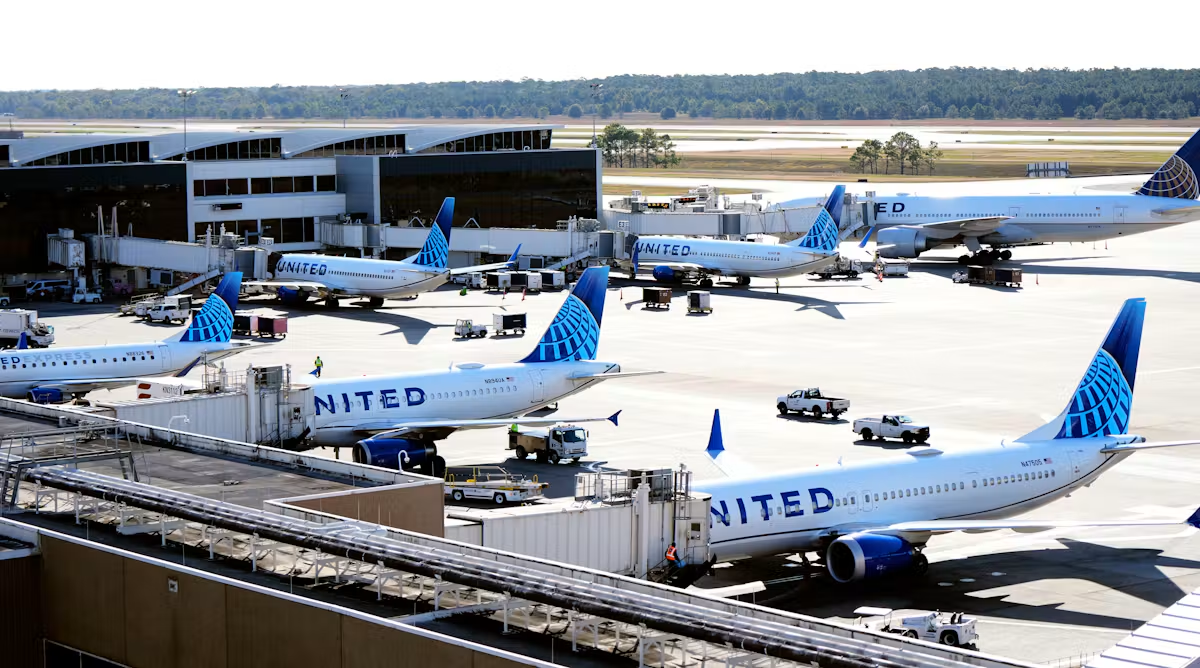
A nationwide ground stop halted all departing US flights for more than four hours on Friday due to a telecommunications failure at an FAA facility. About 3,500 flights were airborne when the Federal Aviation Administration issued the alert, and all landed safely. Thousands of flights were delayed or cancelled, stranding millions of passengers.
US Transportation Secretary Sean Duffy attributed the disruption to maintenance performed by government contractor L3Harris at a remote FAA facility. The work involved replacing copper telecommunications wires with fibre-optic links and switching the system from time-division multiplexing (TDM), an older signal-transmission method, to internet protocol (IP).
During maintenance, a router generated more than 1,000 connection requests every four to five seconds. This overloaded other routers on the network, disrupting aircraft communications and some radar data feeds.
The precise cause of why the router sent so many requests remains under investigation. Incorrect installation, configuration errors, and defective equipment are all potential explanations.
In September 2026, a US government report classified 51 of the FAA's 138 air traffic control systems as unsustainable, and another 54 as potentially unsustainable. The FAA is actively replacing ageing communications, radar, and control equipment.
Modernisation introduces additional risks. When new technology integrates with existing infrastructure, operations must continue during the transition. To prevent similar ground stops, the FAA could segment the network so faults don't spread nationwide, and configure communications to resist overload if a router error occurs.