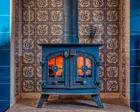
New research across six European towns and cities has delivered an uncomfortable message to British households: the wood burners many of us install for cosy winter ambiance are poisoning our children's air. The study, which measured polycyclic aromatic hydrocarbons (PAH) in schools, sports centres and homes across Athens, Barcelona, Colchester, Copenhagen, Helsinki and Lisbon, found that children's exposure to home wood-burning could be as significant as exposure to traffic exhaust. In Colchester and Athens, PAH exposure exceeded World Health Organization guidelines. This is not a minor concern—Dr Barend van Drooge from Barcelona's Institute for Environmental Assessment and Water Research noted that these compounds are recognised by the International Agency for Cancer Research as related to cancers after prolonged exposures, and evidence exists that they delay cognitive development.
What makes this research particularly alarming for the UK is that Colchester, where wood-burning is widespread, showed the highest PAH levels among all measured cities. Yet Colchester ranked only 120th out of 333 local councils for density of wood burners per square kilometre. Worthing, Norwich and Reading all had around four times more. This suggests the true scale of children's PAH exposure across Britain remains largely unmeasured and unregulated. A separate wintertime study of 53 children from two primary schools in Anglesey found that children living in homes with wood burners could be exposed to over three times more particle pollution than those in non-wood-burning homes.
The seasonal severity of this problem cannot be ignored. In Colchester homes, high-molecular-weight PAH in winter were more than 10 times those in summer. Low-molecular-weight PAH were around three times greater. Greece's experience provides a cautionary tale: wood-burning increased dramatically during the financial crisis that began in 2008 when heating oil costs soared. This contributed to increased deaths associated with particle pollution in Athens, especially for those aged over 70. In some Greek towns, wood-burning leads to PAH that are 100 times greater in winter compared with summer.
The research found that homes with open fireplaces and stoves in wood-burning areas had some of the greatest PAH concentrations—far exceeding those in sports centres and often surpassing schools. Dr Maria Antonia Aretaki rightly emphasised that understanding pollutants in children's everyday surroundings is an important step towards protecting their health, given children's particular vulnerability to environmental pollutants and the potential health implications from exposure during childhood.
While van Drooge noted that none of the cities studied exceeded unacceptable limits for lifetime cancer risk, this should not provide comfort. We must act now to reduce children's unnecessary exposure to these harmful pollutants. Britain needs mandatory ventilation standards for homes with wood burners, public health warnings about their risks, and support for householders transitioning to cleaner heating alternatives. The government should also fund comprehensive monitoring of PAH levels across UK regions, particularly in councils with high wood-burner density. Our children's health cannot be sacrificed on the altar of atmospheric nostalgia.