When the IUCN downgraded the southern elephant seal from 'least concern' to 'vulnerable' in April, it marked a watershed moment: the first time a species had its extinction risk raised explicitly because of H5N1. The reason was devastating enough to warrant it. By 2025, more than 53,000 female elephant seals had died on South Georgia, an island home to more than half of the global breeding population. In some South Atlantic colonies, more than 90% of newborn pups have perished. Yet this catastrophe represents only a fraction of bird flu's true toll. According to BirdLife International, avian influenza now threatens at least 40 bird species, and hundreds of thousands of animals—if not millions—have been killed worldwide. Remarkably, no other animal has seen its conservation status changed.
The bottleneck is not indifference but bureaucracy. Assessing a species' extinction risk is a painstaking scientific process, and most species are reassessed by expert panels only once every decade. The IUCN red list has analysed nearly 176,000 species so far and aims to reach 260,000 by 2030, yet it is updated merely two to three times yearly. In an epidemic where deaths are coming faster than scientists can convene and publish peer-reviewed findings, this timeline is dangerously slow. Ruth Cromie, coordinator of a UN taskforce on avian influenza and wildlife, captured the scale of the crisis bluntly: 'This is a horror show for wildlife. The scale of mortality is absolutely unprecedented.'
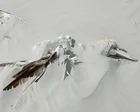
Consider the cases now under urgent reassessment. In Scotland, home to more than half of the world's great skuas, monitored colonies fell by 76% between 2021 and 2023. The northern gannet declined by 43% at Bass Rock in Scotland between 2021 and 2024 and by 47% at Grassholm in Wales between 2015 and 2024. Yet when scientists examined the entire north-eastern Atlantic population, they found only a 17% decline between 2013 and 2024. This discrepancy reveals a genuine challenge: determining whether localized catastrophes signal broader extinction risks requires comprehensive baseline data that many species simply lack.
Rob Martin, senior red list officer at BirdLife International, warns against 'kneejerk' uplisting after mass mortality events, noting that listings can divert conservation funding based on incomplete information. His caution is understandable. Yet it risks paralysis. The Peruvian pelican lost about a fifth of its population in Peru's marine protected areas in 2022 and 2023, but accurate pre- and post-outbreak figures remain elusive due to insufficient monitoring funding. For migratory species crossing vast oceans, counting the dead proves nearly impossible—most birds simply vanish at sea.
The red list system exists to guide conservation priorities and spending. When H5N1 kills hundreds of thousands of animals faster than scientists can document it, that system has failed its essential purpose. Scientists need to expedite reassessments for species suffering documented catastrophic die-offs while maintaining scientific rigor. The pandemic demands innovation: emergency protocols for species experiencing mass mortality, rapid data-sharing networks, and increased monitoring funding. Without action, we risk watching species slip toward extinction while experts debate whether the evidence is complete enough to say so.