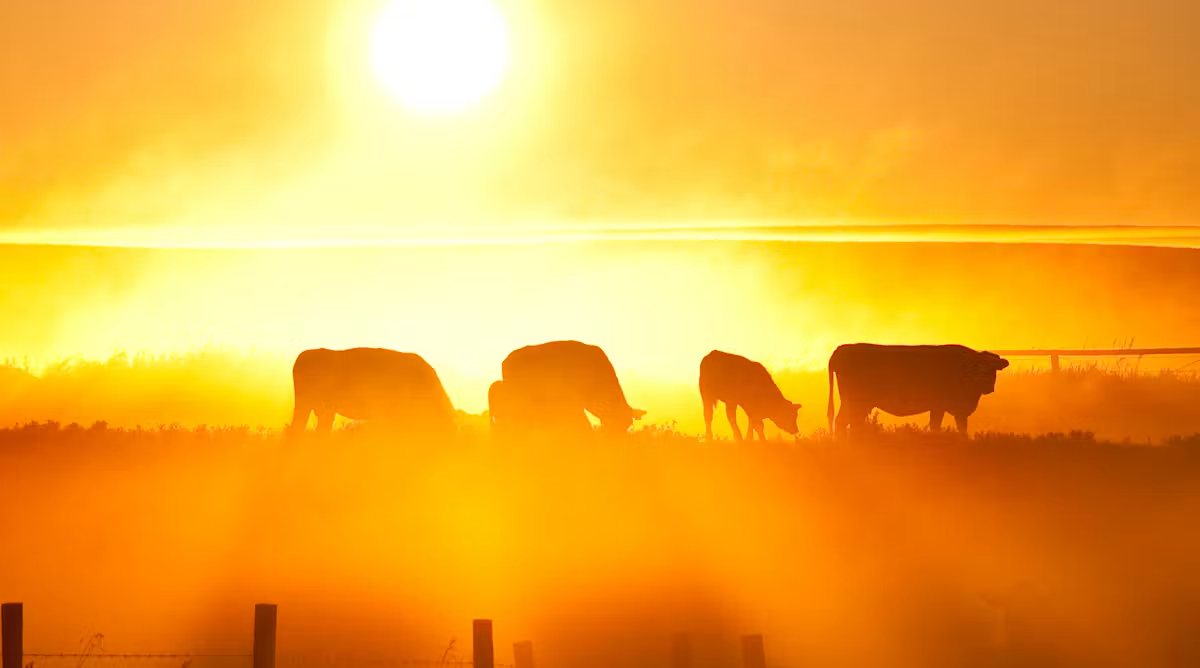
Australia's northern cattle herds face rising danger from heat stress as warming accelerates, according to new research from the University of Southern Queensland.
Australia has warmed about 1.5°C since 1910. About half of the country's 30.8 million cattle graze the tropical and semi-arid north outdoors year-round. Cattle produce internal heat through digestion and shed it less effectively than humans, relying instead on panting, shade-seeking, and cool nights.
The research used climate models and the Heat Load Index, which combines temperature, humidity, wind, and sunshine, to project cattle heat stress across northern Australia for the 1990-2010 period compared with the 2050s and 2090s under low- and high-emissions scenarios.
British breeds like Angus and Hereford face dangerous heat stress at a Heat Load Index of 86. Tropical Brahman breeds tolerate up to 96. For British cattle, dangerous heat days will rise from 117 currently to 143 by the 2050s under low emissions, reaching 195 by the 2090s under high emissions. Brahman cattle will experience dangerous heat days rising from 17 to between 32 and 84 annually.
Regional variation is steep. At Dalby on Queensland's Darling Downs, where more than half the herd is British breed, dangerous days climb from about 45 yearly to 134 by the 2090s under high emissions. In the Northern Territory's Barkly region, where Brahman comprise three in four cattle, dangerous days rise from 15 to 106 annually by the 2090s under high emissions.
Heat stress rarely kills cattle directly but reduces feed intake. At 38°C, cows eat 15-18% less, slowing weight gain and fertility. Heat in the week before slaughter increases dark-cutting beef, which yields lower prices. Nights are warming too, limiting recovery.
Purpose-built shade structures blocking 70% of sunlight can reduce heat exposure to near current levels under high-emissions scenarios, though shade cannot prevent humidity or hot nights. Paddock trees provide insufficient protection.
Workers face mounting danger. Mustering cattle on horseback in the Barkly region will become unsafe for 217 days yearly by the 2090s under high emissions, up from 134 days currently. Many stations already muster at dawn; by the 2090s, even dawn work would be unsafe on more days than full-day work is now.
Graziers must select heat-tolerant breeds and build more shade infrastructure. Feedlot operations have already expanded shade structures following cattle deaths. Sharp emissions cuts could determine whether heat becomes manageable or a serious threat to Australia's most valuable farm export.