U.S. tariffs on Canadian steel, aluminum, automobiles and other products have disrupted cross-border supply chains and reduced exports. In response, Canada's federal government launched a Buy Canadian policy, a Defence Industrial Strategy aimed at creating 125,000 jobs, and Prime Minister Mark Carney pledged to double non-U.S. exports within a decade.
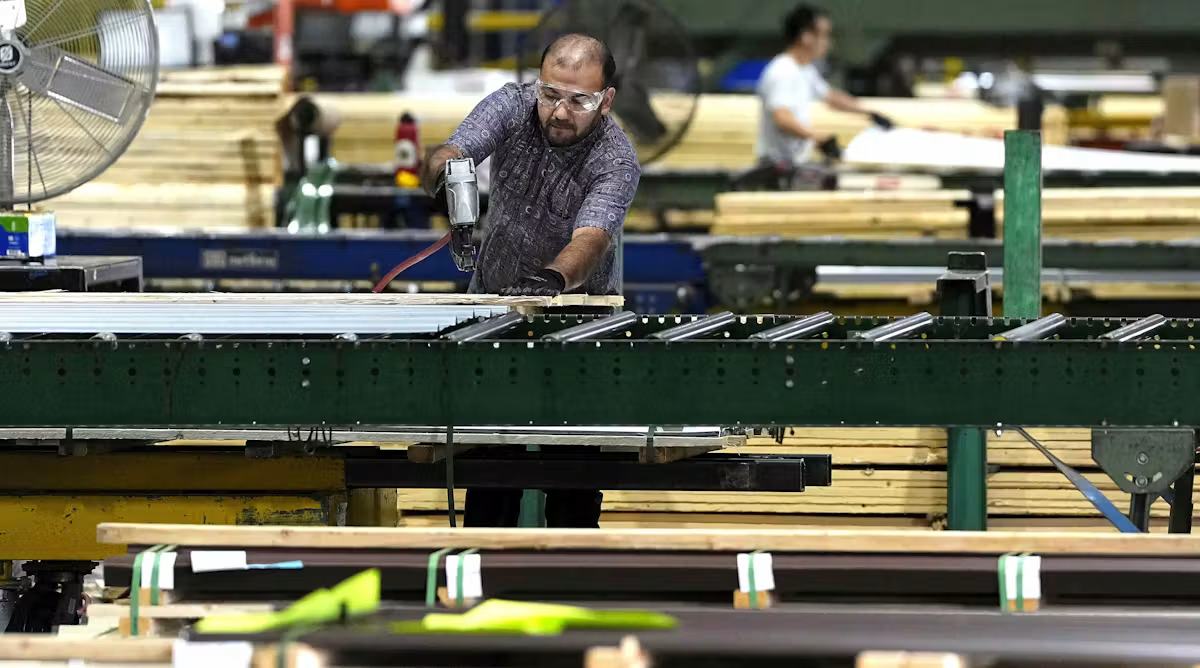
However, manufacturing employment losses are falling disproportionately on immigrant workers. Analysis of Statistics Canada's Labour Force Survey shows immigrants' share of manufacturing employment slipped from just over 30 per cent to under 28 per cent by December 2025, recovering only slightly since.
Between January 2025 and April 2026, manufacturing employment fell by about three per cent overall. But nearly two-thirds of unemployed immigrants who had previously worked in manufacturing reported losing their jobs, compared with fewer than half of Canadian-born workers. More than half of unemployed immigrant manufacturing workers reported a permanent layoff in April 2026, compared with about 43 per cent of Canadian-born workers.
Immigrant manufacturing workers are twice as likely as Canadian-born workers to hold a university degree, close to 40 per cent compared with 20 per cent. Yet immigrant manufacturing workers earned nearly $3 an hour less than Canadian-born workers in April 2026, a gap that has widened since late 2025. More than one-quarter of university-educated immigrants nationally work in jobs requiring no more than high school education, more than double the rate for Canadian-born graduates.
Women make up about one-third of immigrant manufacturing workers, compared with just over one-quarter of Canadian-born workers. When tariffs landed in spring 2025, women's share of employment among immigrant manufacturing workers fell by two percentage points, while the share among Canadian-born workers barely moved.
In August, Ottawa announced a $7.5-billion tariff-response package including additional income support, workplace training and a new Workforce Retention and Retraining Program. The government also launched the Advanced Manufacturing Workforce Alliance to map skills gaps and align training with industry needs. However, these initiatives do not specifically address the employment barriers facing immigrants.
Meanwhile, settlement funding outside Québec is expected to decrease by about $98 million in 2026-27, and advanced language training is being phased out. The Buy Canadian framework sets out no workforce provisions.