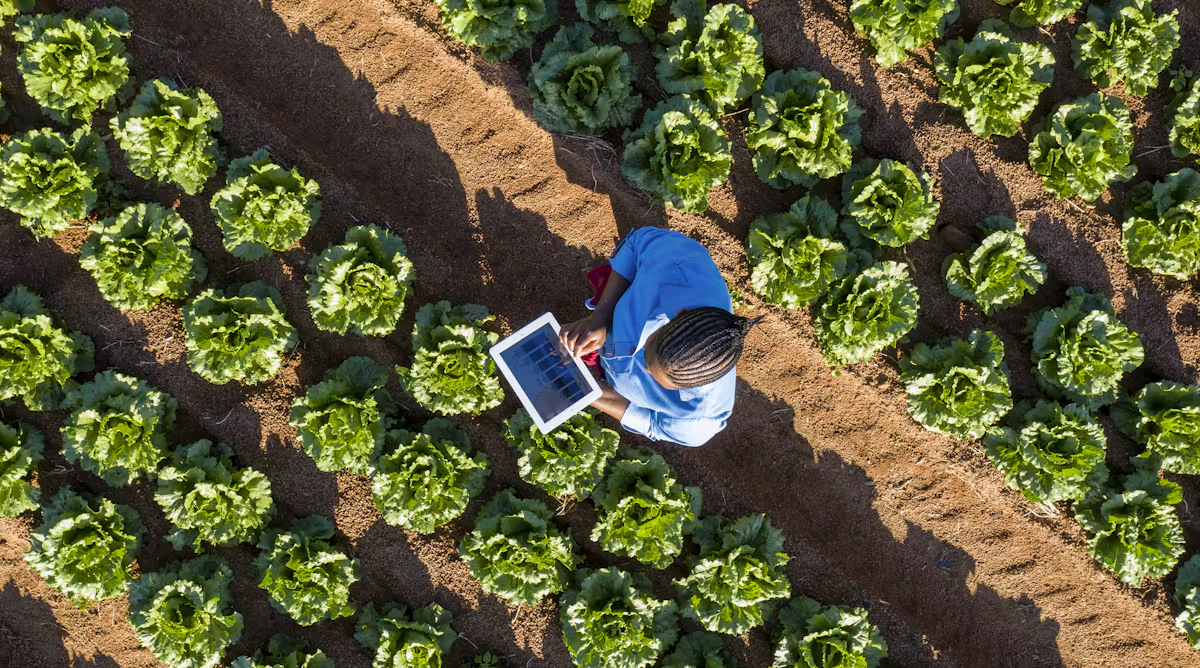
Researchers who study horticultural science, post-harvest technology and sustainable food systems reviewed studies published between 2005 and 2025 on how artificial intelligence and blockchain are used in African farming. They found that existing approaches focus heavily on what the technology can do, such as tracking produce and automating processes, while paying less attention to the people who will use these systems, the conditions under which they operate, and the rules governing how agricultural information is collected and shared.
The researchers identified four issues that need more attention before digital agriculture expands across Africa.
First, data quality remains unverified. Blockchain can protect information after it has been recorded, but it cannot guarantee that the original information was correct. A sensor might give an incorrect reading, or a farm worker might enter wrong information. An AI model trained on poor-quality data could produce an unreliable recommendation. Putting inaccurate information on a blockchain simply creates a secure record of that inaccuracy.
Second, the information produced may not be useful to farmers in practice. A system might correctly predict that a crop is under stress, but the farmer could receive the warning too late to take action. African smallholder farmers also operate under very different conditions. Some have smartphones and reliable internet access, while others work where connectivity is weak, mobile data is expensive or digital skills are limited. The researchers note that technology cannot simply be designed elsewhere and handed to farmers. Farmers should be involved in its design, and some services may need to work offline or require local languages and voice-based communication.
Third, data governance raises critical questions about power. A farm generates valuable information about soils, crop performance, pests, fertiliser use, water, yields and markets. If farmers provide the information that makes a digital system valuable but have little control over how it is subsequently used, digital agriculture could reproduce existing inequalities rather than remove them.
Fourth, farmers need to see clear economic benefits. A technology may improve traceability or produce sophisticated reports, but farmers still have to invest time learning the system and may have to pay for devices, connectivity or services. Benefits could include reducing crop losses, lowering input costs, improving yields, obtaining better prices or accessing new markets. If exporters, retailers, technology companies or regulators receive most of the benefits while farmers carry much of the cost of supplying data, sustained adoption becomes difficult.
The researchers propose a framework in which data collection, AI, blockchain-based verification and automated decision support work together, surrounded by governance that sets clear rules. Community-governed data arrangements are one possible response. Farmer groups could help smallholders have more say over how their data are used. Before expanding digital agriculture, governments, technology developers and agribusinesses should ask whether the information is reliable, whether farmers can act on recommendations, who controls the data and whether the technology delivers measurable benefits.