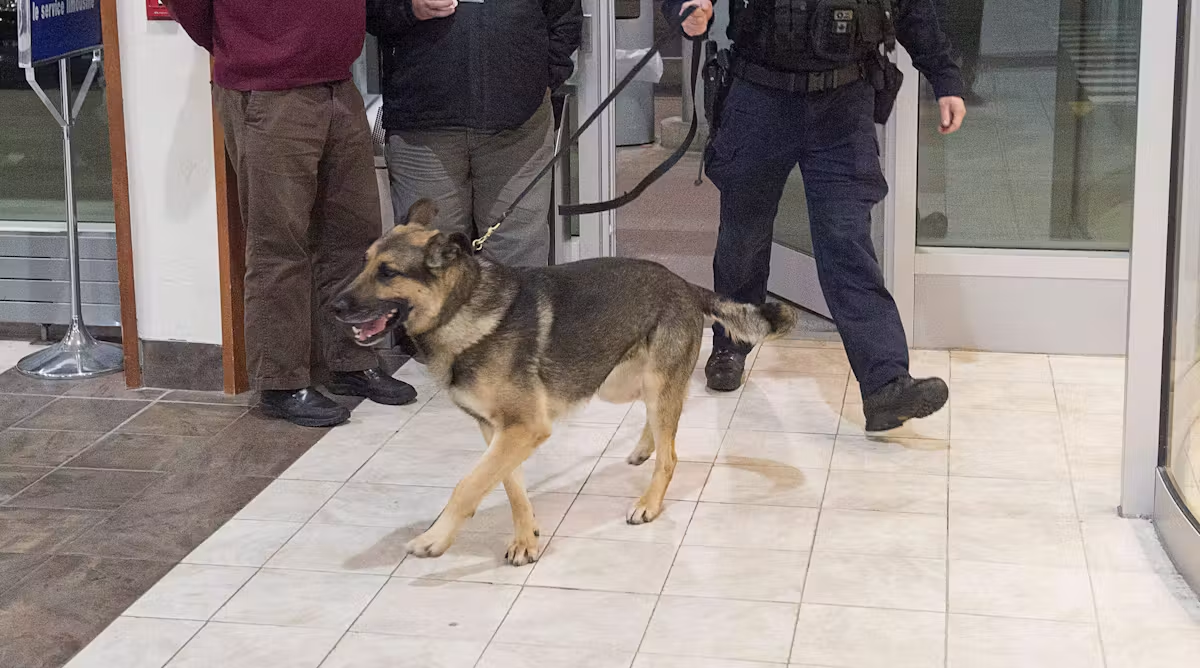
Canadian courts apply a "reasonable suspicion" standard to police sniffer dog searches, treating them as highly accurate and minimally intrusive. New research challenges both assumptions.
Data from New South Wales police in Australia showed that nearly 75 per cent of searches following a sniffer dog alert yielded no illicit drugs. A 2011 Chicago Tribune investigation found only 44 per cent of alerts led to the discovery of drugs or drug paraphernalia. The same investigation found that when the stopped driver was Latino, the dogs' success rate fell to 27 per cent.
False alerts occur for multiple reasons. Poor and inconsistent training affects field performance. Dogs detect minuscule residual drug traces on currency or smell drugs without drugs being present. The chemical piperonal, found in MDMA, is also used in vanilla flavouring and mosquito repellent.
Handler cuing causes errors too. A 2011 study told dog handlers that markers indicated target scents even though none were present. Dogs falsely alerted in 85 per cent of searches and were more likely to alert at marked locations, suggesting handlers' expectations influenced dogs' behaviour. Police officers' unconscious racial biases can transmit to dogs through unconscious handler cuing.
Police use sniffer dogs in stops involving racialized drivers at disproportionately higher rates than stops involving white drivers.
Sniffer dog searches cause both physical and psychological harm. People report fear, anxiety, and public humiliation. Others describe increased heart rate, sweating, and shaking. Subjects often report feeling uncomfortable around police and increased fear of police afterwards. This damages police-community relations, especially among racialized and marginalized populations.
The reasonable and probable grounds standard, applied to other search and seizure powers, should also apply to sniffer dog searches, according to the research.