Data centers and a semiconductor factory are transforming Taylor, Texas, a rural town of roughly 17,000 people about 35 miles northeast of Austin that drew residents seeking affordable land and small-town life.
Samsung broke ground in 2022 on a $17 billion semiconductor facility spanning 1,200 acres, located about a mile from homes in the area. Construction trucks, concrete mixers, and flatbeds now clog County Road 401, and equipment noise carries to Taylor High School and surrounding residential areas less than two miles away.
The city has approved three data centers south of the railroad tracks running through Taylor. Together, the three projects would consume 1.42 gigawatts of electricity, enough to power approximately 950,000 Texas homes a year, or about the annual electricity footprint of Austin.
Blueprint Projects, a 135,000-square-foot data storage and AI processing complex, received initial approval from Taylor in 2024 and would use 60 megawatts at full capacity when built. Construction is set to begin later this year as Samsung's work concludes.
In March, Taylor introduced KDC Project Comal, a $2.5 billion, 360-megawatt hyperscale AI data center campus to be built near the Samsung facility, pending rezoning approval. On October 8, the city authorized a development agreement and annexation for a third project, Taylor Technology Campus, covering 664 acres, with construction slated to begin in 2027.
Linde PLC will also build a $271 million air separation unit and industrial gas facility for chip making on the Samsung campus, with a second facility planned to start construction by year's end.
Texas hosts almost 600 separate data center facilities operating or planned as of September, according to analysis by The Texas Tribune.
Residents like Sarah Medina, who purchased land five-and-a-half years ago intending to raise livestock and create a permanent homestead, expressed frustration with the transformation. "We moved for a small-town feel, for a tighter-knit community, for the ability to afford some land and do some agricultural stuff, and to have space for our kids to run around," Medina said. "We did not move here to be closer to any kind of tech."
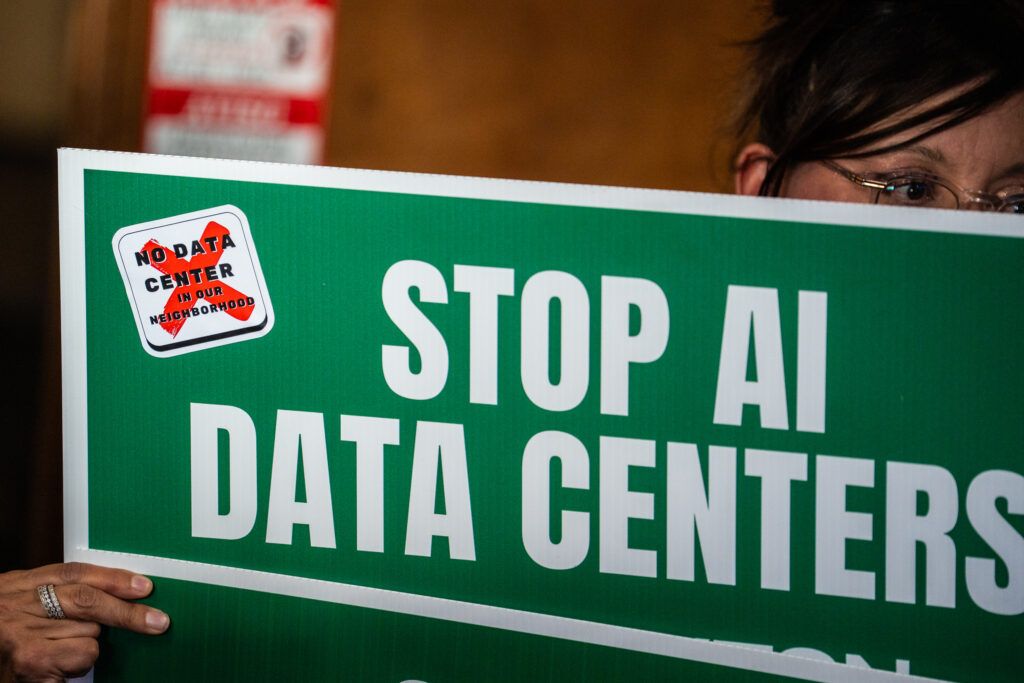
Resident Samia Brand said the city provided unclear responses to questions about water sources and development plans. A residents' opposition movement called the HALT Taylor coalition has formed in response to the expansion of industrial development.