The Trump administration denied 26% of major disaster declarations in 2025, more than double the rate in 2024 and well above the 15% average denial rate over the past two decades, according to analysis cited by Daniel P. Aldrich, Dean's Professor of Resilience at Northeastern University.
Approvals varied sharply by political alignment. A study of roughly 2,500 disaster declarations since FEMA's creation in 1979 found that in Trump's second term, the administration approved nearly 90% of requests from states where the governor and all U.S. senators were Republican, while approving only 23% from all-Democratic states. Andrew Rumbach, a senior fellow at the Urban Institute, analyzed FEMA data and found that about 84% of requests from states Trump won in 2024 were approved during his second term, compared with about 42% from states he lost.
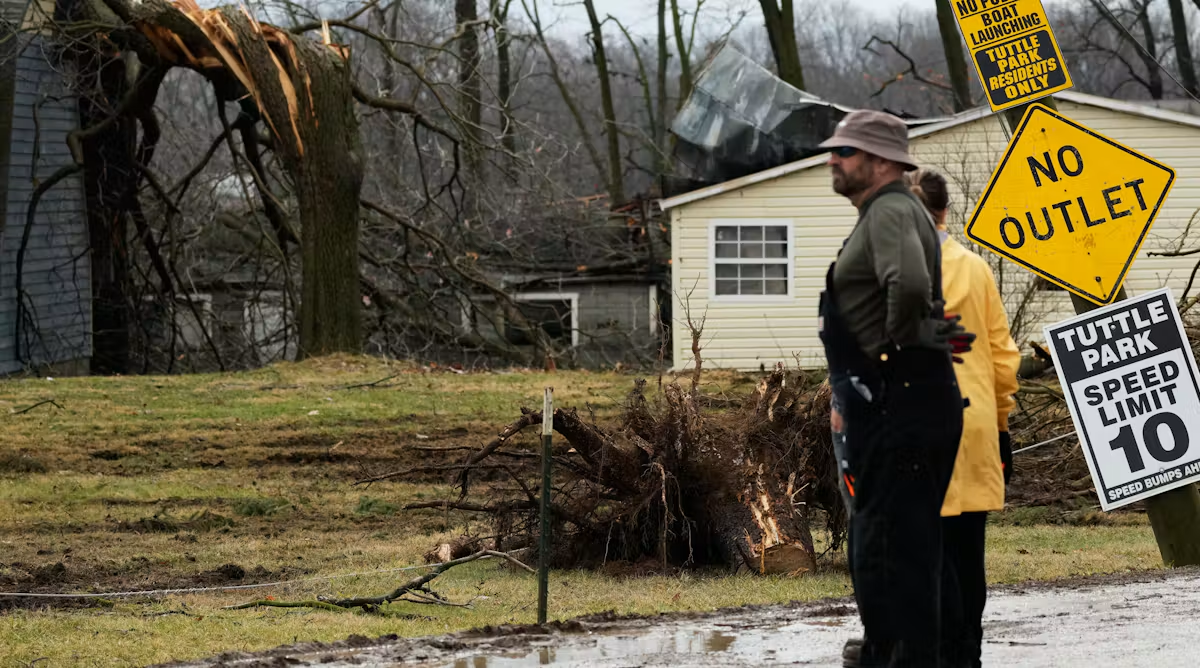
Governor Gretchen Whitmer of Michigan requested FEMA assistance twice after four tornadoes struck southwest Michigan in early March 2026, killing four people. Both requests were denied. Colorado, an all-Democratic state, had both of its 2025 appeals for disaster rejected. They were Colorado's first denials since the 1980s. Florida, an all-Republican state, received $416 million from Trump in June for disasters without a specific declaration specified, with much directed to the Panhandle.
FEMA owes local governments almost $10 billion in reimbursements for recovery work already paid for by cities and towns. When a declaration is denied, towns can cover costs as high as 15% of their annual budget.
Aldrich's research found that after Hurricane Katrina in August 2005, about 90% of residents in the low-income neighborhood around the Mary Queen of Vietnam Church in east New Orleans had returned home by summer 2007, compared to 45% for the city overall. Reverend Vien Nguyen coordinated supplies, organized volunteers and maintained contact with evacuated residents.
In 2025, 44.7% of U.S. public libraries served as cooling or warming centers during extreme temperatures, up 8.2% from 2022. A national survey found 84% of library directors agreed libraries have a critical role in disaster response, yet only 36% knew that federal law allows libraries to seek FEMA relocation funding to move to safer ground, and just 51% had an emergency preparedness plan.
Aldrich's research during the COVID-19 pandemic found that U.S. counties with stronger social ties had lower pandemic tolls. Those ties included bonding ties connecting neighbors and family, and linking ties connecting residents to officials, often built through spaces like libraries and faith-based organizations.
Aldrich's analysis shows more than 90% of federal disaster funds in the early 21st century went to roads, utilities and other standard infrastructure, while less than 10% went to libraries, parks, schools, places of worship and community centers where neighbors organize recovery.