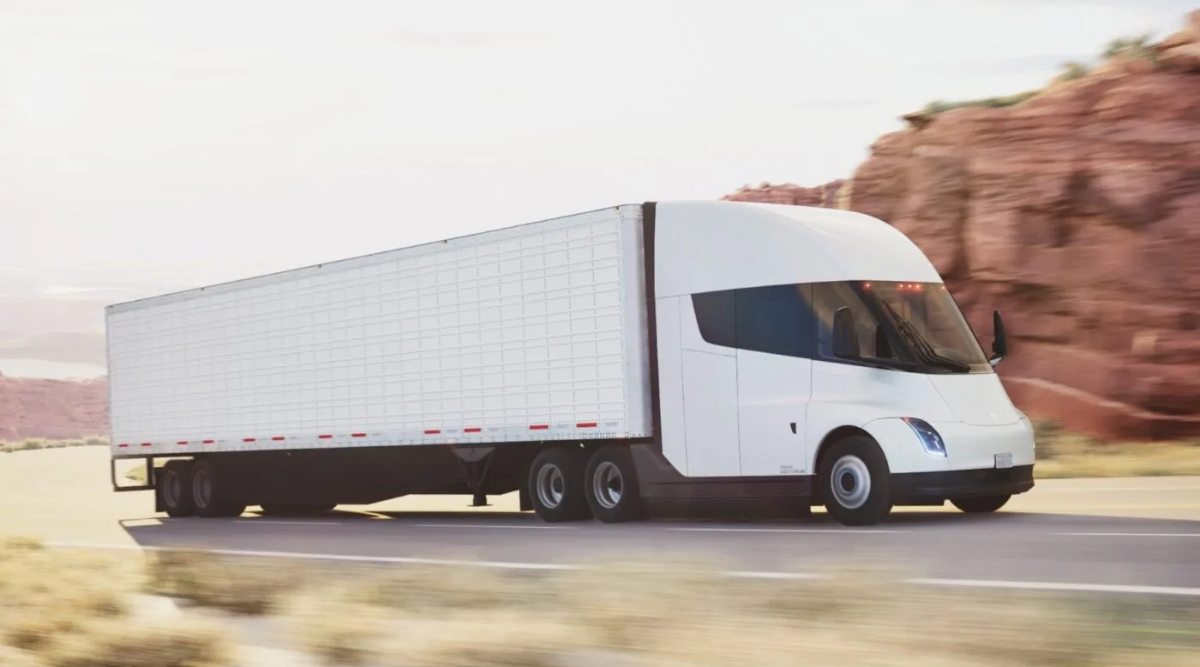
A Tesla Semi caught fire on Interstate 880 in Hayward, California on Tuesday night during the evening commute. The driver noticed something was wrong, pulled over near Highway 92, and escaped unharmed. The battery pack entered thermal runaway. Fire crews shut down both directions of the freeway due to concern over toxic chemical smoke. Southbound lanes remained closed for nearly ten hours. When cleared, only the tractor's rear axles and ash remained.
This marks the second major freeway closure involving a Tesla Semi in just over two years. In August 2024, a Tesla-operated Semi drifted off Interstate 80 near Emigrant Gap, hit a tree, and caught fire. That incident required 50,000 gallons of water, air drops from Cal Fire, and a 15-hour closure.
The National Fire Protection Association reports US fire departments respond to roughly 15,000 large truck fires annually, about 40 diesel rigs per day. Diesel trucks burn frequently from blown turbochargers, seized bearings, and dragging brakes. The difference lies in how they burn. Diesel fires typically extinguish in 45 minutes with standard foam. When an 800-plus kilowatt-hour battery pack enters thermal runaway, cells generate their own oxygen, becoming a self-sustaining furnace. First responders cannot simply drown it. They must pump tens of thousands of gallons of water for hours or maintain defensive mode while traffic gridlocks.
Roughly 4 million Class 8 commercial diesel trucks operate on American roads. The active Tesla Semi fleet numbers between 150 and a few hundred early-production and pilot tractors. Two incidents in a tiny pilot fleet cannot yield a clean statistical failure rate, but they cause catastrophic 10-to-15-hour interstate shutdowns.
This is not uniquely a Tesla problem. In summer 2023, several Nikola Tre battery-electric trucks caught fire. Third-party investigators found a coolant leak in battery packs supplied by Romeo Power had caused an internal electrical short. Nikola recalled all 209 trucks built.
Startups approach trucking like consumer electronics, designing from a clean sheet and prioritizing efficiency. Traditional truck builders move slowly. In 2023, Volvo and Mack filed safety recalls with the National Highway Traffic Safety Administration covering hundreds of electric trucks for coolant lines not fully locked into place and over-torqued internal fasteners that could snap off as loose metallic debris, both creating fire risks. Volvo caught a small factory fire, issued a stop-ship order within a week, and called trucks on the road in for battery pack swaps. Traditional truckmakers possess institutional safety systems earned over a century. When they detect problems, they trigger stop-ship orders, ground fleets, file Part 573 defect notices with federal regulators, and disassemble battery packs in service bays rather than deploy firmware patches.