# Climate change rarely goes on trial. This one could be a landmark.
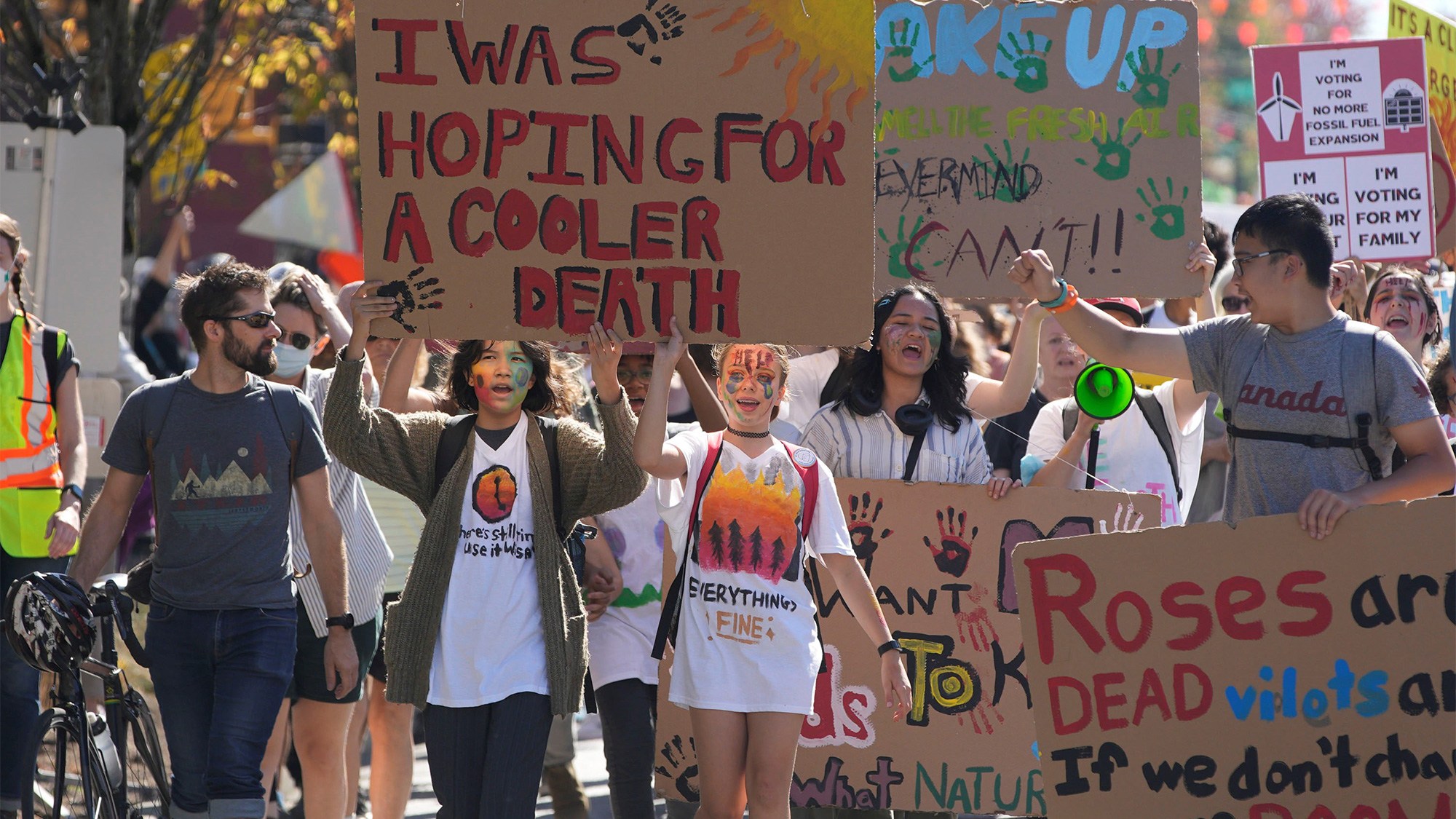
Fifteen Canadian youth will argue today that the federal government violated their constitutional rights by failing to adequately address climate change. Legal experts said this case in Vancouver is arguably the most consequential climate lawsuit to reach trial globally.
The plaintiffs, six of whom identify as Indigenous, filed suit in 2019. They allege the government breached Section 7 of the Canadian Charter of Rights and Freedoms, which guarantees "the right to life, liberty, and security of the person." They also claimed federal action breached their equality protections under Section 15 because young people will bear a disproportionate share of climate impacts.
The youth argue the government allowed emissions to remain dangerously high, set targets that fell short of what scientists said was necessary, repeatedly failed to meet those targets, and continued supporting fossil fuel development.
A federal judge dismissed the case without trial in 2020, ruling the lawsuit was overly broad and improperly asked courts to resolve a political matter. The plaintiffs appealed. In 2023, the Federal Court of Appeal upheld the dismissal of the Section 15 claim but allowed the Section 7 arguments to proceed if plaintiffs more specifically detailed which government conduct violated their rights.
The plaintiffs amended their complaint to focus on the Canadian Net-Zero Emissions Accountability Act of 2021 and the 2030 emissions reduction plan. They argue these efforts don't go far enough to avoid violating their charter rights.
The trial in Vancouver is slated to last five weeks. The 15 plaintiffs are expected to testify alongside climate scientists and other experts. Michael Gerrard, faculty director of Columbia University's Sabin Center for Climate Change Law, said the outcome "could prove persuasive in other climate litigation or spur new cases" and that "this trial will be closely watched."