# Landmark Youth Climate Trial Against Canadian Government Begins
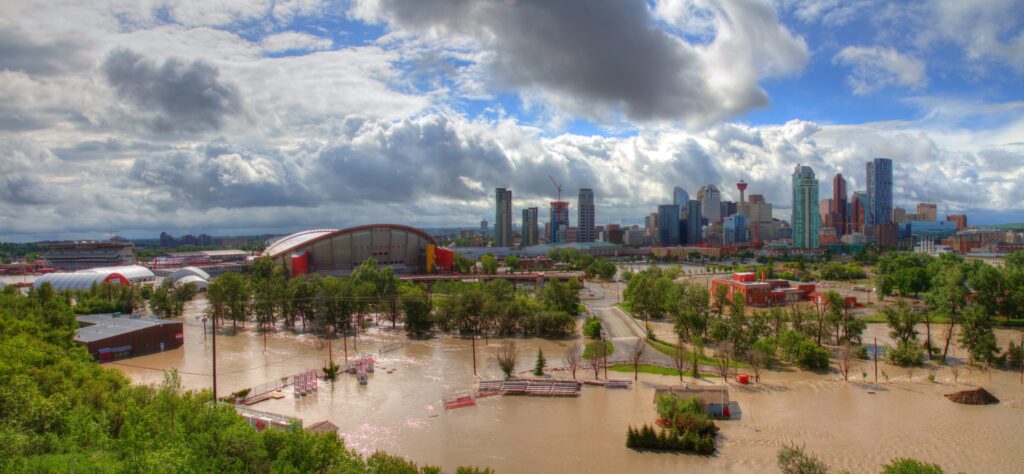
Sadie Vipond was eight years old when torrential rain forced her family to evacuate their Calgary home during one of Canada's worst flooding events in June 2013. The Bow River swelled beyond its banks, destroying neighborhoods and displacing thousands. That terrifying evacuation stuck with Vipond. Now, as a young adult, she stands at the center of a legal battle that could reshape how Canada addresses climate change.
Vipond is among youth plaintiffs who sued the Canadian government, claiming federal climate policy violates their constitutional rights to life, liberty, and security. The trial, one of the first of its kind in Canada, represents a growing wave of youth-led climate litigation globally. Similar cases have advanced in Germany, France, Portugal, and the United States, with courts increasingly receptive to arguments that government climate inaction constitutes a violation of fundamental rights.
The Canadian lawsuit challenges the adequacy of the nation's climate targets and emissions reduction plans. Canada committed to cutting greenhouse gas emissions 40 to 45 percent below 2005 levels by 2030 under its 2021 climate commitment. However, the plaintiffs argue these targets fall short of what science demands to limit global warming to 1.5 degrees Celsius. They contend that inadequate federal climate policy directly harms their health, safety, and future economic prospects.
Canada's federal government has downplayed the legal threat. Officials argue that Parliament, not courts, should make climate policy decisions. The government maintains its climate plan represents a balanced approach between environmental protection and economic considerations. Yet the courtroom strategy reflects deeper tension between political incrementalism and the accelerating pace of climate-driven disasters.
The timing matters. Canada experienced record wildfires in 2023, with smoke drifting into the United States. Flooding continues to plague multiple provinces. Insurance companies have warned of mounting costs from climate-related damages. Meanwhile, Canada's official greenhouse gas emissions rose in 2022 to 670 megatonnes CO2 equivalent, driven largely by fossil fuel extraction in Alberta and Saskatchewan.
Vipond's personal narrative anchors the broader argument. The 2013 Calgary flood killed four people and caused an estimated 5 billion Canadian dollars in damage. Extreme precipitation events have intensified since, with climate models projecting further increases across Canada. Plaintiffs argue they will inherit a degraded climate with fewer livable regions, diminished job opportunities, and permanent ecological loss.
The trial represents uncharted legal territory in Canada. Courts rarely overturn government policy on climate grounds. But international precedent suggests openness to youth claims. In 2021, Germany's Constitutional Court ruled that climate policy targets were inadequate and violated the constitutional rights of younger generations. Portugal's Constitutional Court reached similar conclusions.
A Canadian victory would force the government to substantially strengthen emissions targets and implementation timelines. It could accelerate the phase-out of fossil fuel subsidies, currently estimated at 18 billion Canadian dollars annually. The ruling might also embolden similar suits against provincial governments, which control energy policy in resource-rich provinces.
The outcome remains uncertain. Canada's courts have historically deferred to legislative bodies on policy matters. But younger Canadians facing decades of climate change impacts increasingly reject that deference. Vipond's trial signals that judicial patience with slow climate action may be wearing thin.