The IceCube Observatory has detected high-energy astrophysical neutrinos, but scientists do not know where most of them originate. A study published in October 2026 by researchers including Yjan Gordon, instructor of physics at University of Wisconsin-Whitewater, suggests radio telescopes could help identify sources.
Neutrinos interact only through the weak force, making them difficult to detect. IceCube uses Antarctic ice to observe neutrino interactions when they occur. The observatory has detected astrophysical neutrinos hundreds of thousands of times more energetic than previously observed.
Some neutrinos appear to come from quasars. In 2017, IceCube detected a neutrino from the direction of quasar TXS 0506+056 at the same time another telescope detected a gamma-ray outburst from that object. However, this single case may not be representative.
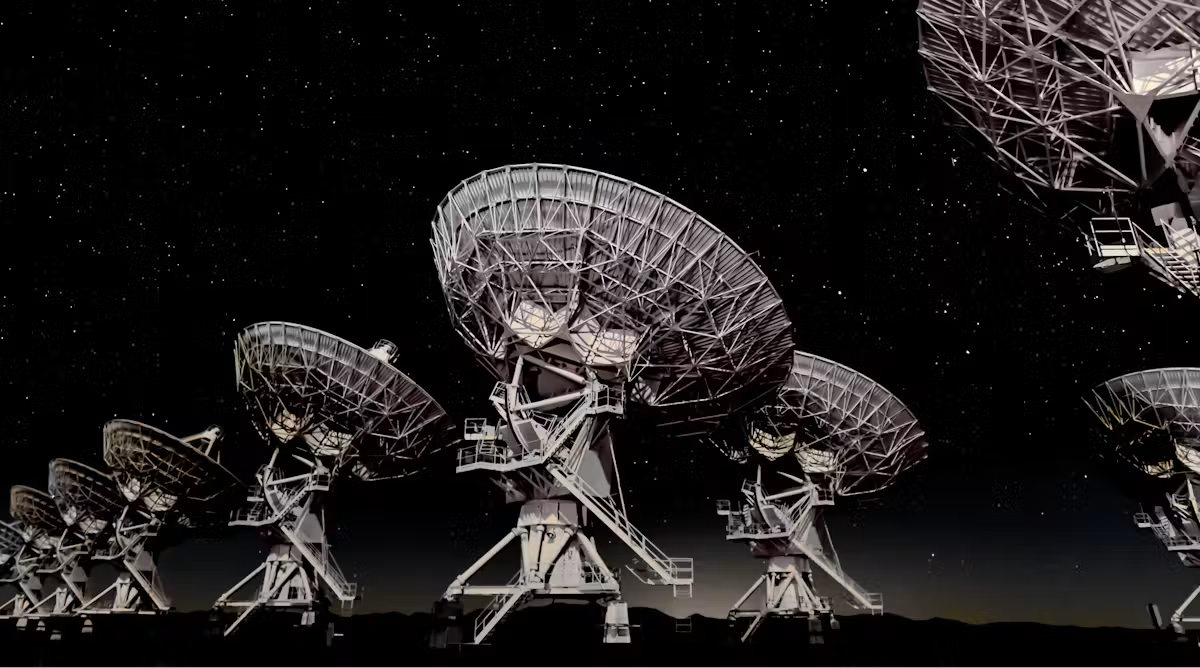
The research team analyzed data from the Very Large Array Sky Survey, or VLASS, which tracks radio emissions from space beginning in 2017. They found that most objects VLASS observed with fluctuating radio emissions were quasars. When the team compared times IceCube detected neutrinos with times VLASS observed radio flares, a correlation appeared.
Radio flares seemed to coincide with neutrino detections more often than random chance would predict. Radio outbursts potentially associated with neutrinos occurred more than 90% of the time without being detected by gamma-ray telescopes, suggesting radio waves penetrate where gamma rays cannot.
However, radio flares potentially associated with neutrinos account for only about 13% of IceCube's astrophysical neutrino detections. The odds of the observed correlation occurring by chance are about one in 30, below the standard threshold of one in a million that scientists require to confirm a result. More observations over the next few years will determine whether the correlation is real.