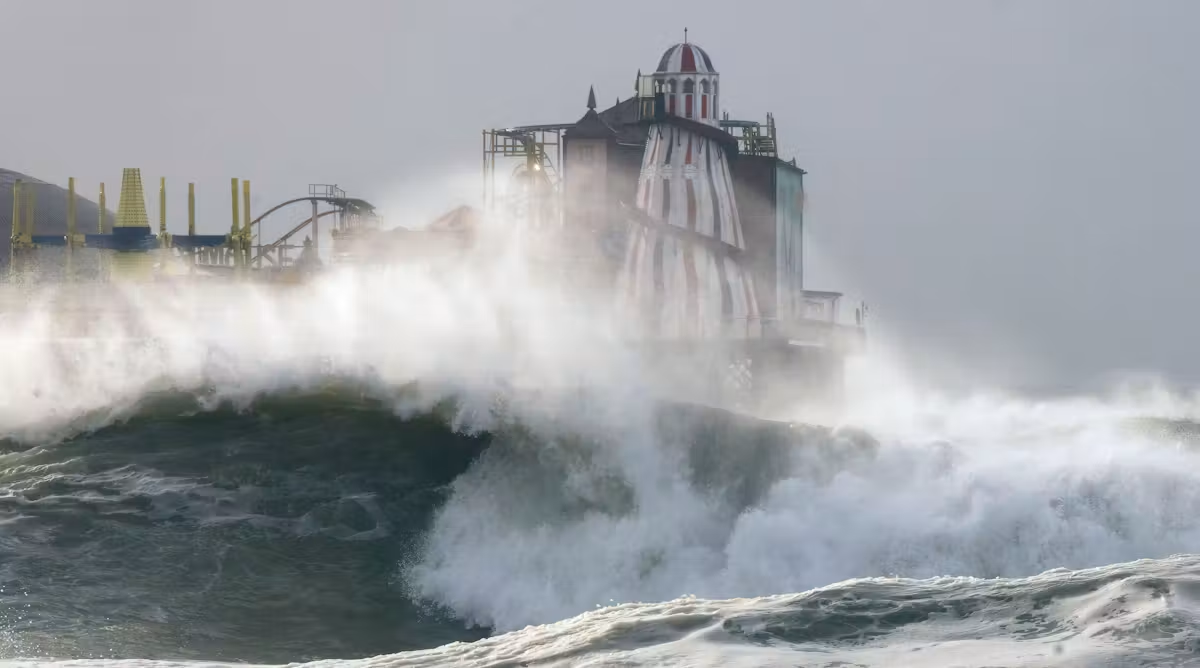
England and Wales remain in drought despite recent storms, with the Environment Agency declaring severe drought conditions across parts of Cornwall, Devon, Dorset, Somerset and Sussex. South-west and south-east England experienced their driest April to September period in over 100 years.
Winter is when the UK refills its water stores. Between October and March, less water evaporates and plants consume less, allowing rain to recharge reservoirs and groundwater, the water held in chalk and sandstone rocks beneath the surface. Groundwater supplies much of the drinking water in southern and eastern England but fills slowly, over months and years.
The Wimbleball reservoir on Exmoor, which supplies around 400,000 people, dropped from full capacity in March to about 13% by October after the weather shifted from wetter than normal to drier than normal.
Short bursts of heavy rain from storms like Austen and Boelo overwhelm drains and cause rivers to rise quickly. But reservoirs and groundwater respond far more slowly. The Environment Agency estimates England needs around 120% of normal rainfall between September and April for every area to come out of drought. Heavy rain can cause flooding while the reservoirs remain depleted because the water either runs off or takes months to soak deep enough to recharge groundwater.
This is the third drought in England in five years. The stores barely have time to recover before the next one begins.
Climate scientists do not expect a dry winter every year as fossil fuel burning continues to heat the planet. Climate projections suggest UK winters will get wetter on average. But summers heated by fossil fuel burning dry out soil and drain reservoirs faster, while winter rain increasingly arrives in heavy bursts that are harder to capture and more likely to flood. Natural swings in weather will still deliver dry winters from time to time. The chance of a drought rolling into winter or across two winters goes up as the planet continues to heat.
Water companies need to move faster on fixing leaks, which waste billions of litres every day. New reservoirs are being planned in England but will take more than a decade to build and cost billions of pounds. Rainwater harvesting and water reuse in homes, sustainable drainage in towns, and wetlands and floodplains that hold water like a sponge could provide additional solutions.