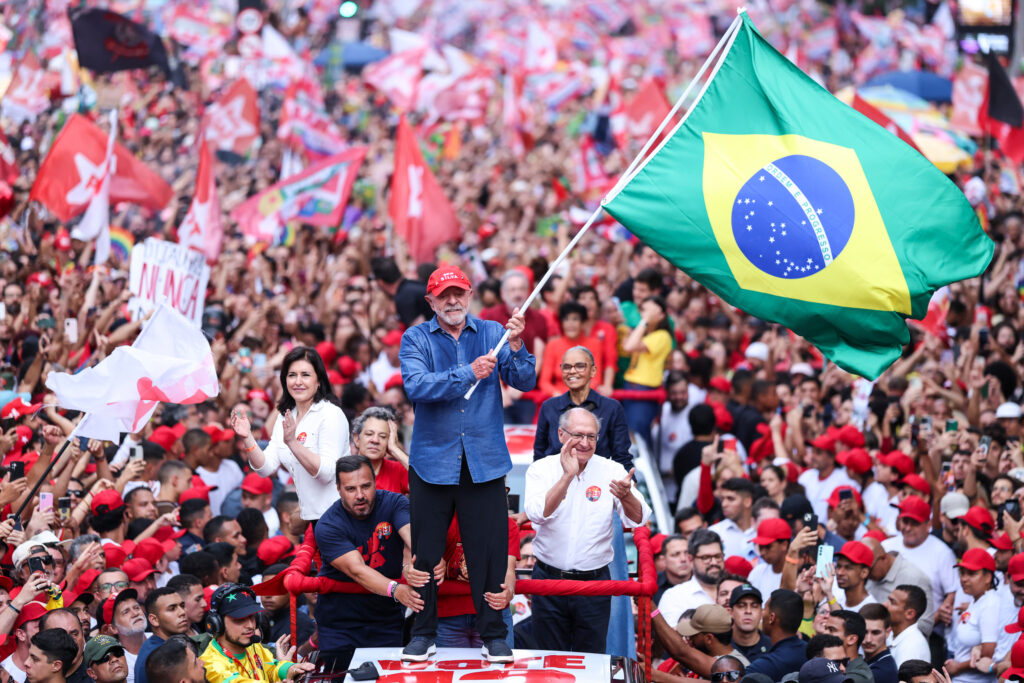
Luiz Inácio Lula da Silva's re-election as Brazil's president in October 2022 delivered a reprieve for the Amazon rainforest after four years of accelerated deforestation under his predecessor Jair Bolsonaro. Climate advocates framed the narrow victory over right-wing Senator Flávio Bolsonaro as a decisive moment for both regional and global climate stability. Brazil controls roughly 60 percent of the Amazon, making deforestation policy in Brasília consequential for carbon sequestration and climate targets worldwide.
Under Bolsonaro's administration, annual deforestation rates in the Amazon surged to 13,038 square kilometers in 2021, the highest level since 2006, according to Brazil's National Institute for Space Research. Bolsonaro weakened enforcement mechanisms at IBAMA, the federal environmental agency, slashed funding for the Amazon Fund, and dismantled protections for indigenous territories that typically experience lower deforestation than surrounding areas. Scientists warned that sustained clearing could push the Amazon past a tipping point where the ecosystem transitions from carbon sink to carbon source.
Lula's campaign platform promised to restore enforcement capacity at IBAMA, increase Amazon Fund resources, and expand protected areas and indigenous land demarcation. His previous administration from 2003 to 2010 reduced deforestation by roughly 83 percent through satellite monitoring, expanded protected areas, and partnerships with indigenous communities. Environmental groups including Greenpeace, the World Wildlife Fund, and the Amazon Watch coalition mobilized supporters around the risk of continued Bolsonaro-era policies.
However, environmentalists tempered celebration with caution. Brazil's Congress leans conservative, complicating legislative action on deforestation fines and enforcement budgets. Agribusiness interests, including cattle ranching and soy production, wield significant political influence. Lula faces pressure to balance environmental restoration with economic demands from sectors dependent on Amazonian land conversion. Mining companies and infrastructure developers also seek access to protected regions.
The incoming administration signaled intent to reverse course immediately. Lula appointed Marina Silva, a longtime environmental advocate and former environment minister, to lead the ministry. He pledged to eliminate illegal mining on indigenous lands and halt deforestation permits issued during Bolsonaro's term. He also promised to pursue international climate finance, including restoration of the Amazon Fund, which received contributions from Norway and Germany before Bolsonaro halted its operations in 2019.
Scientists stressed that even with policy reversal, deforestation prevention alone does not restore ecosystem integrity. Reforestation efforts require sustained funding and coordination with indigenous land managers who have demonstrated effectiveness at maintaining forest cover. Global climate models depend on Amazon carbon storage persisting through 2050 and beyond. Recent research published in Nature Climate Change indicated that the region already exhibits altered precipitation patterns consistent with ecosystem stress.
Lula's victory created space for policy action, but implementation timelines remain uncertain. Congress approval remains necessary for major environmental investments. International observers including the UN Environment Programme flagged the Brazilian result as consequential for global climate commitments under the Paris Agreement framework. The next 18 months will determine whether Lula's environmental promises translate into enforcement mechanisms and resource allocation sufficient to reverse deforestation trends and restore Amazon ecosystem function.