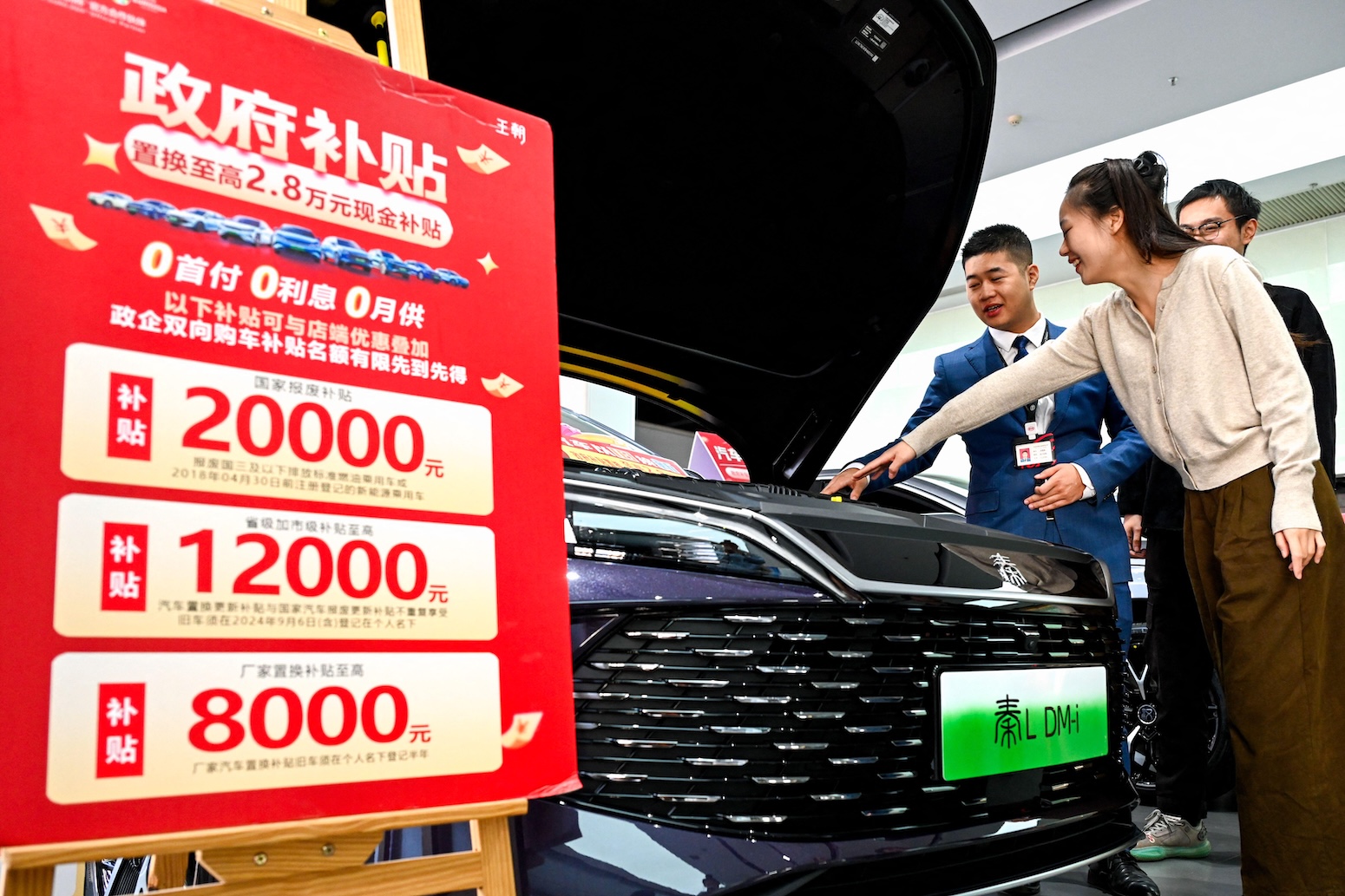
China's passenger vehicle market has crossed a watershed: new-energy vehicles (NEVs) captured 67% of new car sales in September, marking the first time this category has reached two-thirds of the market. The figure represents a dramatic acceleration in the world's largest car market and signals how quickly internal combustion engine vehicles are being displaced.
The September milestone includes both battery electric vehicles (BEVs) and plug-in hybrid electric vehicles (PHEVs), two technologies that China has aggressively promoted through subsidies, manufacturing capacity, and grid investment. This market share comes despite global supply chain constraints and competition from established automakers entering the EV space. Domestic manufacturers including BYD, Li Auto, Nio, and XPeng have captured substantial portions of this expanding segment.
China's pivot to electric vehicles reflects deliberate state policy. The government has set targets for NEV penetration and invested heavily in charging infrastructure, with over 1.6 million public charging points now operational across the country. Battery production capacity has exploded, with Chinese firms dominating global lithium-ion manufacturing. CATL, BYD, and other Chinese battery makers now control roughly 60% of worldwide battery supply.
The economic implications extend beyond China. This market shift has forced legacy automakers to accelerate electrification timelines. Volkswagen, Tesla, General Motors, and BMW all operate significant manufacturing footprints in China and have expanded EV portfolios to compete. The global automotive supply chain has reorganized around battery sourcing, with cobalt and lithium demand reshaping mining patterns in Africa, South America, and Australia.
The environmental impact remains mixed. If powered by coal-heavy grids, EVs deliver only modest emissions reductions. However, China's grid has diversified substantially. Renewable energy capacity reached 1.2 trillion kilowatt-hours in 2023, with solar and wind expanding faster than coal consumption. As grid cleanliness improves, the emissions benefit of each EV sold increases.
The transition also poses manufacturing and resource challenges. Battery production requires water, energy, and rare earth processing. Recycling infrastructure remains underdeveloped in many regions, creating end-of-life risks. Chinese battery recyclers are beginning to establish operations, but capacity lags demand.
Industry analysts expect China's NEV share to continue rising. Some projections show 80% penetration by 2030. This trajectory has compelled other major markets to accelerate policy timelines. The European Union's 2035 combustion engine ban and various U.S. incentive structures respond partly to competitive pressure from Chinese EV dominance.
The September figure also reveals market maturation. Early adoption phases typically show volatile growth. Reaching two-thirds suggests EV technology has achieved price-to-performance parity with conventional cars for many buyers. Charging availability has improved consumer confidence. Depreciation concerns have lessened as used EV markets establish pricing.
China's record represents the most aggressive automotive electrification achieved by any major economy. The speed of this transition compresses timelines for global automotive emissions reductions but also creates dependencies on Chinese battery supply and processing capacity.